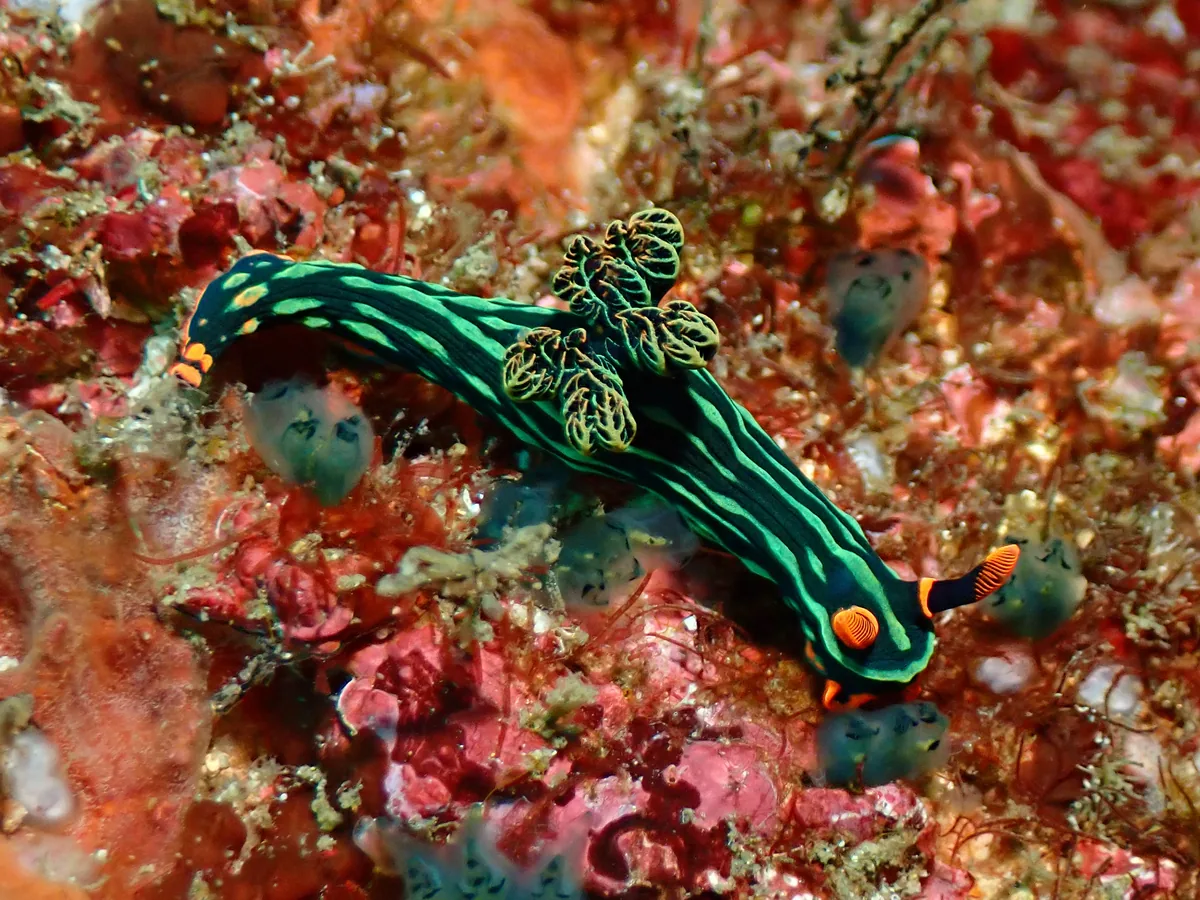
Type
Planerobranchia
Elongated body with gills that cannot be retracted. Feed on tunicates, bryozoans and other opisthobranchs.
MacroDivers Academy
A practical guide to the Order and Type categories used in the MacroDivers database, helping divers recognise the main sea slug groups and classify records consistently.
Sea slugs are a wonderfully varied group of marine molluscs. Many divers use the word "nudibranch" for almost anything colourful and slug-like, but nudibranchs are only one part of the wider sea slug world.
This guide explains the main sea slug groups used in the MacroDivers database. It is designed as a practical identification reference for divers, photographers and database editors rather than a full scientific taxonomy key.
Order
Common name: Dorids
The most diverse group and the largest. They all lack a shell in the adult state. Most dorids have a circle of gill branches around the anus.
Type
Elongated body with gills that cannot be retracted. Feed on tunicates, bryozoans and other opisthobranchs.
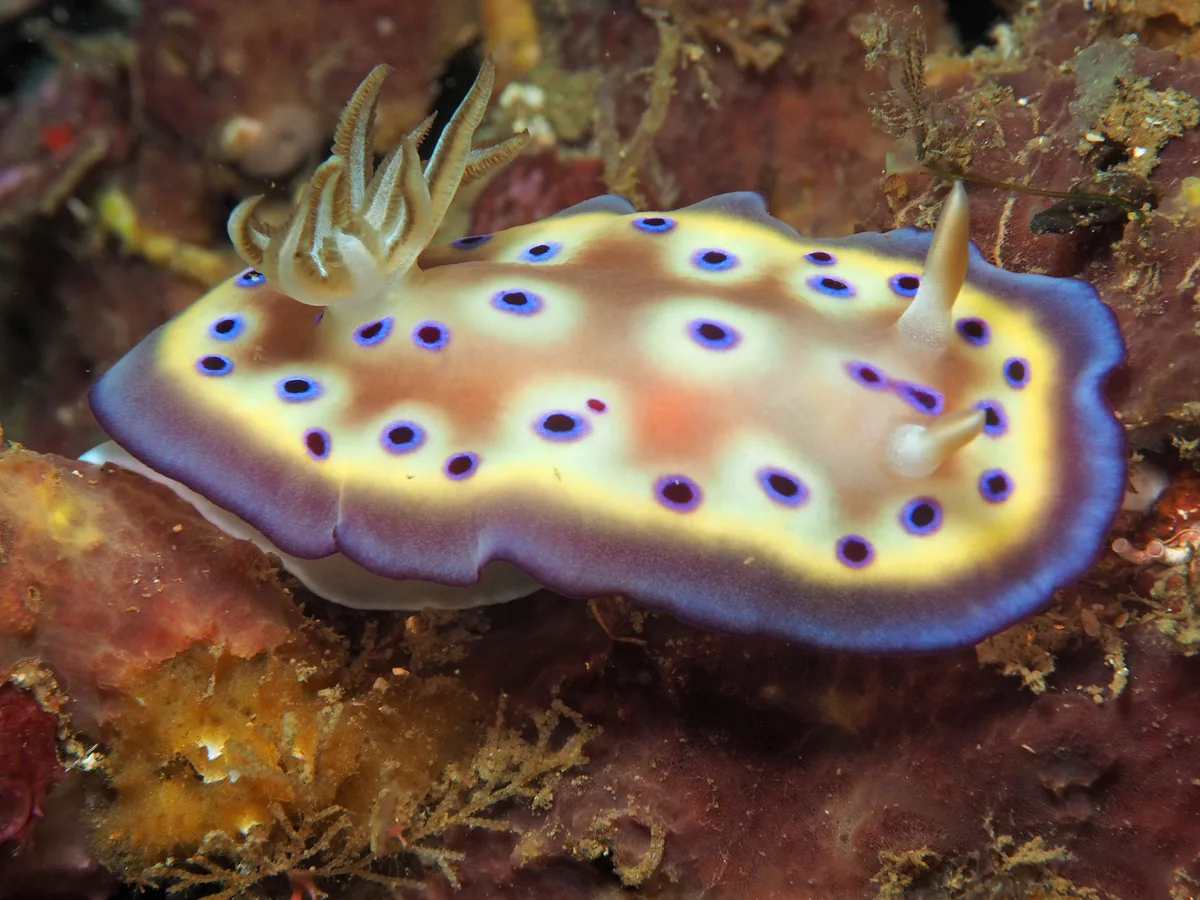
Type
The largest group of dorids. They have gills that can be retracted into a pocket. Rhinophores are also retractable. Body shape is usually oval. They feed on sponges.
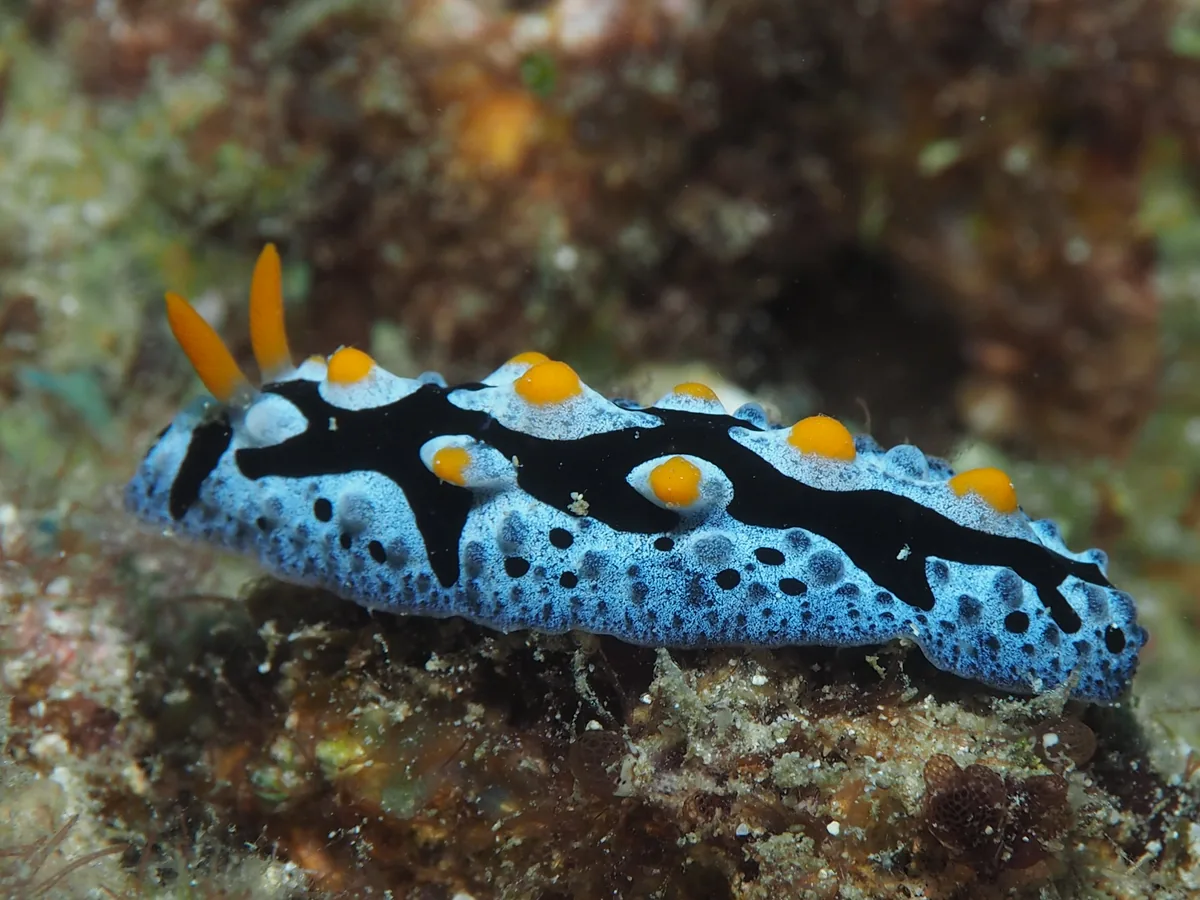
Type
This group does not have the radular teeth of other dorids. Instead, they secrete digestive enzymes onto sponges and then suck up the softened food. Some have gills on the back, while others, such as the Phyllidiidae, have secondary gills protected underneath the edge of the mantle.
Order
Common name: Cladobranchs
The second major group of nudibranchs. Cladobranchs are characterised by having a branched digestive gland.
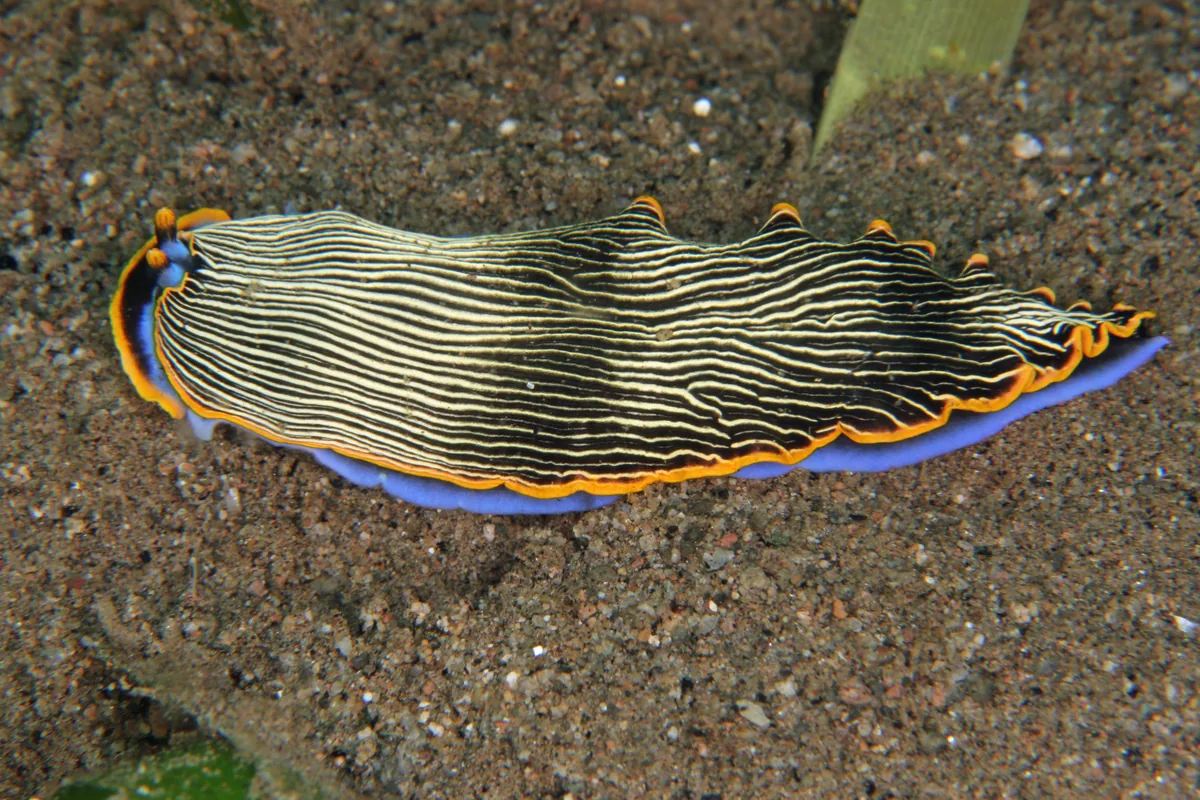
Type
Widespread in the Indo-Pacific. They typically have ridges along their elongated bodies. The gills are hidden between the mantle and foot. Arminids have an oral veil and club-like rhinophores with vertical lines. They are mainly found on the bottom.
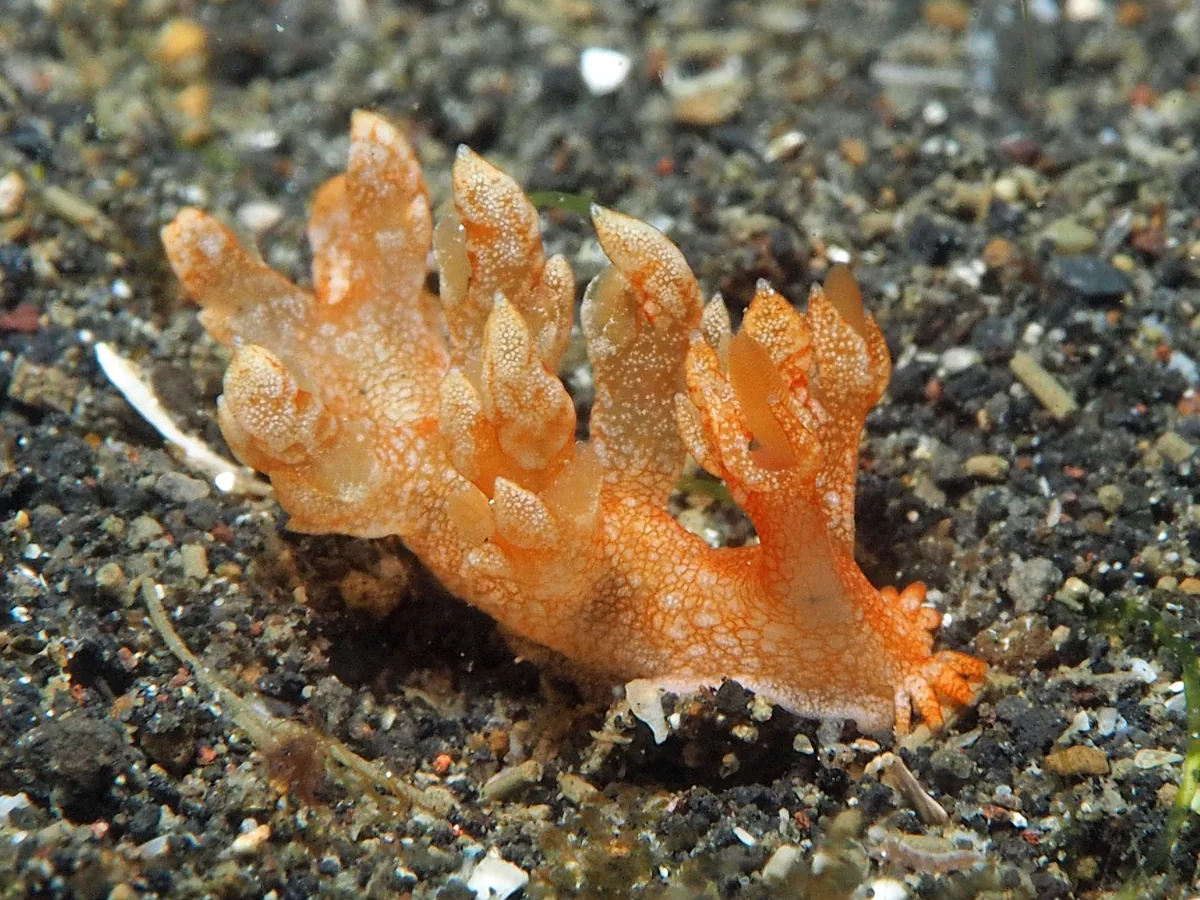
Type
Dendronotinids have rhinophoral sheaths and numerous appendages along the sides of their elongated bodies. The highly branched appendages act as secondary gills.
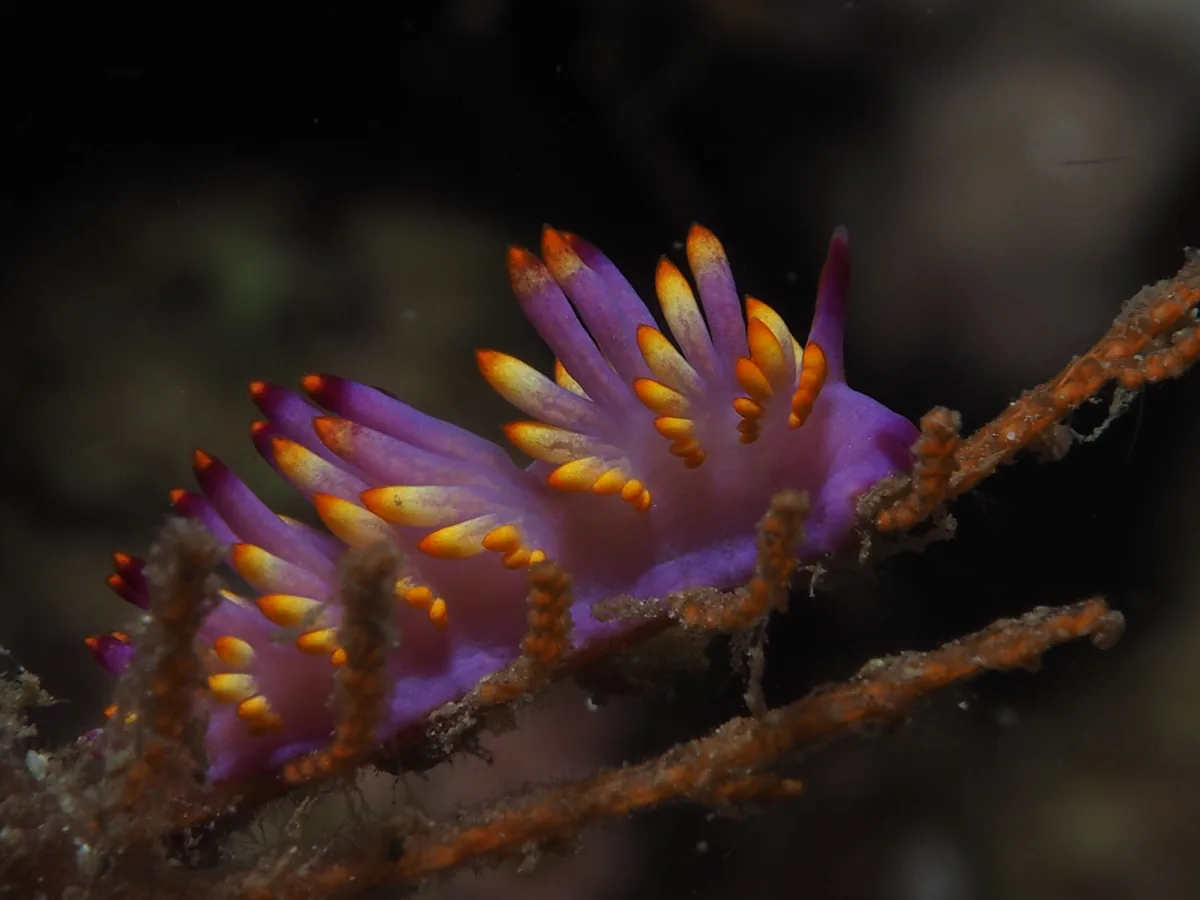
Type
Common name: Aeolids
Aeolids lack gills but use cerata for respiration. The cerata contain the digestive tract, and the tips can hold nematocysts collected from their food. This gives them an effective defence system. Aeolid rhinophores may be complex, but many are smooth, and most species also have oral tentacles.
Page section
Other Sea Slug Orders is only a page section heading. It is not a database Order value. The actual database Order values in this section are Cephalaspidea, Anaspidea, Sacoglossa, Pleurobranchoida and Basal shelled sea slugs.
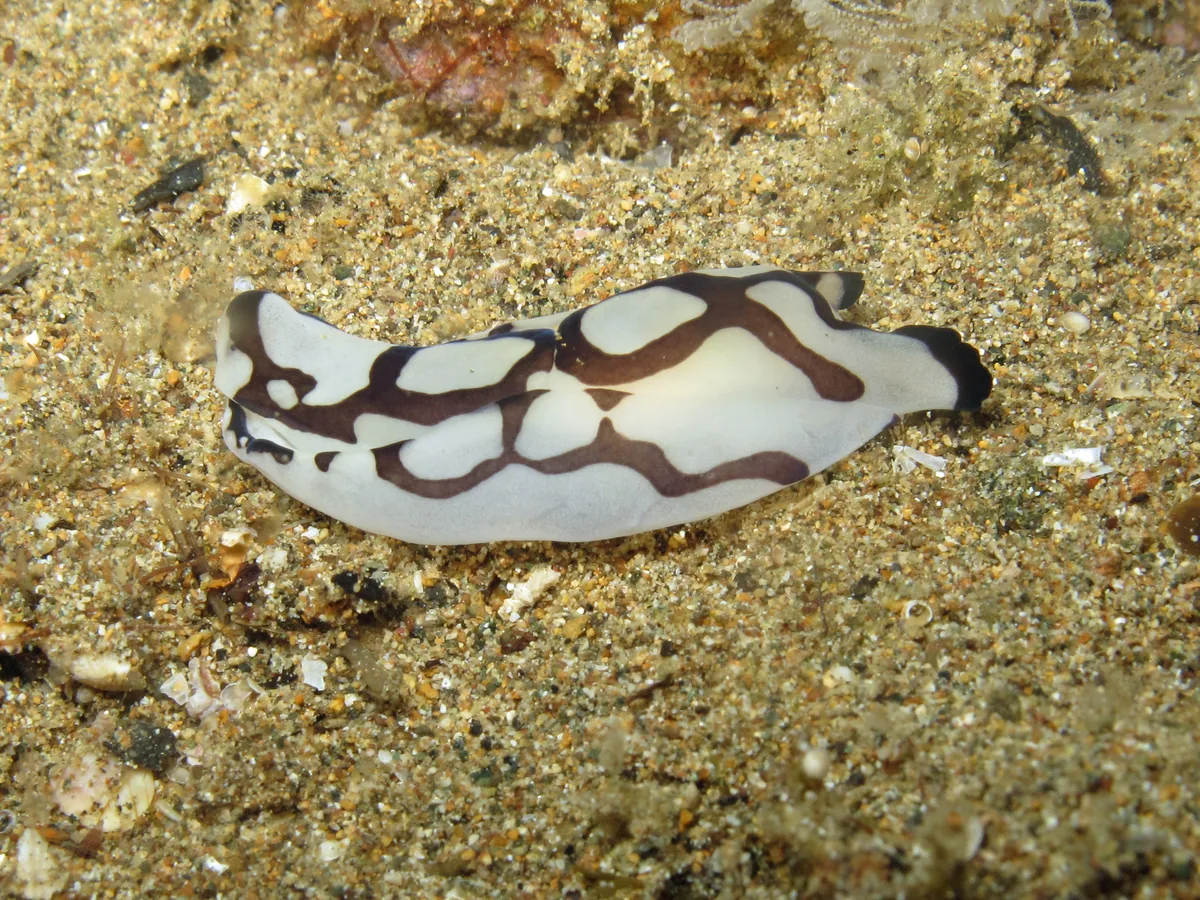
Order: Cephalaspidea
This group may have a bubble shell or internal shell which is visible, while some do not. They have a thick layer of skin to protect the head because they are burrowers. Consequently, they do not have visible rhinophores or tentacles.
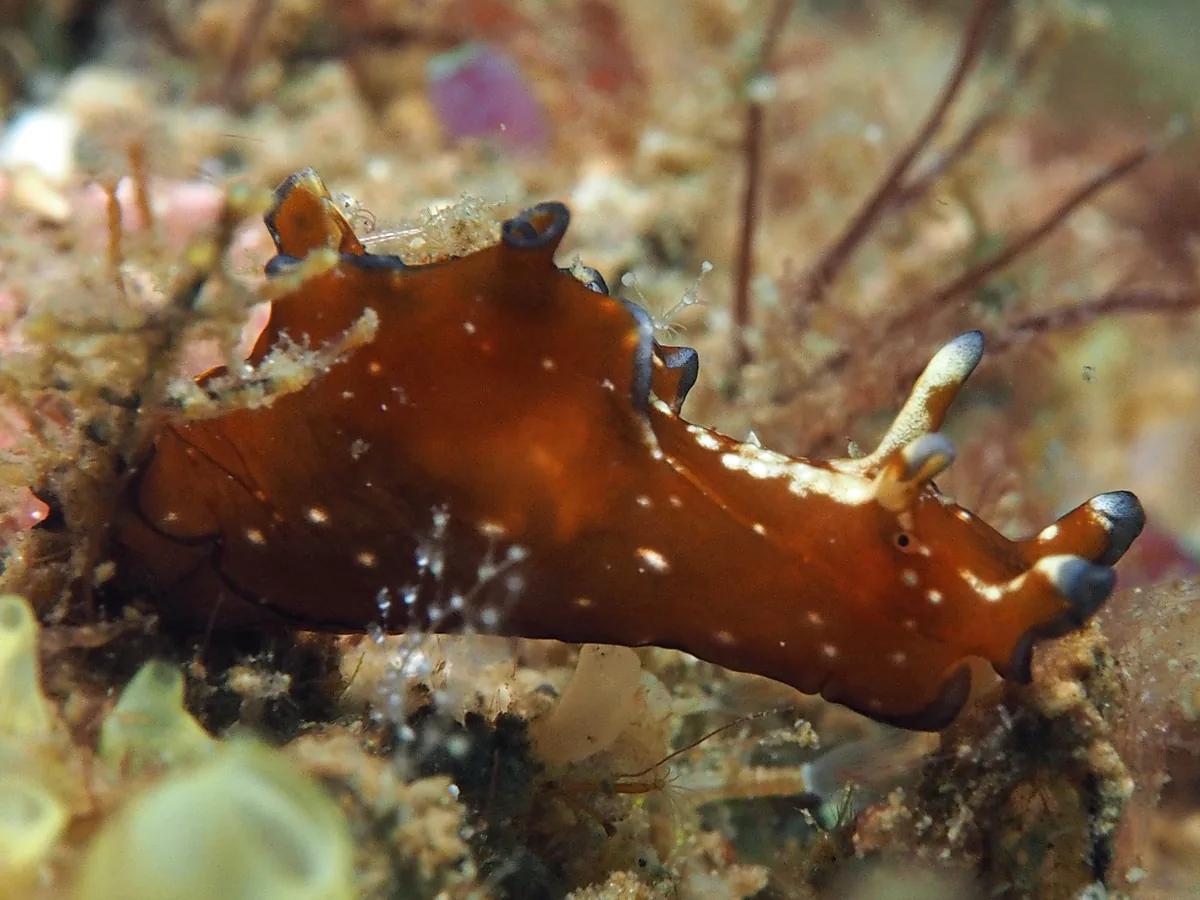
Order: Anaspidea
Herbivorous slugs with a wide distribution. They are often very large and most have an internal shell. They are called sea hares because they have eye spots and rolled rhinophores that look like ears.
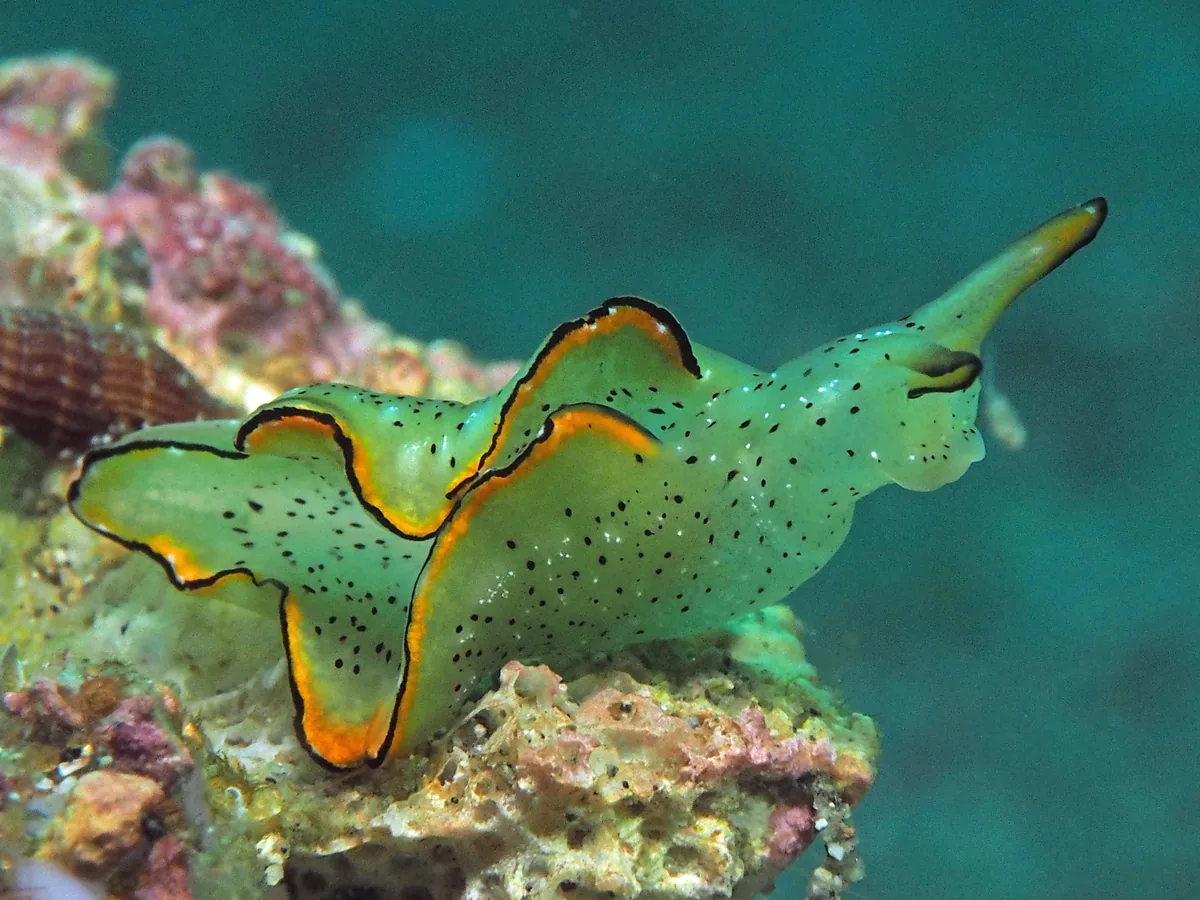
Order: Sacoglossa
As the name suggests, these slugs are herbivorous. They pierce algal cells and suck out the contents. Some have visible shells, many have appendages such as cerata or parapodia, and most have either smooth or rolled rhinophores.
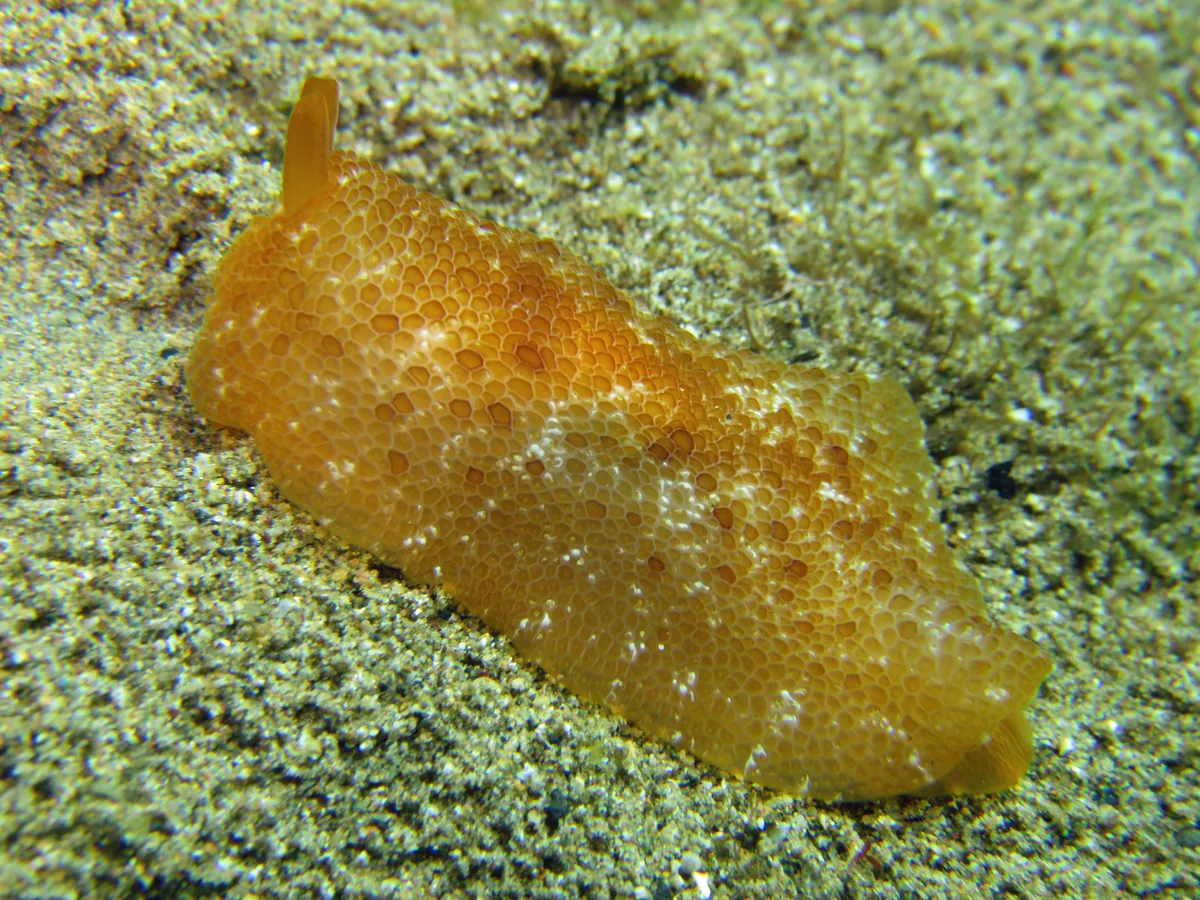
Order: Pleurobranchoida
Closely related to nudibranchs. Some are very large and they are mostly seen on night dives. The gill is often visible on the right side of the body.
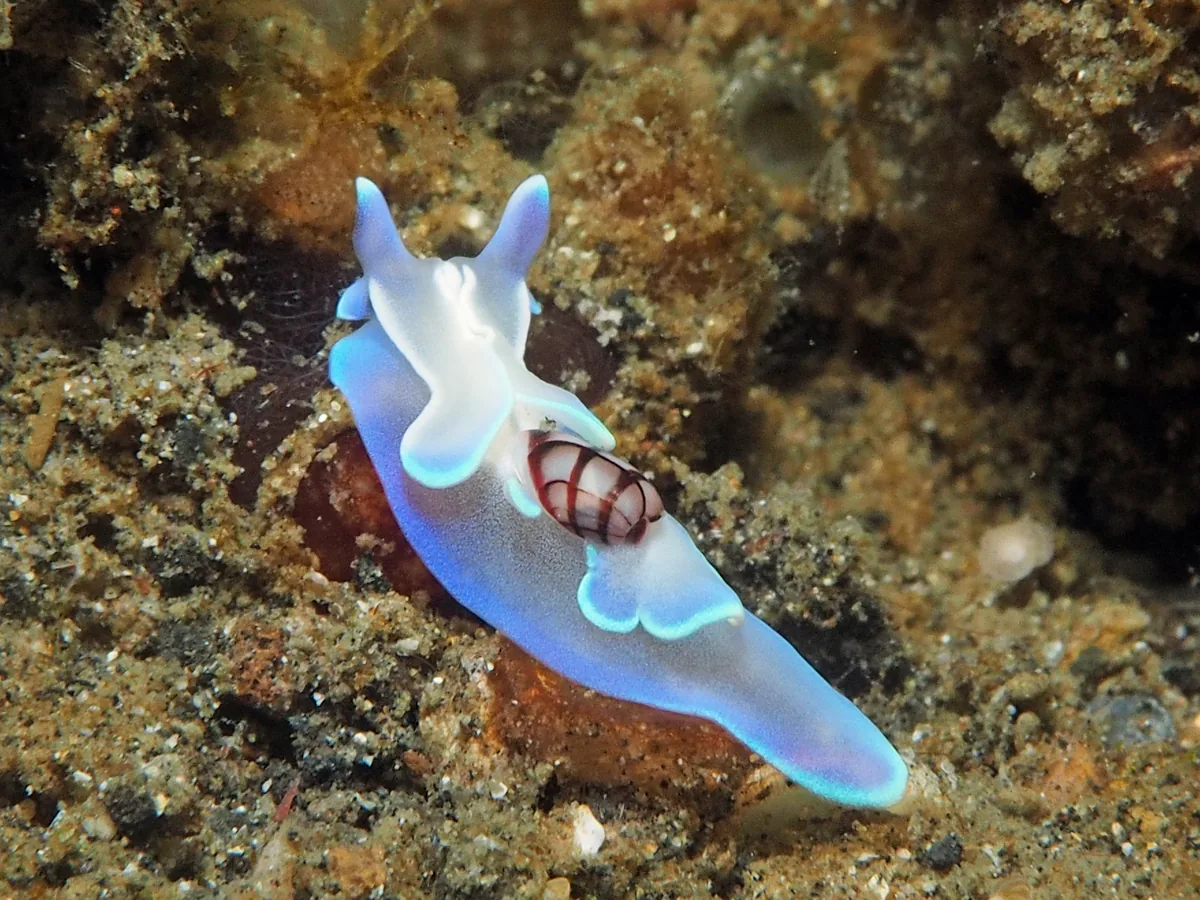
Order: Basal shelled sea slugs
Seen occasionally. Previously called cephalaspideans. Micromelo is the animal in this group with the widest circulation and is therefore the one divers are most likely to see.
Reference categories
These are valid database categories where MacroDivers does not currently have its own photo examples.
Order: Umbraculoidea
Umbrella shells have a gill on the right side of the body and an external shell. They are most often seen on night dives.
MacroDivers photo neededOrder: Pteropoda
Pteropods are pelagic sea slugs found in the water column. They may occasionally be seen on blackwater dives.
MacroDivers photo neededOrder: Runcinida
Runcinida are a very small group of tiny slugs with an internal shell. Very few species are found in the Indo-Pacific region.
MacroDivers photo neededOrder: Acochlidia
Acochlidia occur in the Indo-Pacific region, but at less than 1 mm and living between grains of sand, divers are unlikely to find one.
MacroDivers photo neededUse this table as the controlled list of Order and Type values for the MacroDivers database.
| Order | Type | Photo status |
|---|---|---|
| Nudibranchia - Doridoidea | Planerobranchia | MacroDivers photo |
| Nudibranchia - Doridoidea | Cryptobranchia | MacroDivers photo |
| Nudibranchia - Doridoidea | Porostomata | MacroDivers photo |
| Nudibranchia - Cladobranchia | Arminina | MacroDivers photo |
| Nudibranchia - Cladobranchia | Dendronotina | MacroDivers photo |
| Nudibranchia - Cladobranchia | Aeolidina | MacroDivers photo |
| Cephalaspidea | Head-shield slugs | MacroDivers photo |
| Anaspidea | Sea Hares | MacroDivers photo |
| Sacoglossa | Sap-sucking slugs | MacroDivers photo |
| Pleurobranchoida | Side-gill slugs | MacroDivers photo |
| Basal shelled sea slugs | Basal shelled sea slugs | MacroDivers photo |
| Umbraculoidea | Umbrella Shells | MacroDivers photo needed |
| Pteropoda | Pteropoda | MacroDivers photo needed |
| Runcinida | Runcinida | MacroDivers photo needed |
| Acochlidia | Acochlidia | MacroDivers photo needed |
| Unknown | Unknown | Not applicable |
No. Nudibranchs are one group of sea slugs, but not all sea slugs are nudibranchs. Sea hares, sap-sucking slugs, head-shield slugs, side-gill slugs and umbrella shells are also sea slugs, but they belong to different groups.
Order is the broad group used in the database. Type is the more specific category beneath that Order. For example, Nudibranchia - Doridoidea is the Order, while Cryptobranchia is the Type.
The aim is to make the database useful for divers and underwater photographers. Some categories are formal scientific groupings, while others are diver-friendly labels that make identification and searching easier.
MacroDivers prefers to use its own underwater photographs wherever possible. Some groups are rare, tiny, pelagic, nocturnal or difficult to photograph, so we do not yet have suitable examples for every category.
Unknown is used when the Order or Type is uncertain. It is better to mark a record as Unknown than to guess and place a sea slug into the wrong category.
Useful features include body shape, gill position, rhinophore shape, cerata, mantle shape, shell presence, behaviour and habitat. Colour can help, but it is often not enough on its own.
Yes. Dorids and cladobranchs are the two major nudibranch groups used on this page. Dorids often have a circle of gills around the anus, while cladobranchs include aeolids, dendronotids and arminids.
Yes. The MacroDivers database is designed to improve over time. If a better category structure is needed, records can be reviewed and updated, but consistency is important so searches and filters continue to work properly.
Start with body shape, gill position, rhinophores, cerata, mantle shape and behaviour. These features are often more useful than colour alone.