Recognise it
Symptoms can include unusual fatigue, joint or muscle pain, tingling, numbness, dizziness, headache, skin rash or marbling, breathing difficulty and confusion.
Know the signs. Reduce the risk. Act fast.
Decompression sickness can affect any diver. Symptoms may appear soon after a dive or within the following 24 hours, and early recognition matters. Not every symptom is dramatic. Fatigue, unusual pain, tingling, dizziness, skin changes or shortness of breath after diving should always be taken seriously.
This page is for diver education and awareness. It does not replace professional medical advice, emergency services, DAN guidance or formal first aid training. If you suspect DCS, stop diving and seek appropriate medical help promptly.
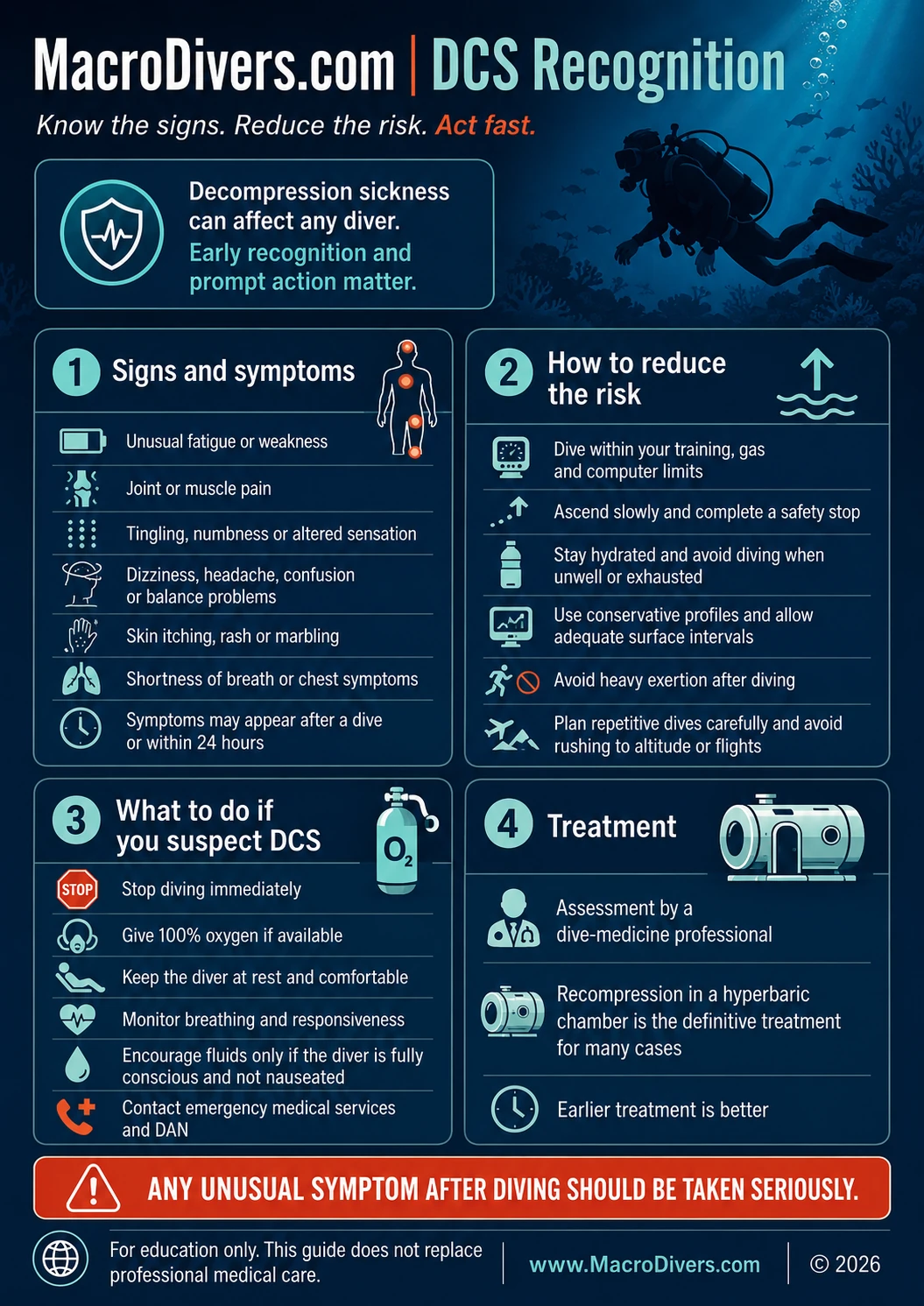
Early recognition and prompt action are far more important than trying to guess whether symptoms are minor.
Symptoms can include unusual fatigue, joint or muscle pain, tingling, numbness, dizziness, headache, skin rash or marbling, breathing difficulty and confusion.
Dive within your training and computer limits, ascend slowly, complete an appropriate safety stop, stay hydrated and avoid unnecessary exertion after diving.
Stop diving, give 100 percent oxygen if available, keep the diver at rest, monitor breathing and responsiveness, and encourage fluids only if the diver is fully conscious.
Any unusual symptom after diving should be taken seriously. Contact local emergency medical services and DAN or an appropriate diving medical advice service as soon as possible.
Recompression in a hyperbaric chamber may be the definitive treatment for many cases, and earlier treatment is generally better. Do not wait for symptoms to become severe before seeking advice.
If you or your buddy experience any unusual symptoms after diving, seek urgent medical attention.
Possible signs include unusual joint or limb pain, tingling, numbness, weakness, dizziness, skin changes, unusual fatigue, breathing difficulty, confusion or problems with balance. Symptoms can vary, so treat anything unusual after diving seriously.
Yes. Symptoms may appear shortly after a dive or develop later. Divers should remain alert for unusual symptoms after diving, especially after repetitive, deep, cold, strenuous or decompression-stress dives.
Stop diving, keep the diver safe and resting, activate local emergency procedures, seek urgent medical advice and contact an appropriate diving medical service such as DAN where available.
If trained and it is available, high-concentration oxygen is generally recommended as first aid for suspected decompression illness while emergency medical help is arranged.
Emergency help should be called immediately if a diver has neurological symptoms, breathing difficulty, severe pain, weakness, collapse, confusion, worsening symptoms or any worrying symptom after diving.
Good planning can reduce risk, but it cannot remove it completely. Conservative profiles, slow ascents, safety stops, hydration, warmth, fitness, rest and staying within training and computer limits all help.
Return to the Diving Skills & Safety section to explore other practical safety and first response guides for divers.
Return to Diving Skills & Safety