Diving Skills & Safety

Dive Emergency Action Plan

A practical checklist-style guide to help divers think clearly before an emergency happens.

Why an emergency action plan matters

A good dive emergency action plan is not a document for a folder. It is a simple, usable plan that helps real people act quickly when stress, weather, distance and uncertainty are all working against them.

The best plans are short enough to use, specific to the site and checked before the first dive. For travelling underwater photographers, the plan should cover both the dive operation and the practical reality of cameras, boats, shore entries and remote locations.

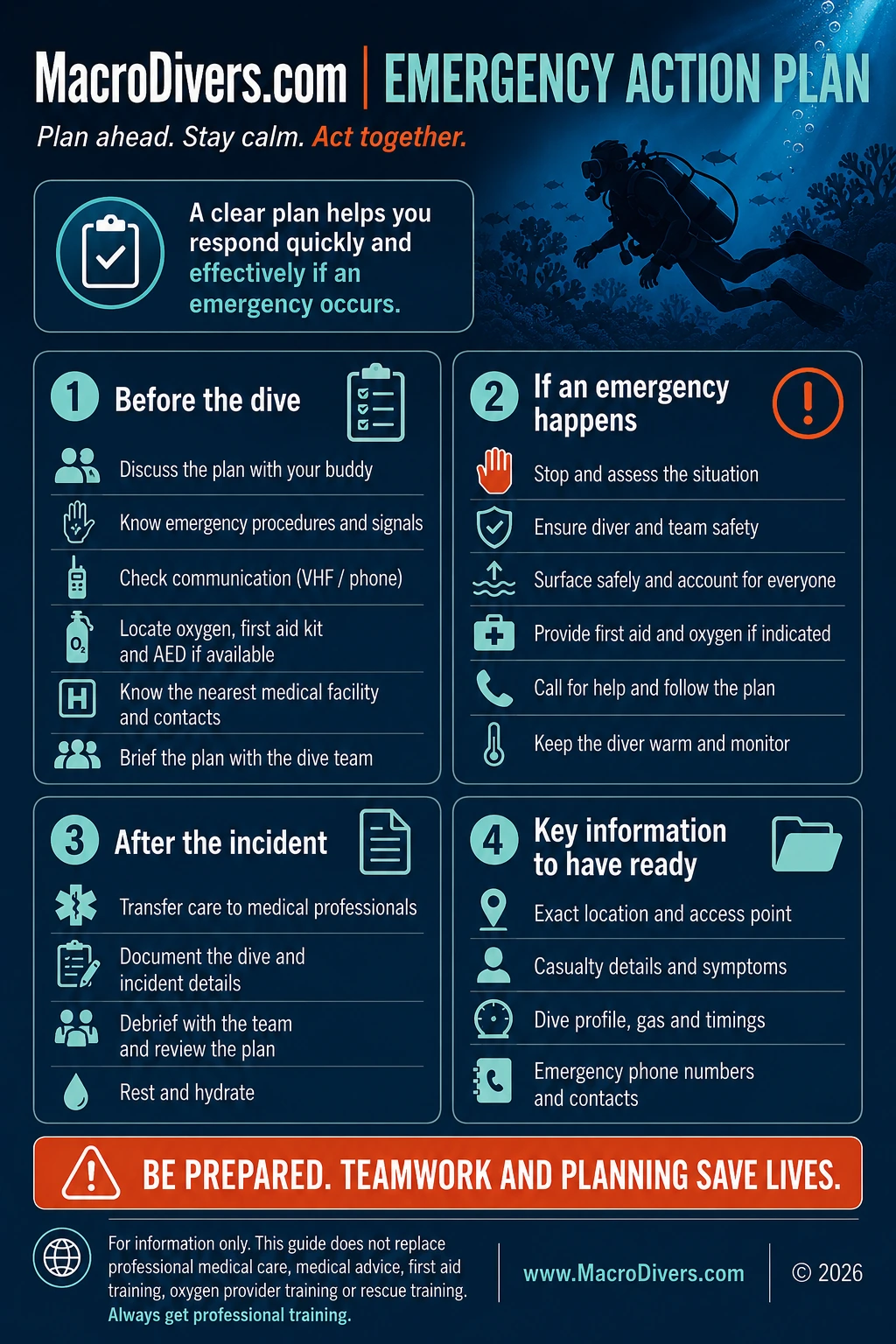
MacroDivers.com Dive Emergency Action Plan infographic showing before the dive planning, actions during an emergency, after the incident and key information to have ready.

What to check before diving

These are the questions worth asking before the incident happens.

Emergency contact route

For a life-threatening emergency, know who contacts local emergency services and the most suitable medical facility first. DAN or another diving-medical service can then support the response as appropriate. Check phone, radio or satellite options.

Oxygen and first aid

Confirm where the oxygen kit and first aid kit are kept, who is trained to use them and whether the cylinder is full. See our Oxygen First Aid for Divers guide for more on emergency oxygen provision.

Evacuation route

Know the fastest realistic route from the dive site to shore, clinic, hospital, airport or chamber pathway.

Role allocation

Allocate leadership, communications, casualty monitoring and information gathering to the people available. On a small team, one person may need to cover more than one role.

Information capture

Record times, depths, gases, ascent details, symptoms, oxygen use, fluid intake, medical history and medications if known.

Group control

Stop further diving, account for everyone, manage equipment and keep non-essential people away from the casualty area.

A simple handover structure

When help arrives, give a short structured handover: who the casualty is, what happened, when symptoms started, what first aid has been given, current condition, relevant dive profiles and any known medical issues or medication.

For dive travel, keep local emergency numbers and the resort or boat procedure available offline. Store only the emergency and insurance information the response may genuinely require, and protect it with appropriate device security. Do not create unnecessary photographs of passport or other identity details.

Build the plan alongside Decompression Sickness Symptoms, Diving Medical Red Flags and the Dive First Aid Kit guide.