Use a personal stop/go check
Before every dive, ask whether you are rested, hydrated, clear-headed, comfortable with the plan and able to equalise normally.
Diving Skills & Safety
A simple pre-dive self-check for travel divers, photographers and anyone unsure whether today is a good day to dive.
Diving is meant to be enjoyable, but travel, poor sleep, dehydration, congestion, stress, alcohol, medication changes and minor illness can all reduce a diver's margin for error.
This page is not a medical clearance tool. It is a practical awareness guide to help divers pause, reassess and seek professional advice where appropriate before getting in the water.
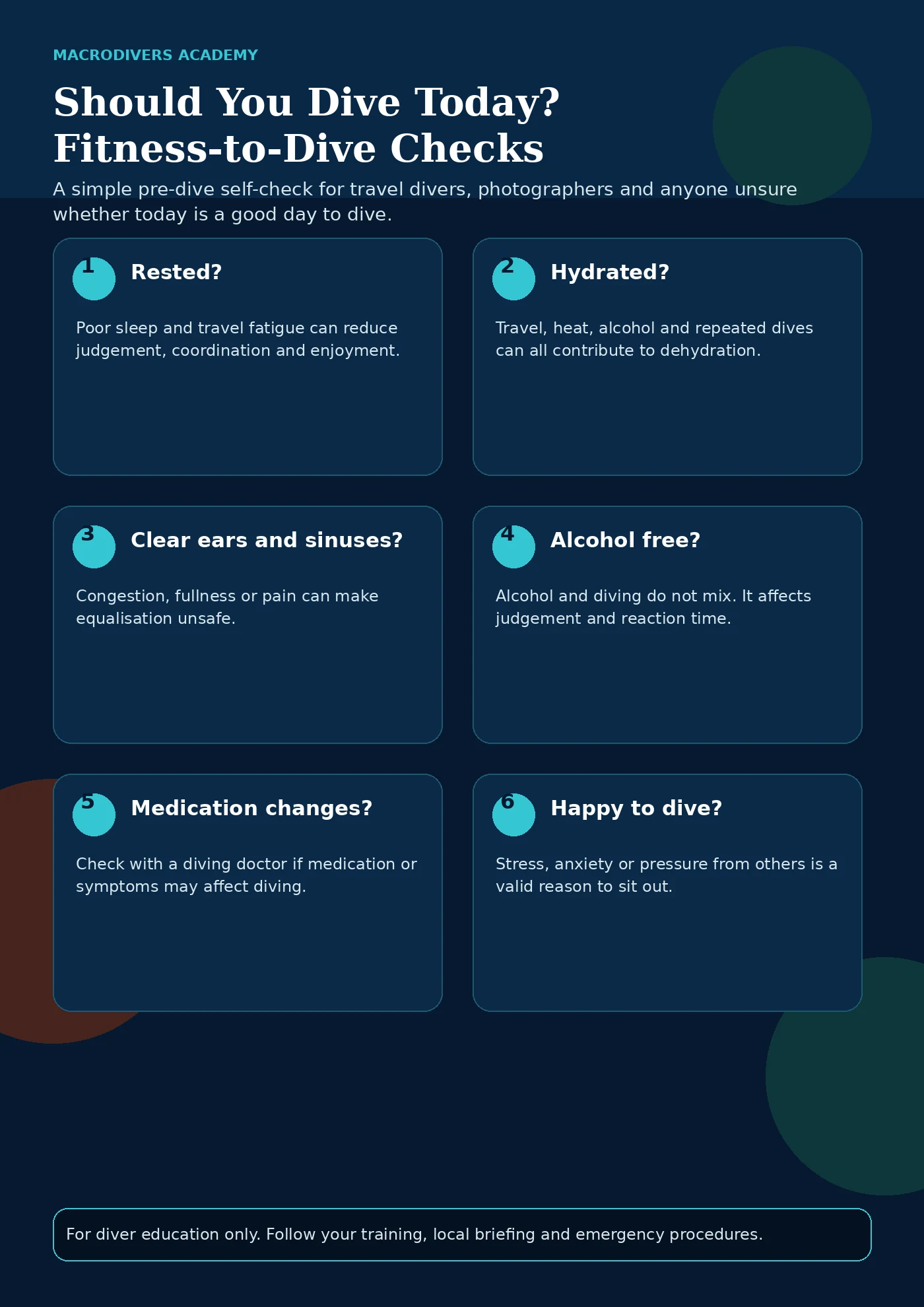
Practical reminders to discuss before the dive and apply within your training and local briefing.
Before every dive, ask whether you are rested, hydrated, clear-headed, comfortable with the plan and able to equalise normally.
Long flights, heat, dehydration, time-zone changes and busy itineraries can make the first dive feel harder than expected.
A paid dive, rare subject or group expectation is never a good reason to ignore symptoms or discomfort.
Chest symptoms, neurological symptoms, ear or sinus pain, medication concerns, recent illness or unusual post-dive symptoms need proper medical advice.
This guide does not replace a diving medical, GP advice, a diving doctor, DAN, local emergency services or the judgement of a qualified instructor or dive professional.
This guide is for general diver education and does not replace formal training, medical advice or the guidance of your instructor, dive centre, emergency services or a diving doctor.
If fatigue affects concentration, coordination or comfort, it may be better to rest. Travel fatigue can reduce awareness and enjoyment, especially on the first dive of a trip.
Significant dehydration is a concern. Rehydrate, rest and consider skipping or delaying the dive if you feel unwell, dizzy, headachy or unusually tired.
Alcohol and diving are not compatible. Alcohol can impair judgement, reaction time and coordination, and it can contribute to dehydration.
Diving with congestion can make equalisation difficult and increase the risk of ear or sinus barotrauma. Do not dive if you cannot equalise comfortably.
Some medicines or the conditions they treat may affect diving. If in doubt, seek advice from a doctor with diving medicine knowledge before diving.
Yes. Personal fitness and comfort matter. Any diver can call a dive for any reason before or during the dive.
Return to the Diving Skills & Safety section to explore other practical safety and first response guides for divers.
Return to Diving Skills & Safety