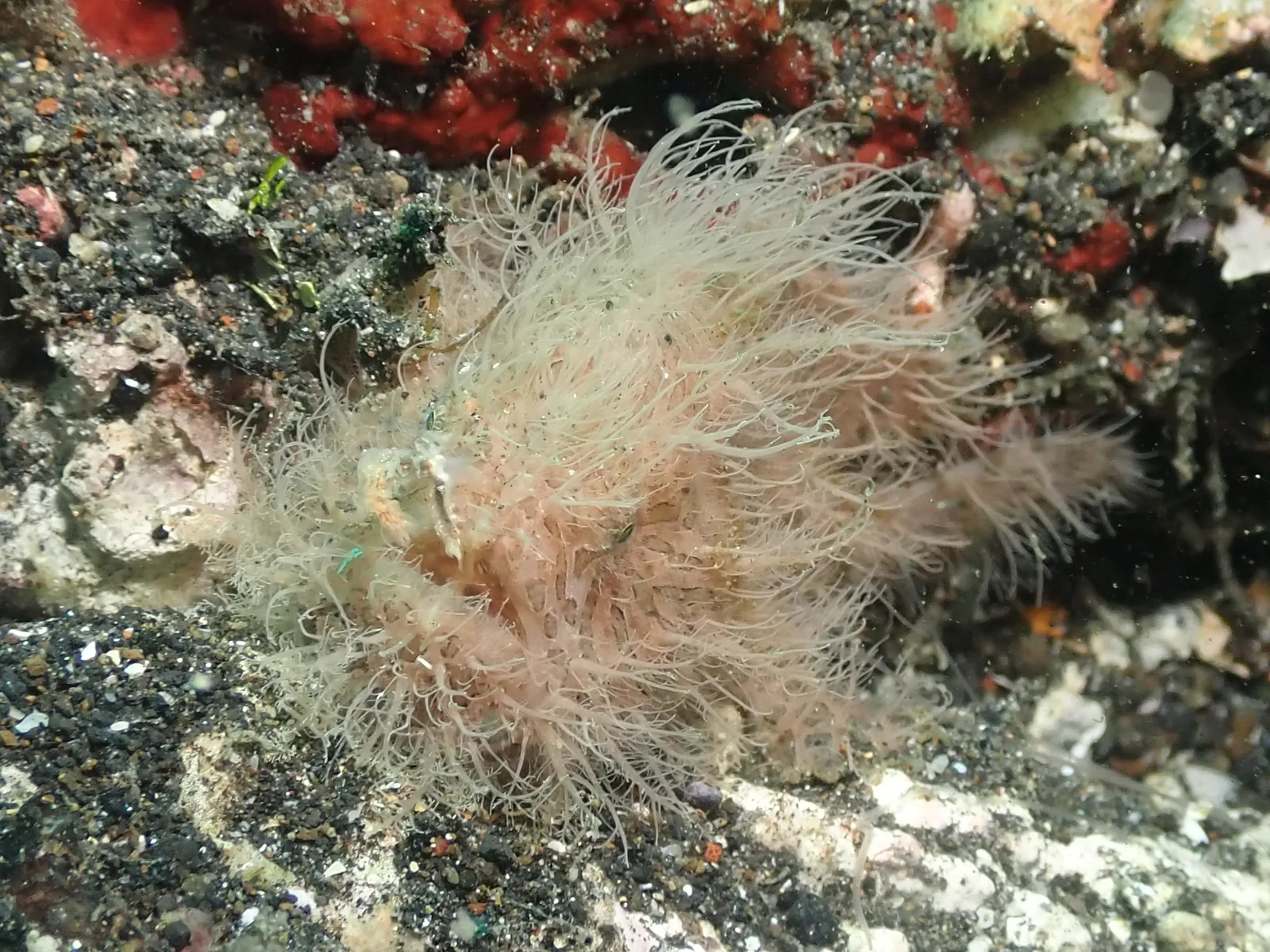
Frogfish
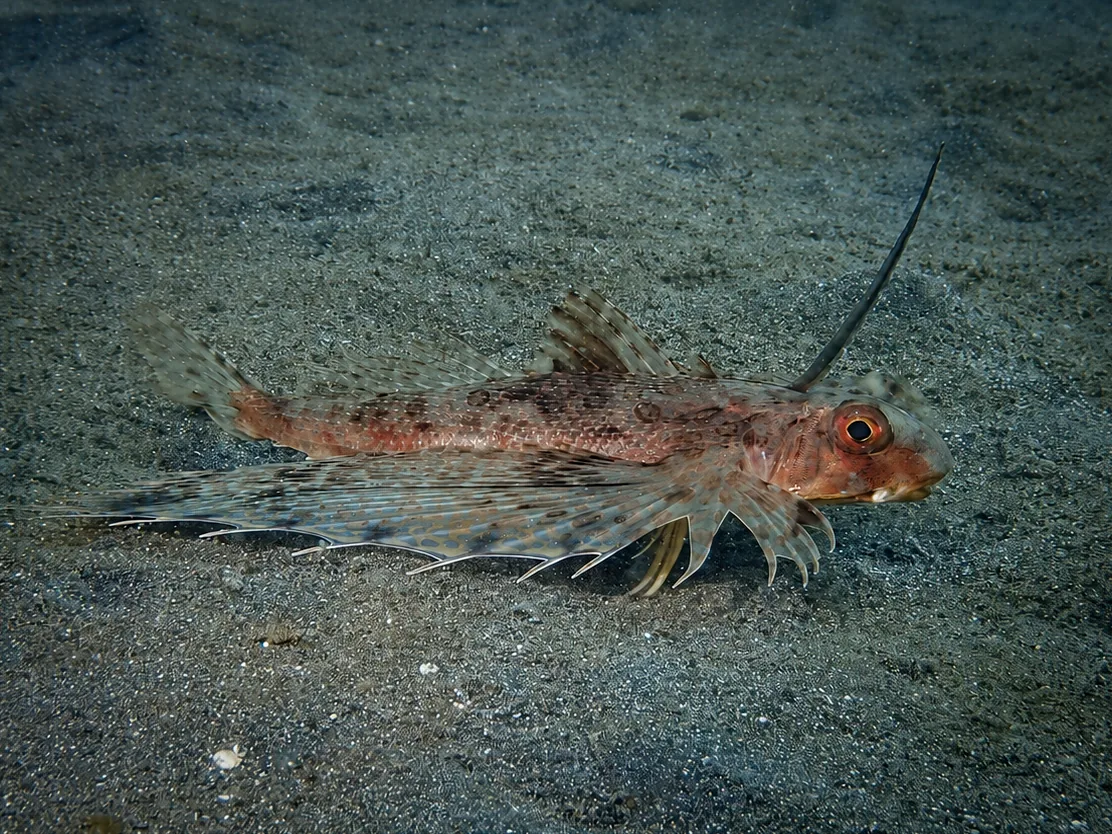
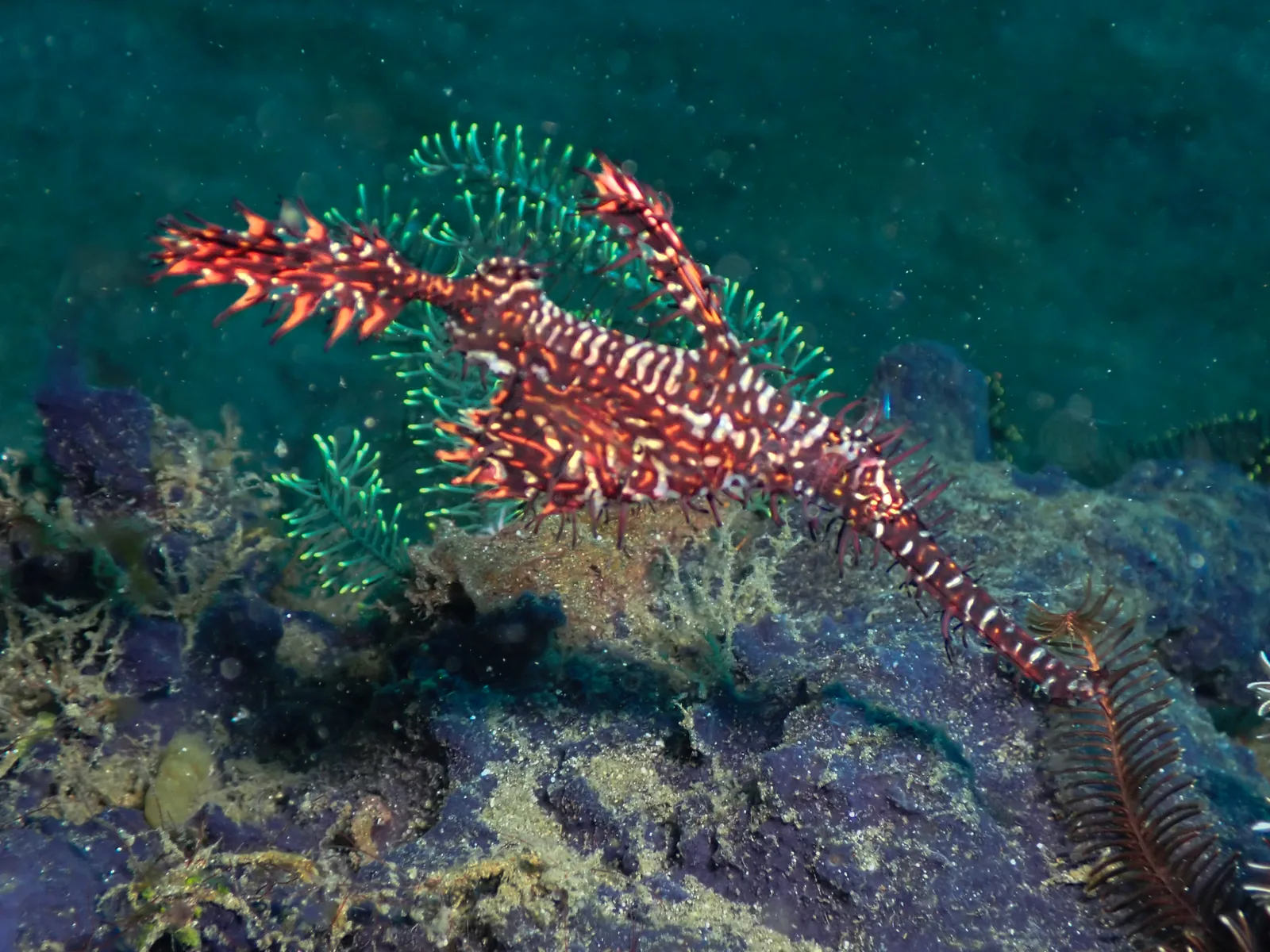
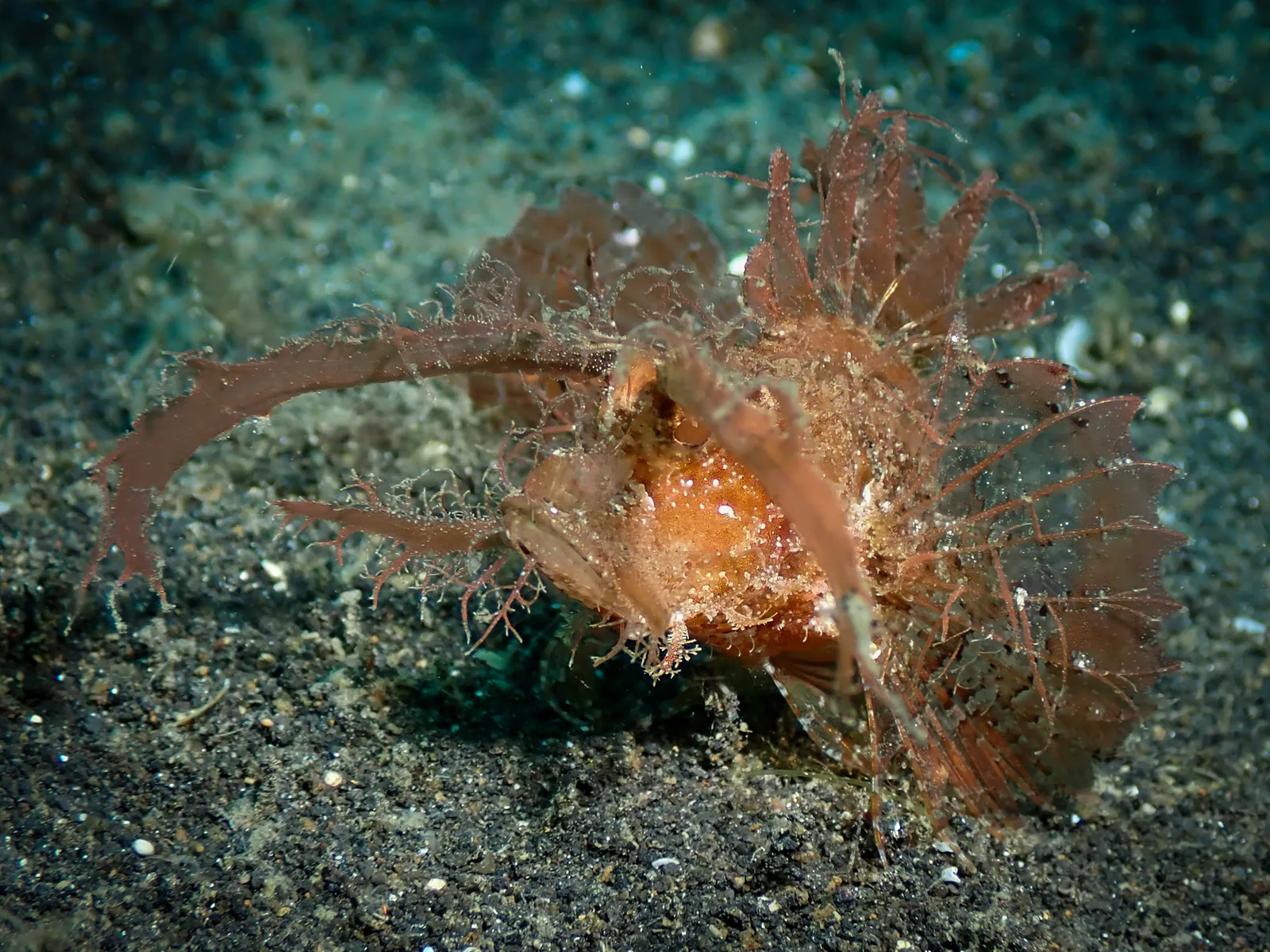
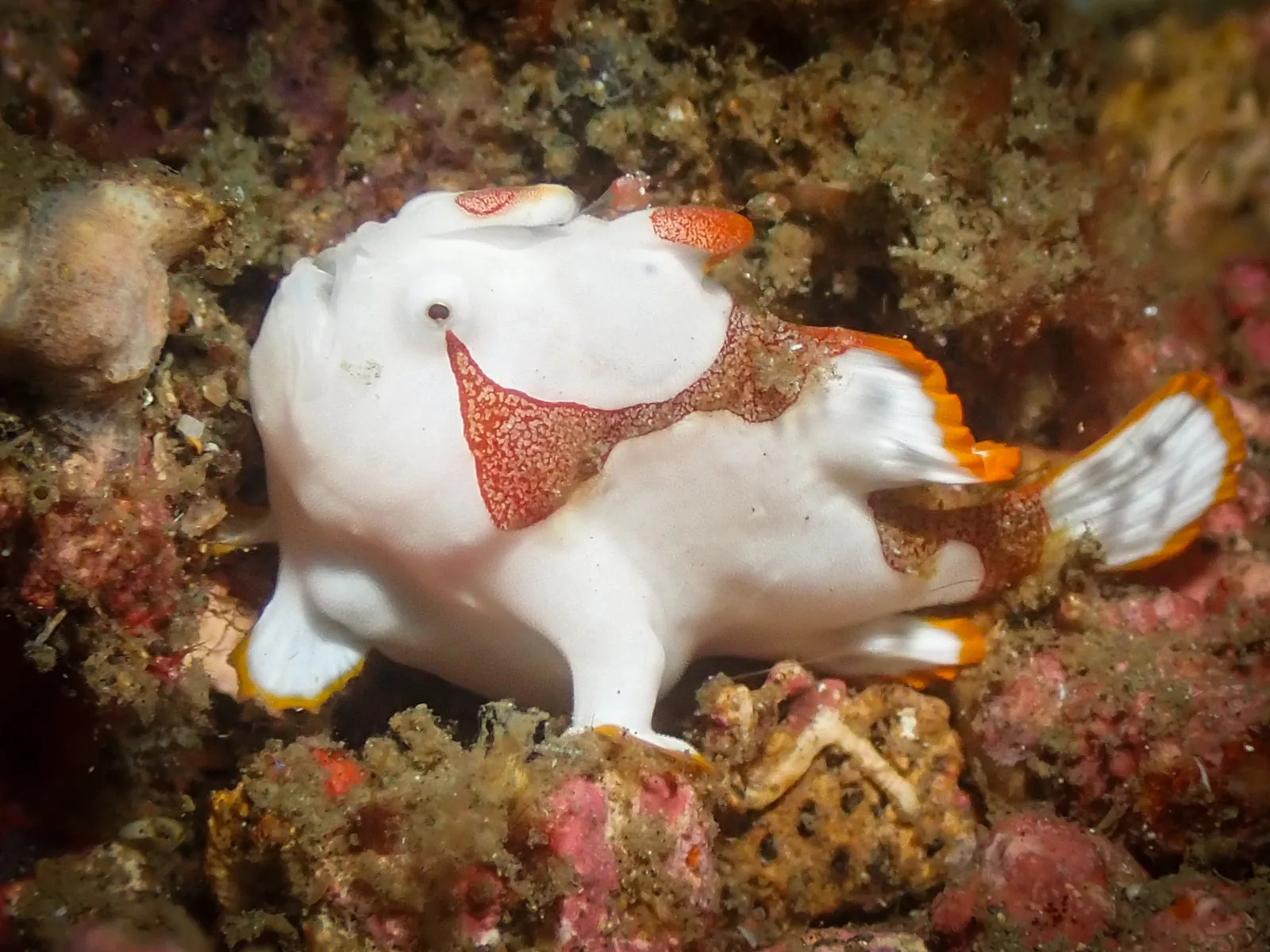
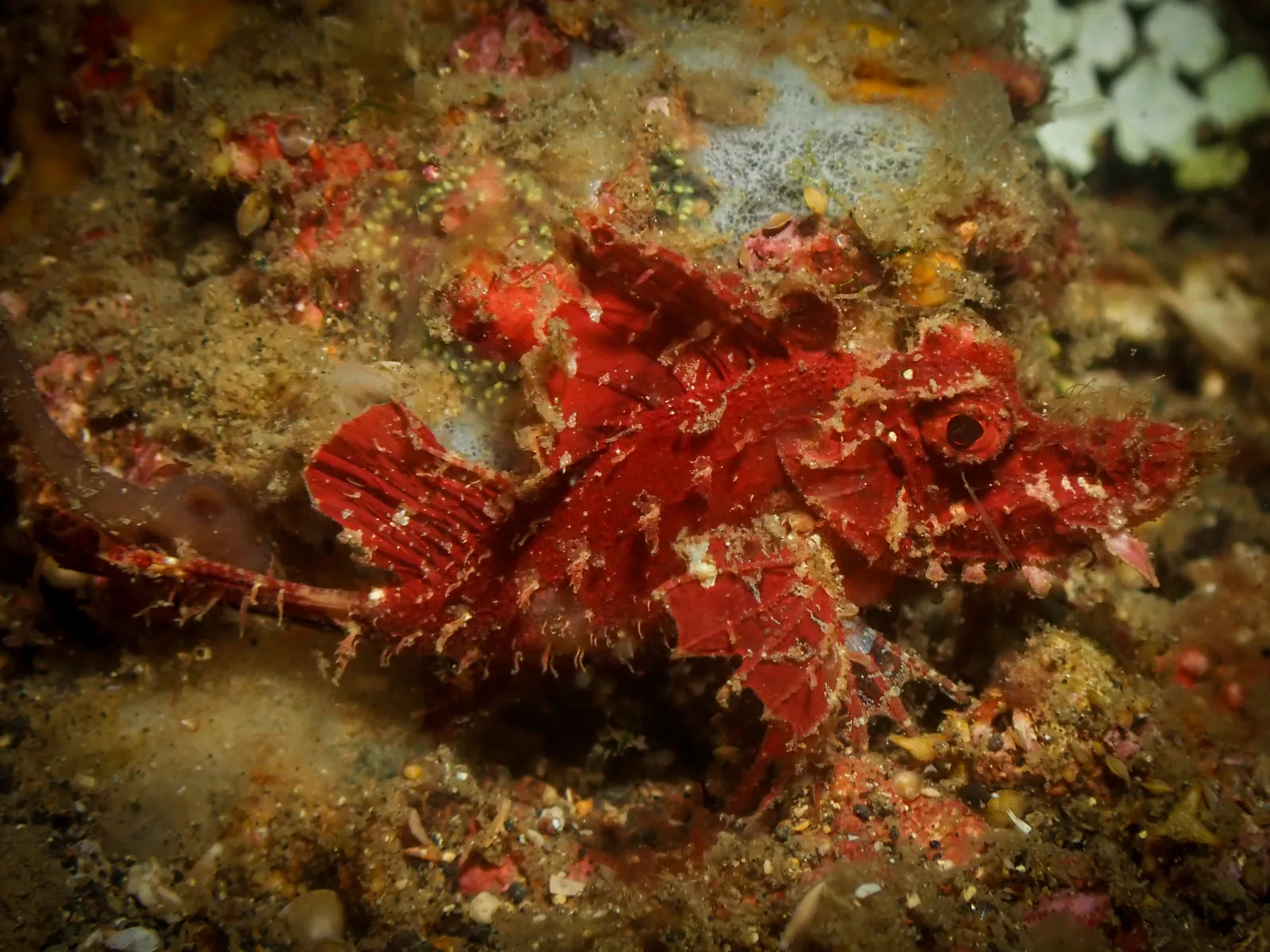
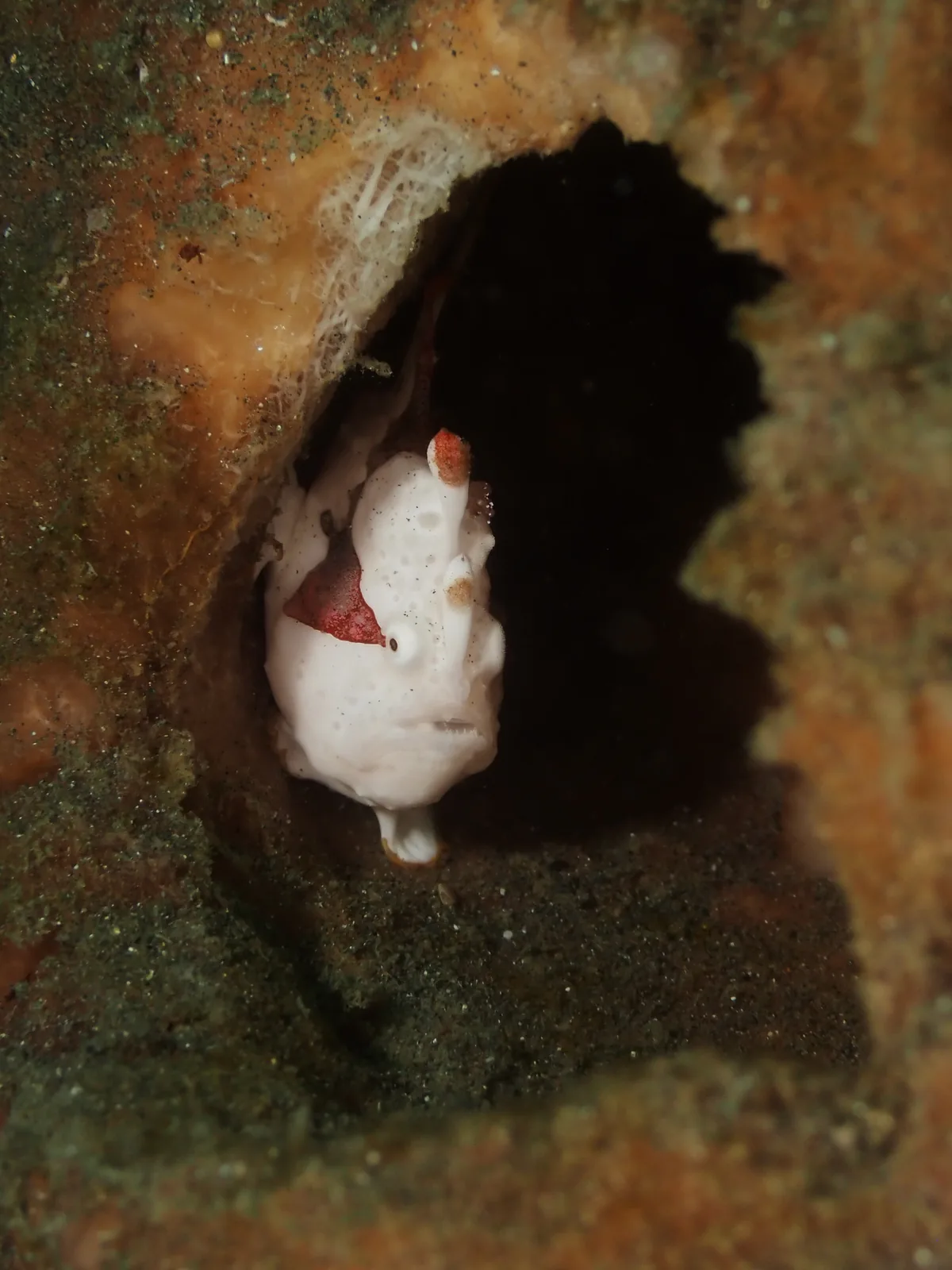
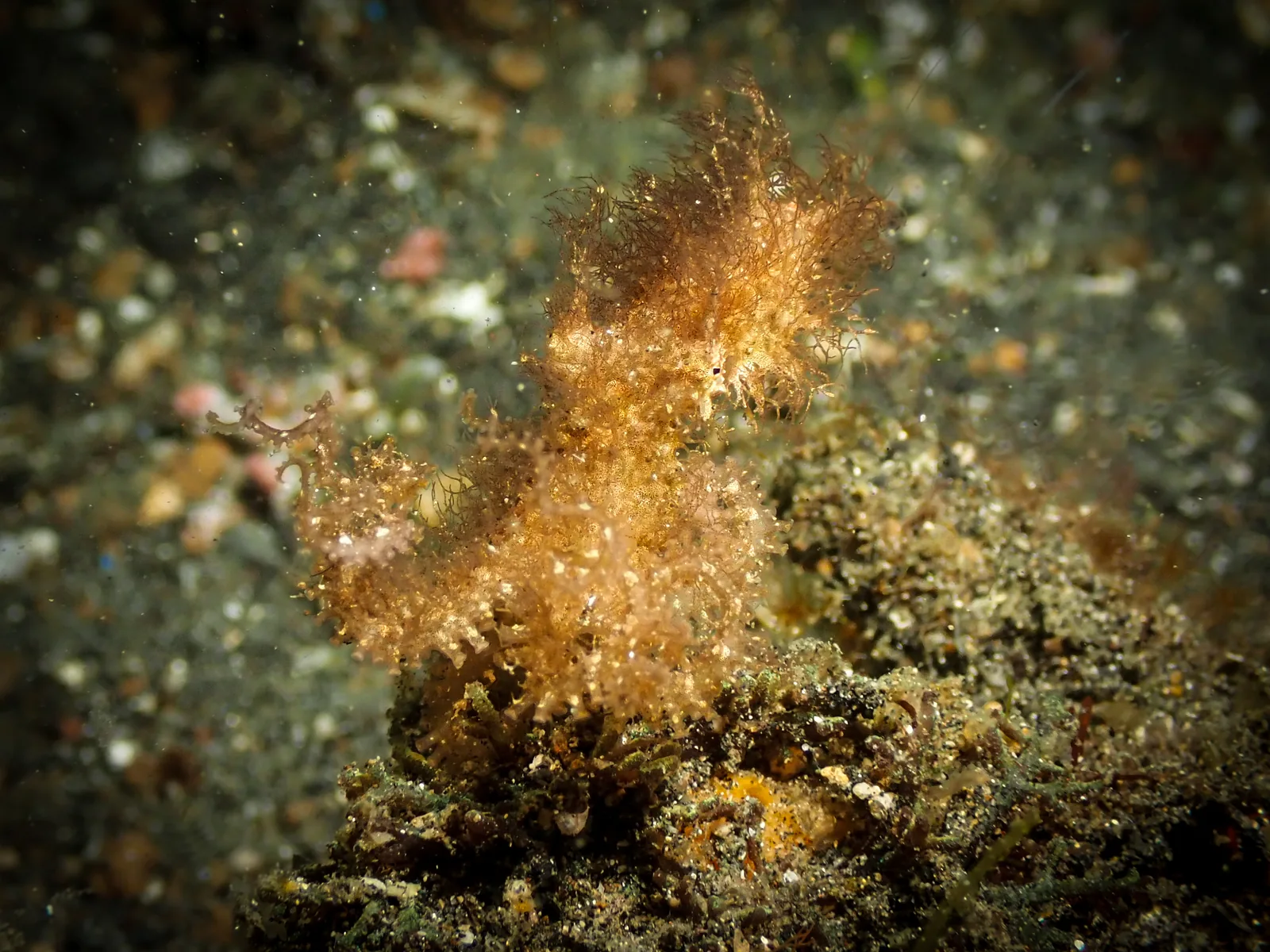
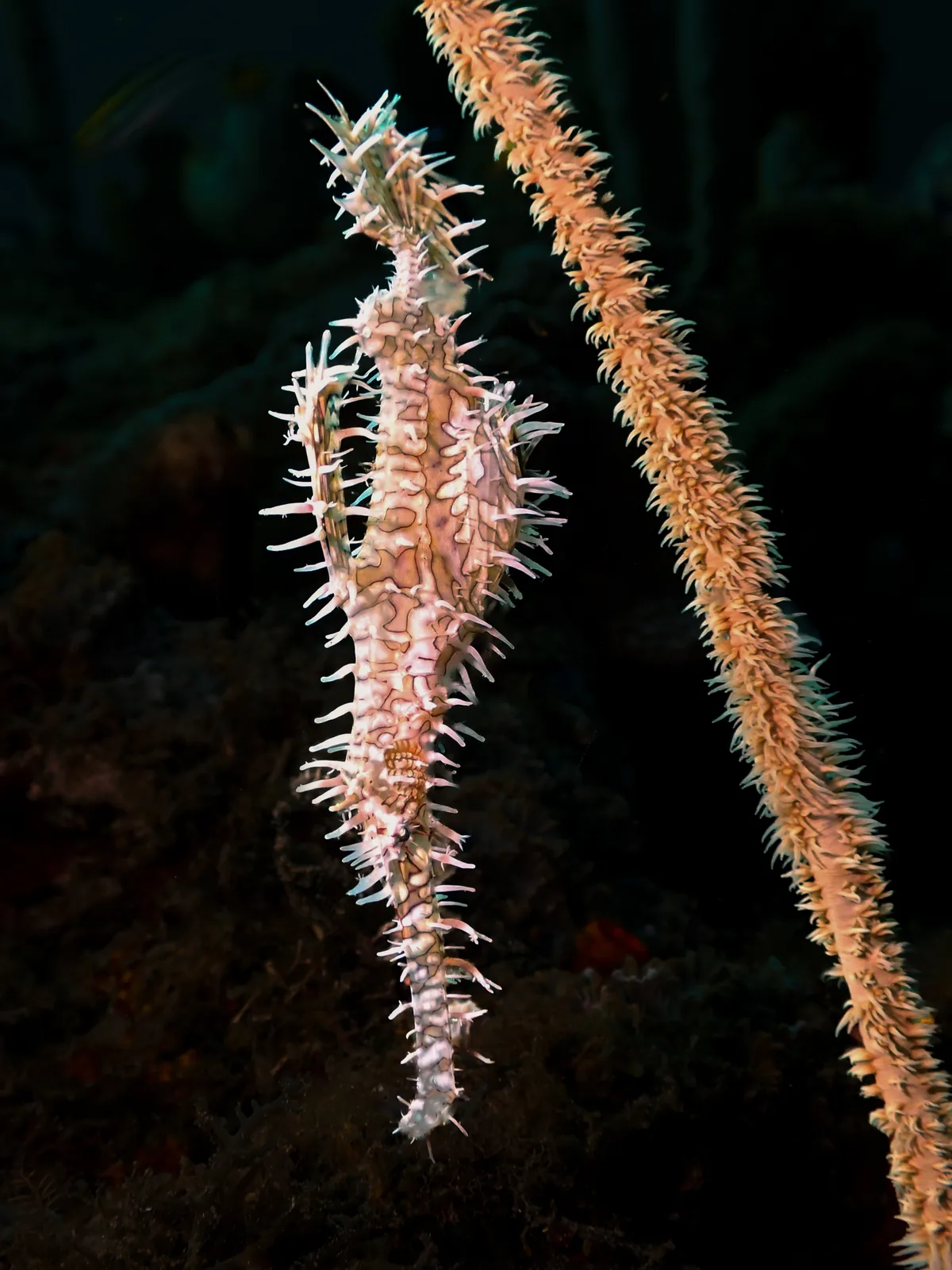
From warty frogfish to the unmistakable hairy frogfish, Lembeh repeatedly delivered the sort of cryptic subjects that can be invisible until a guide points them out.
Destination
Three weeks of muck diving, macro photography and extraordinary critter encounters in one of Indonesia's best-known small-subject destinations.
For us, Lembeh was about frogfish, nudibranchs and octopus—especially blue-ringed octopus—alongside the tiny, strange and brilliantly camouflaged animals that reward slow diving and patient photography.
Our Lembeh Journey
We stayed at Dive Into Lembeh for three weeks during August and September 2026 before moving on to Murex Manado for another five nights. The trip was booked through Diverse Travel.
Our route was Gatwick to Istanbul, Jakarta and then Manado. Dive Into Lembeh arranged our paid airport transfer, with a driver waiting for us on arrival. The journey took about an hour: mostly smooth and fairly straight on a modern toll road, with the final 20 minutes on narrower, winding and bumpier local roads.
At the end of the stay, Dive Into Lembeh also arranged our onward transfer to Murex Manado. From arrival to departure, the logistics were straightforward and well organised.
Destination: Lembeh Strait, North Sulawesi, Indonesia
Travelled: August–September 2026
Tour Operator: Diverse Travel
Dive resort: Dive Into Lembeh
Stay: Three weeks at Dive Into Lembeh, then five nights at Murex Manado
Focus: Muck diving and macro photography
Key subjects: Frogfish, nudibranchs and octopus, especially blue-ringed octopus
Camera: Olympus TG-7 with Backscatter MF-2
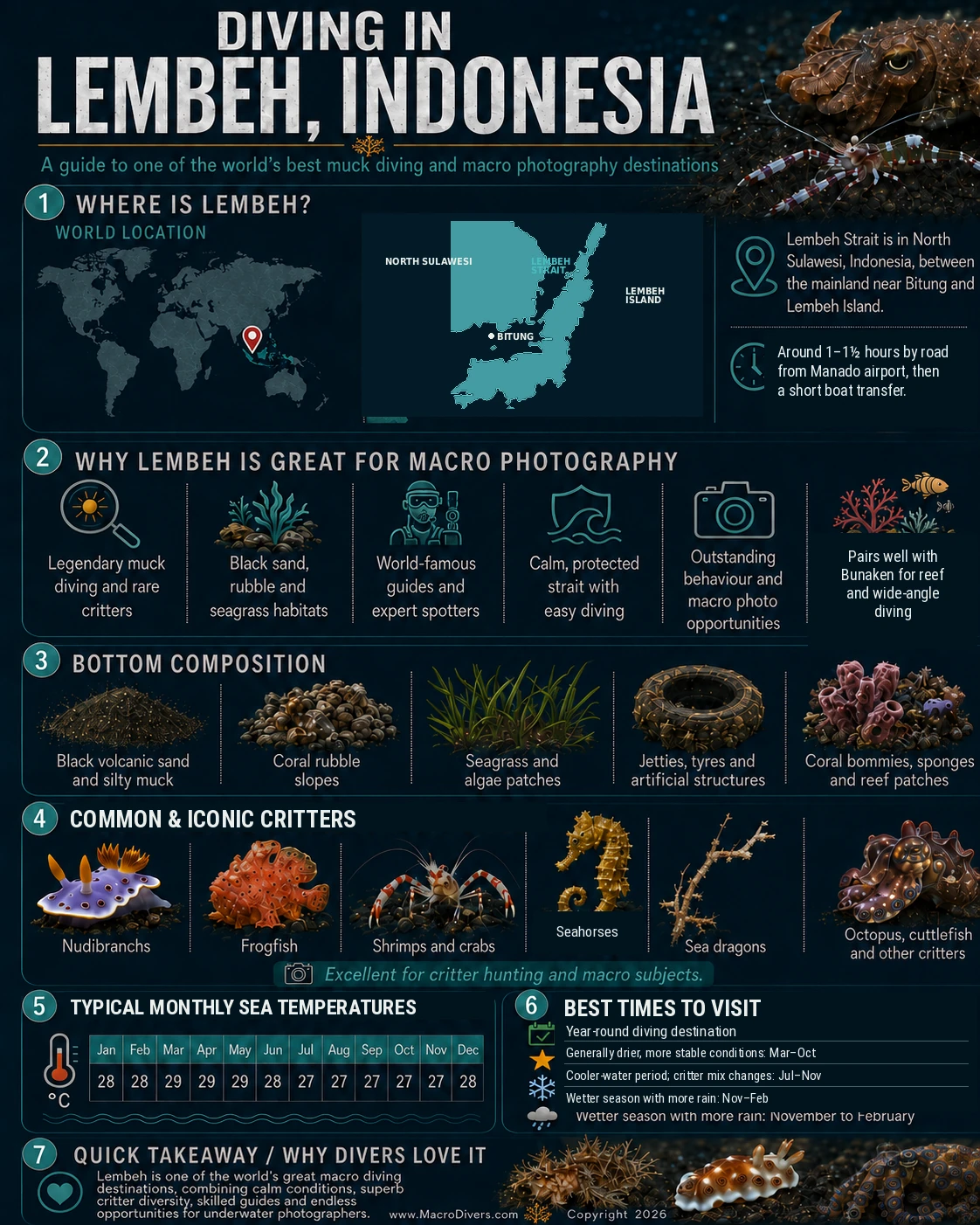
A quick visual guide to Lembeh Strait, the diving style, signature critters, typical water temperatures and the seasonal picture for a macro-focused trip.
Dive base
Dive Into Lembeh gave us a relaxed, well-organised base for three weeks of critter diving, with fast boats, attentive crews and excellent support for underwater photographers.
Accommodation: Private poolside villa with a balcony hot tub / onsen
Diving: Small, fast boats with backward-roll or giant-stride entries
Camera facilities: Dedicated camera room, camera tank and crew handling
Equipment service: Dive kit assembled and carried by resort staff
Lembeh Critters
These three groups defined the trip for us. Lembeh rewards a slow pace, careful buoyancy and guides who know where to look.
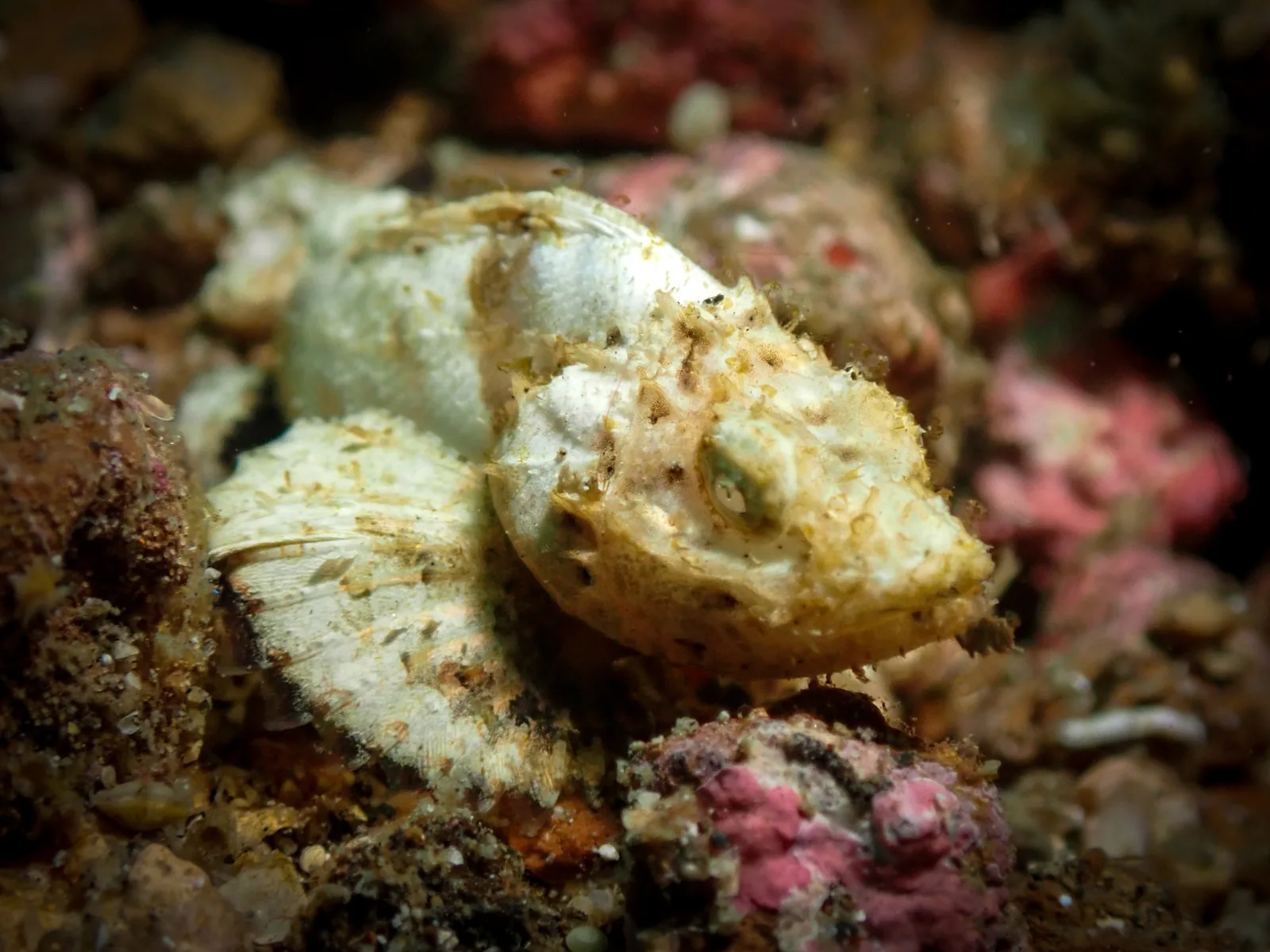
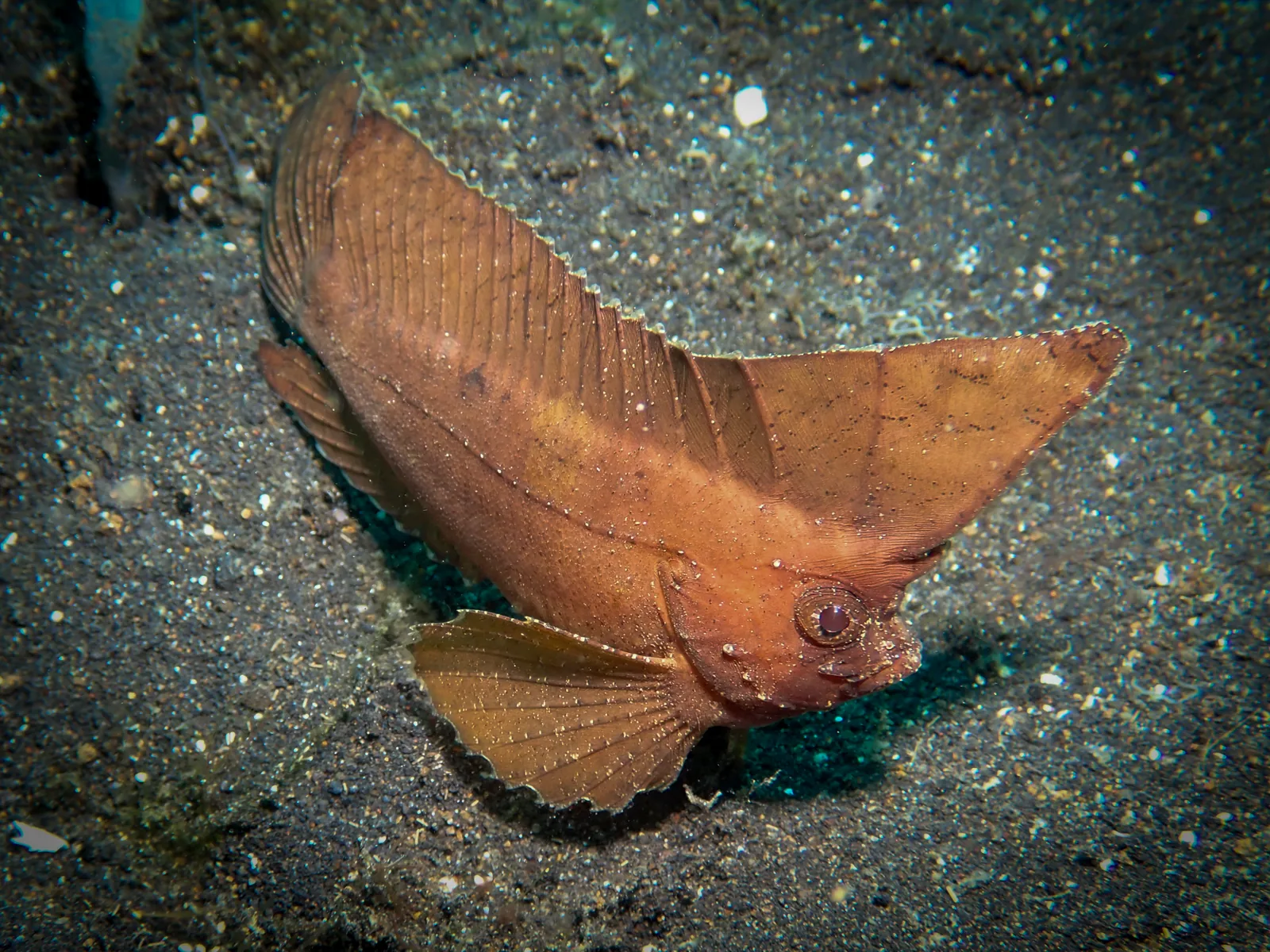
From warty frogfish to the unmistakable hairy frogfish, Lembeh repeatedly delivered the sort of cryptic subjects that can be invisible until a guide points them out.
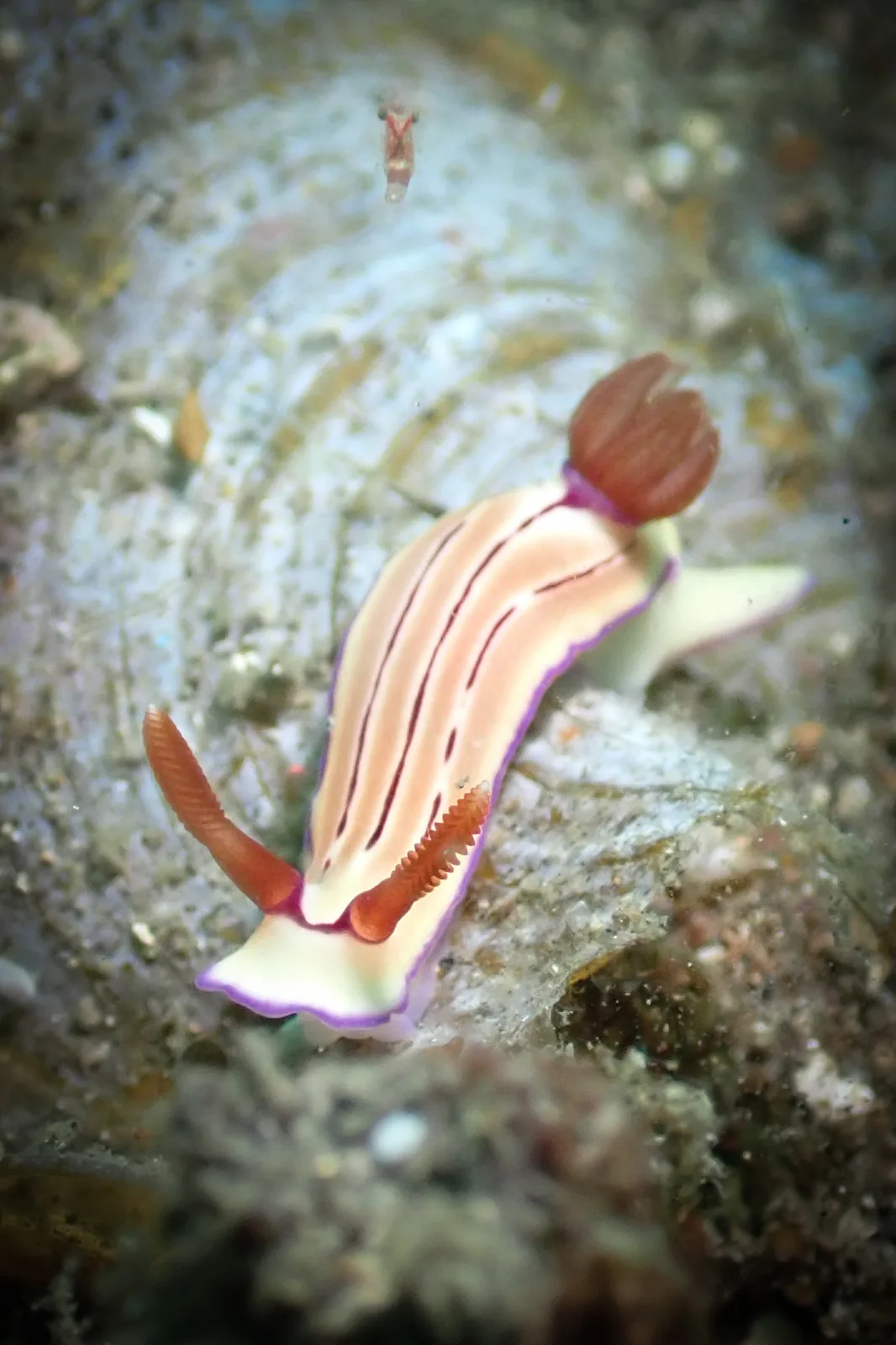
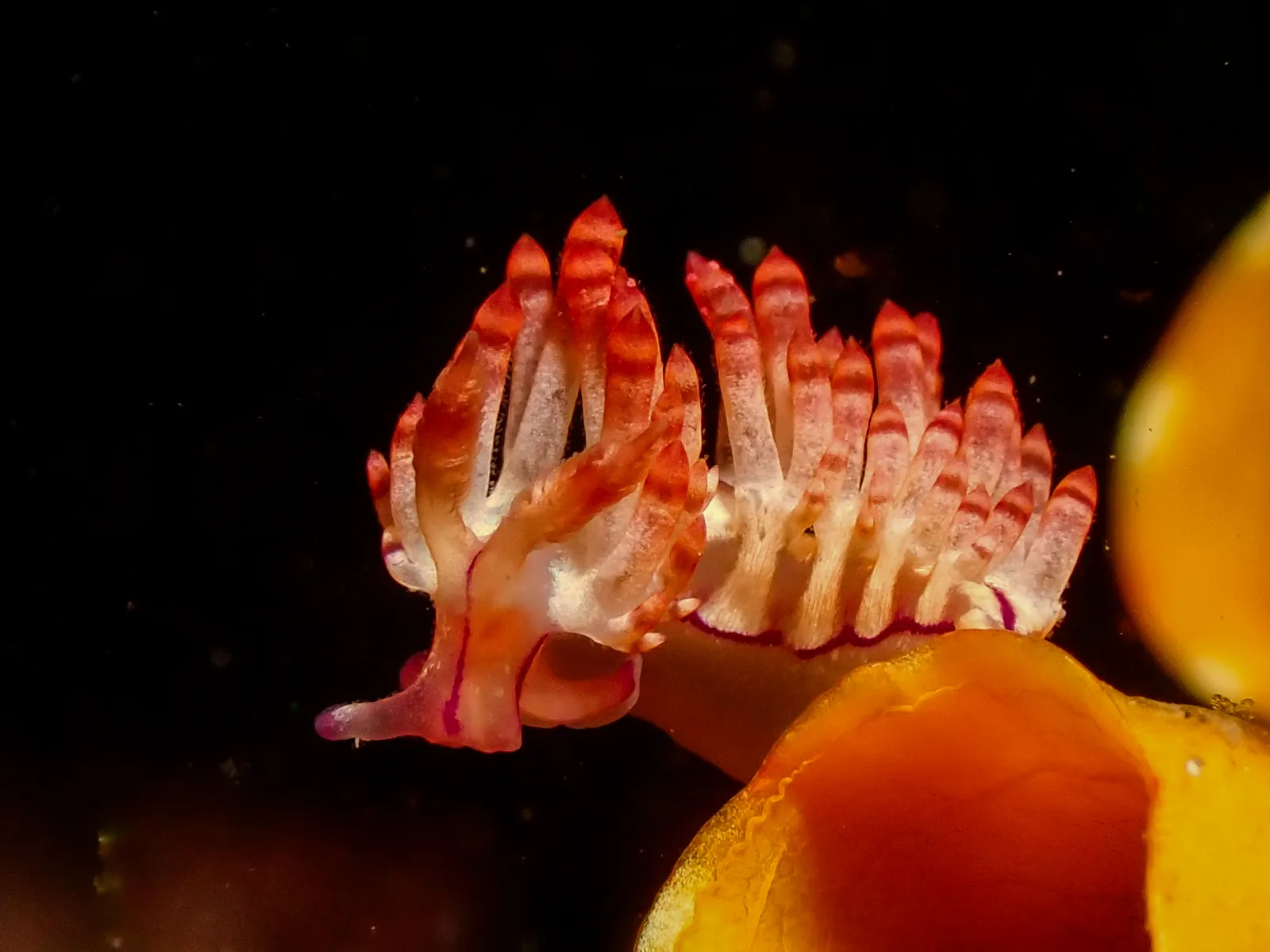
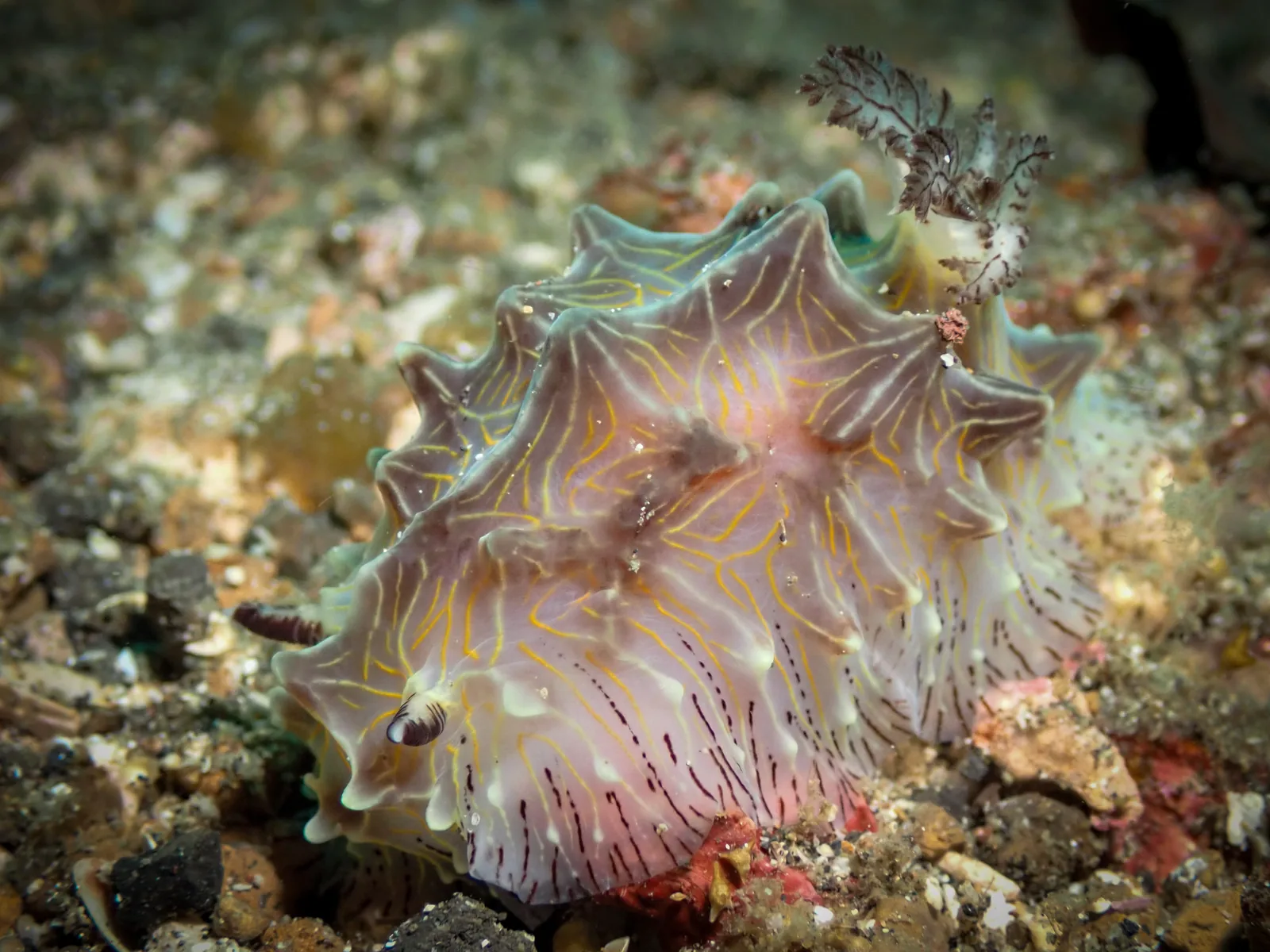
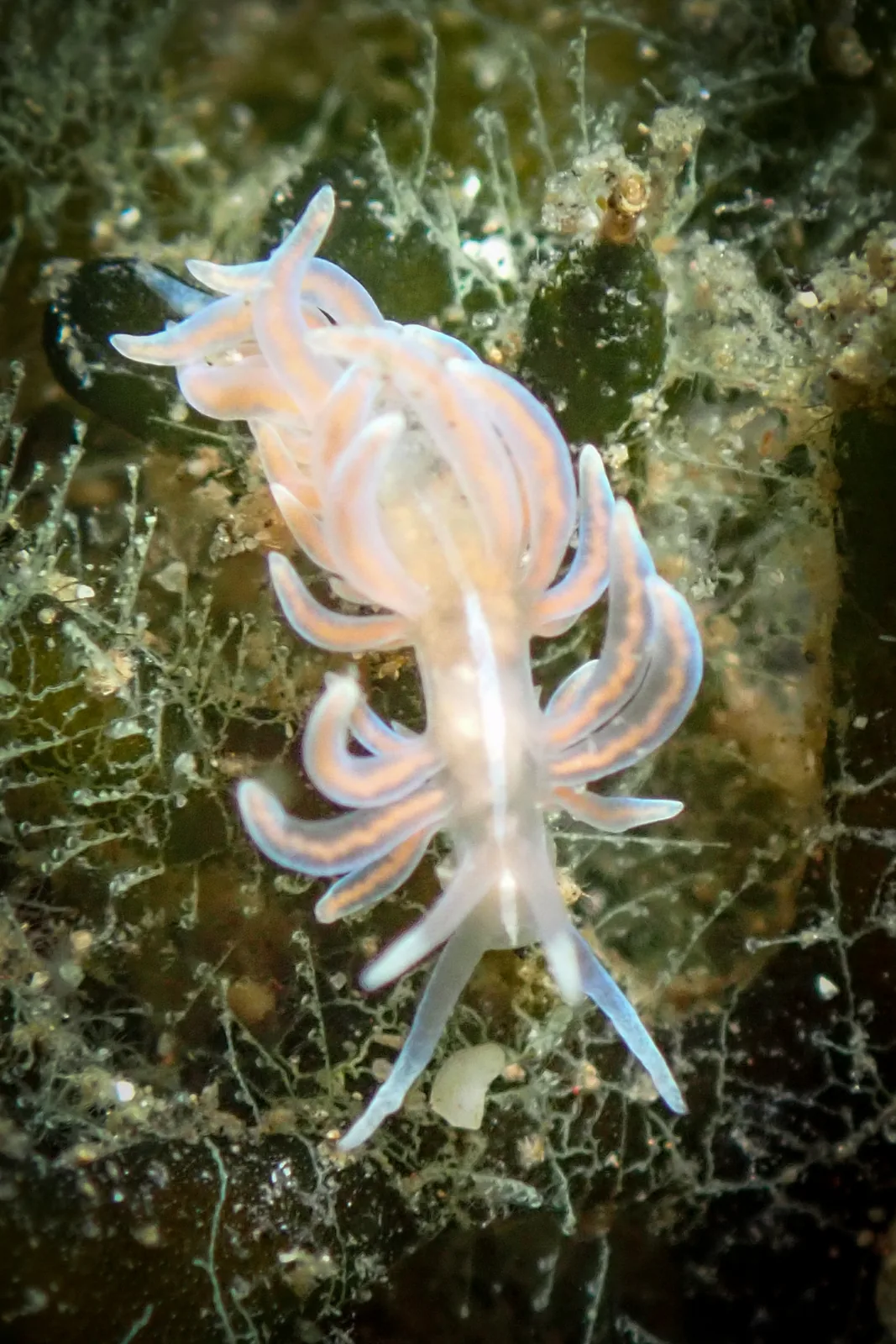
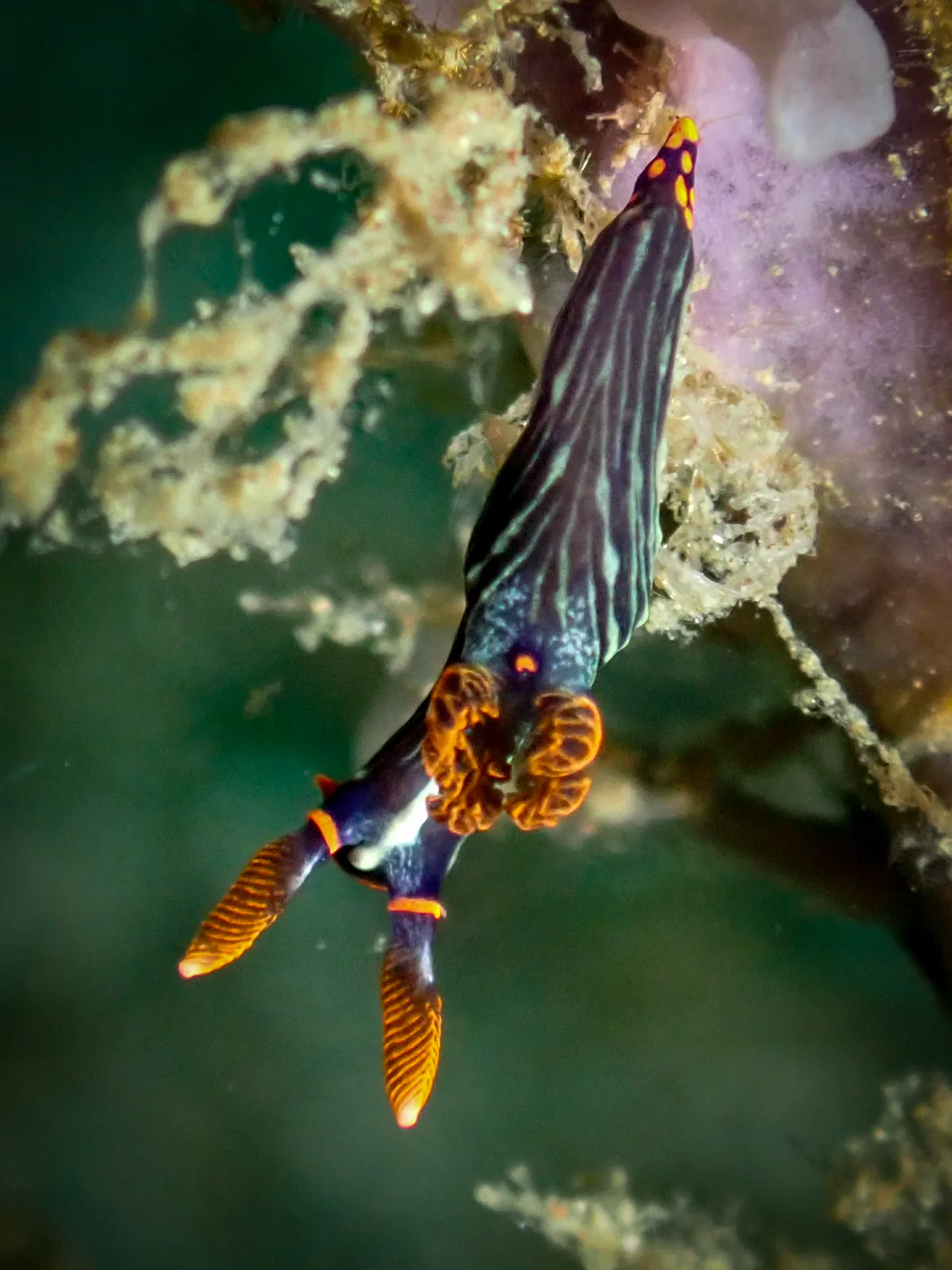
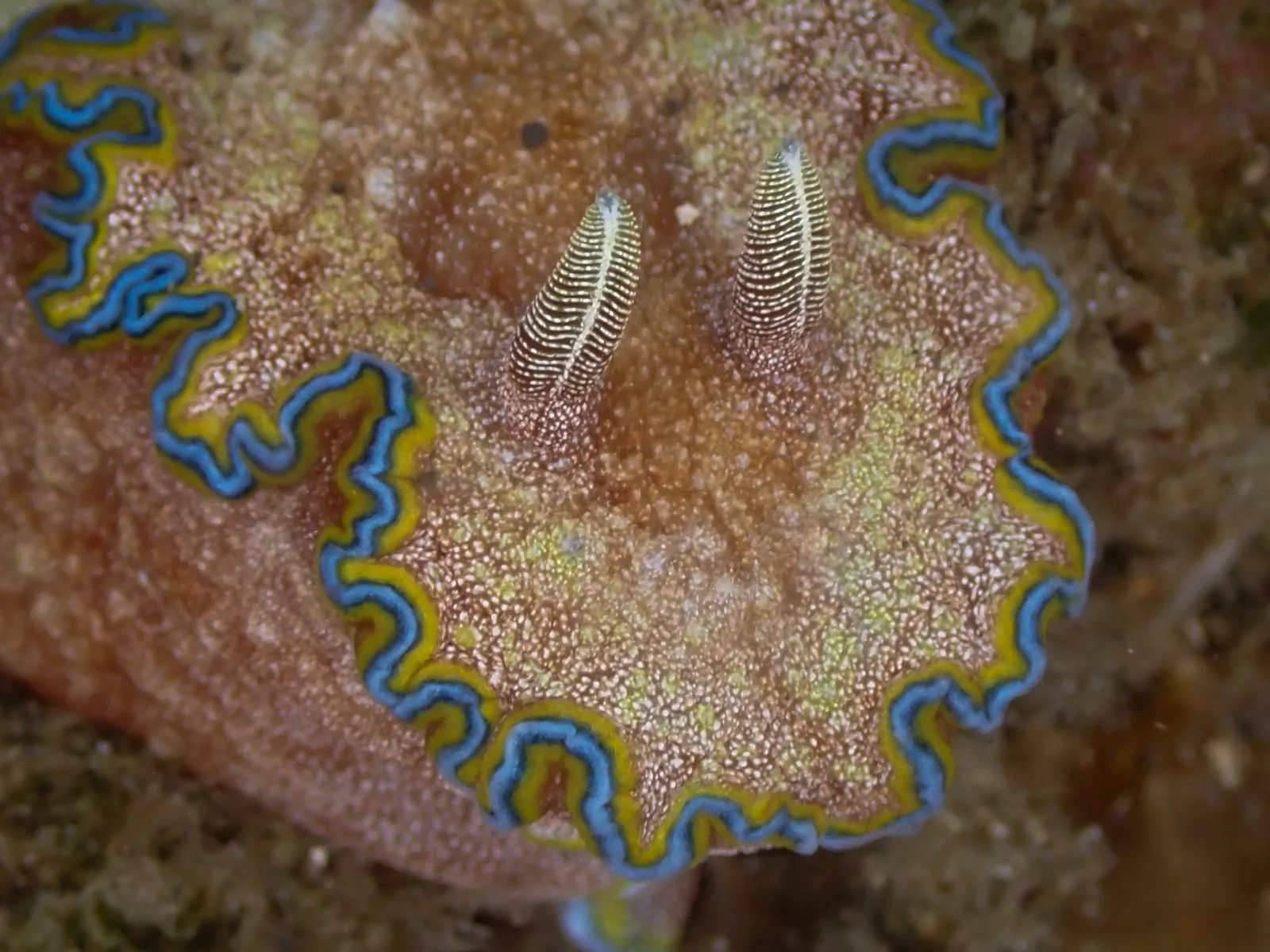
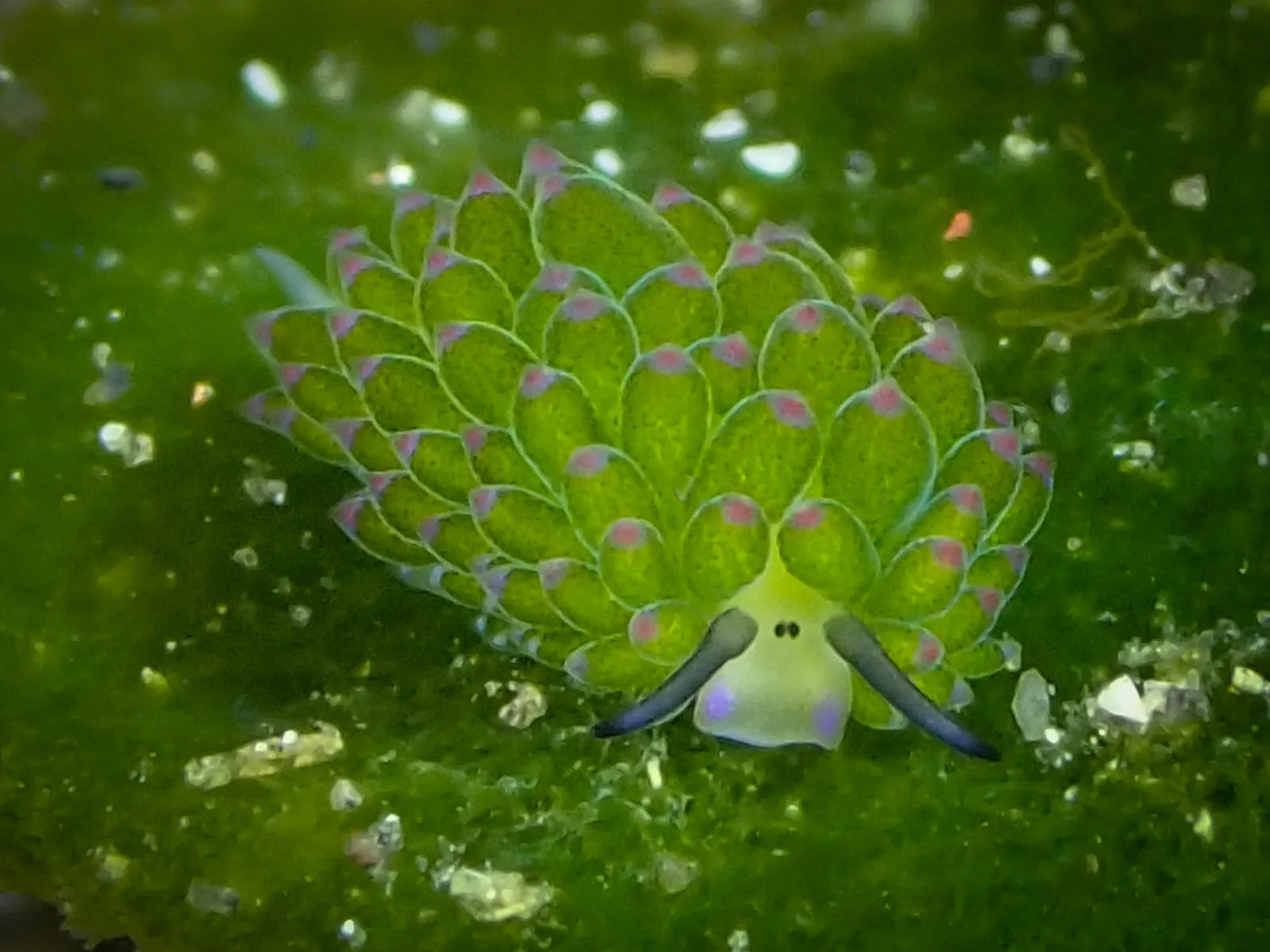
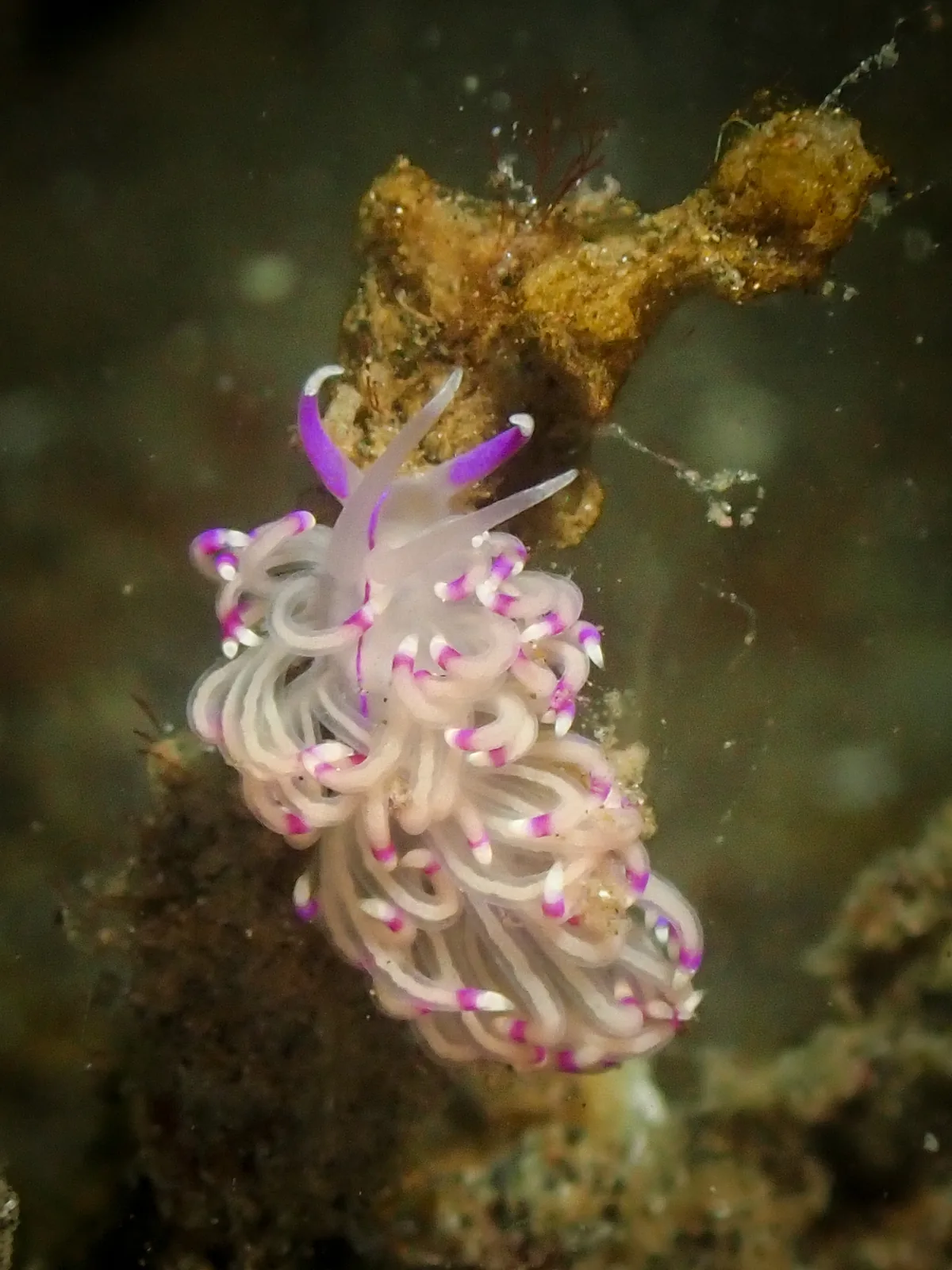
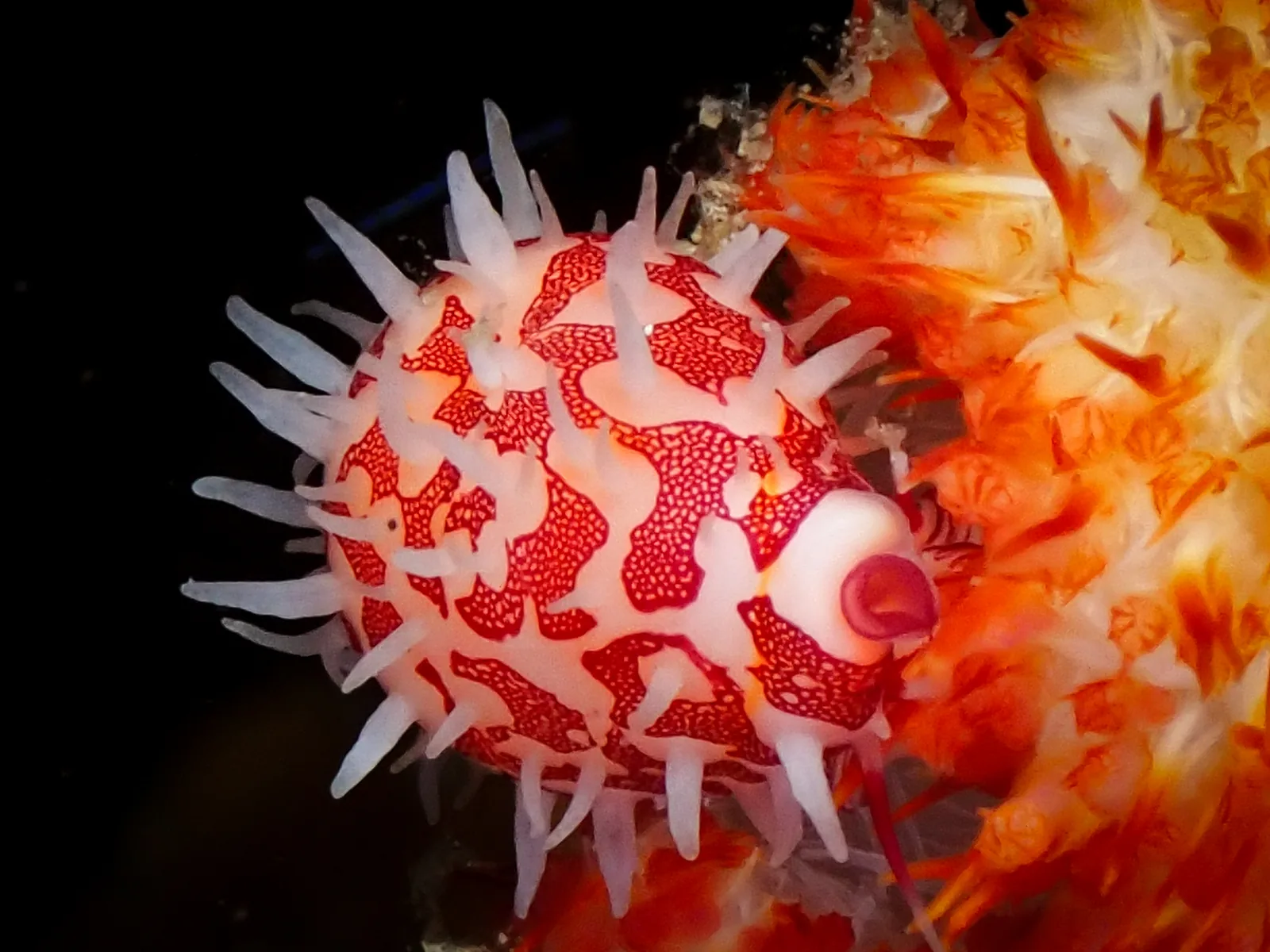
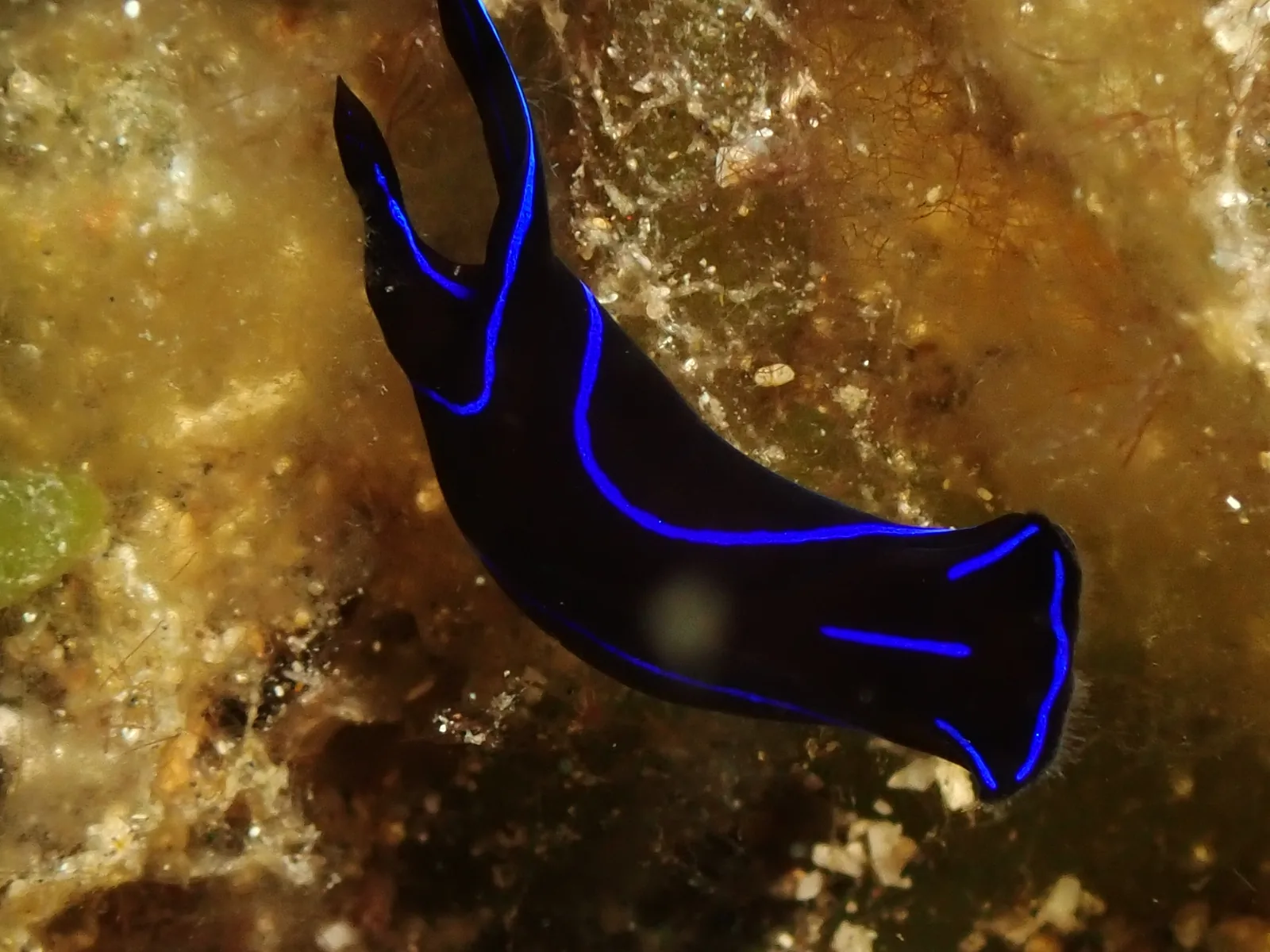
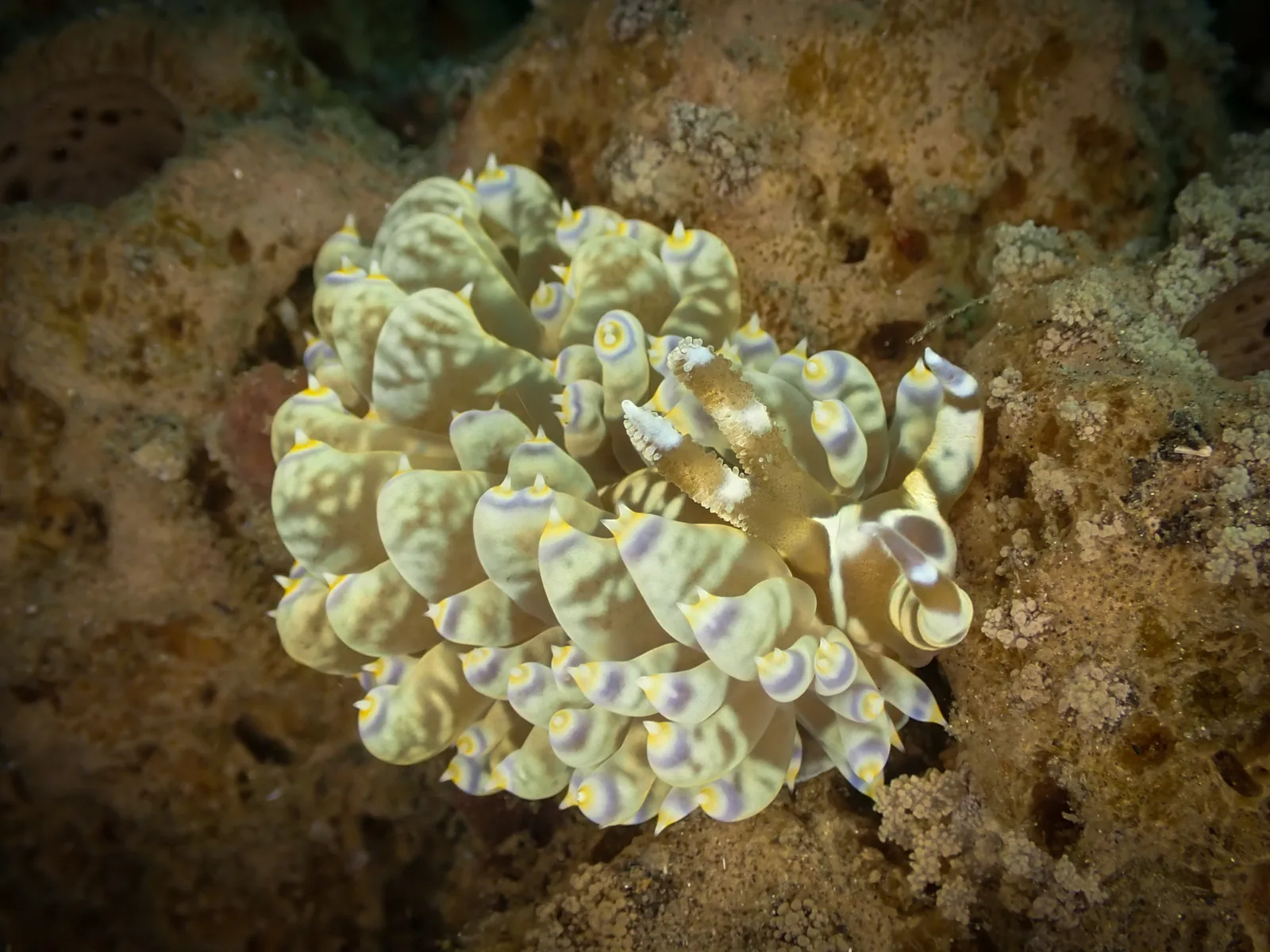
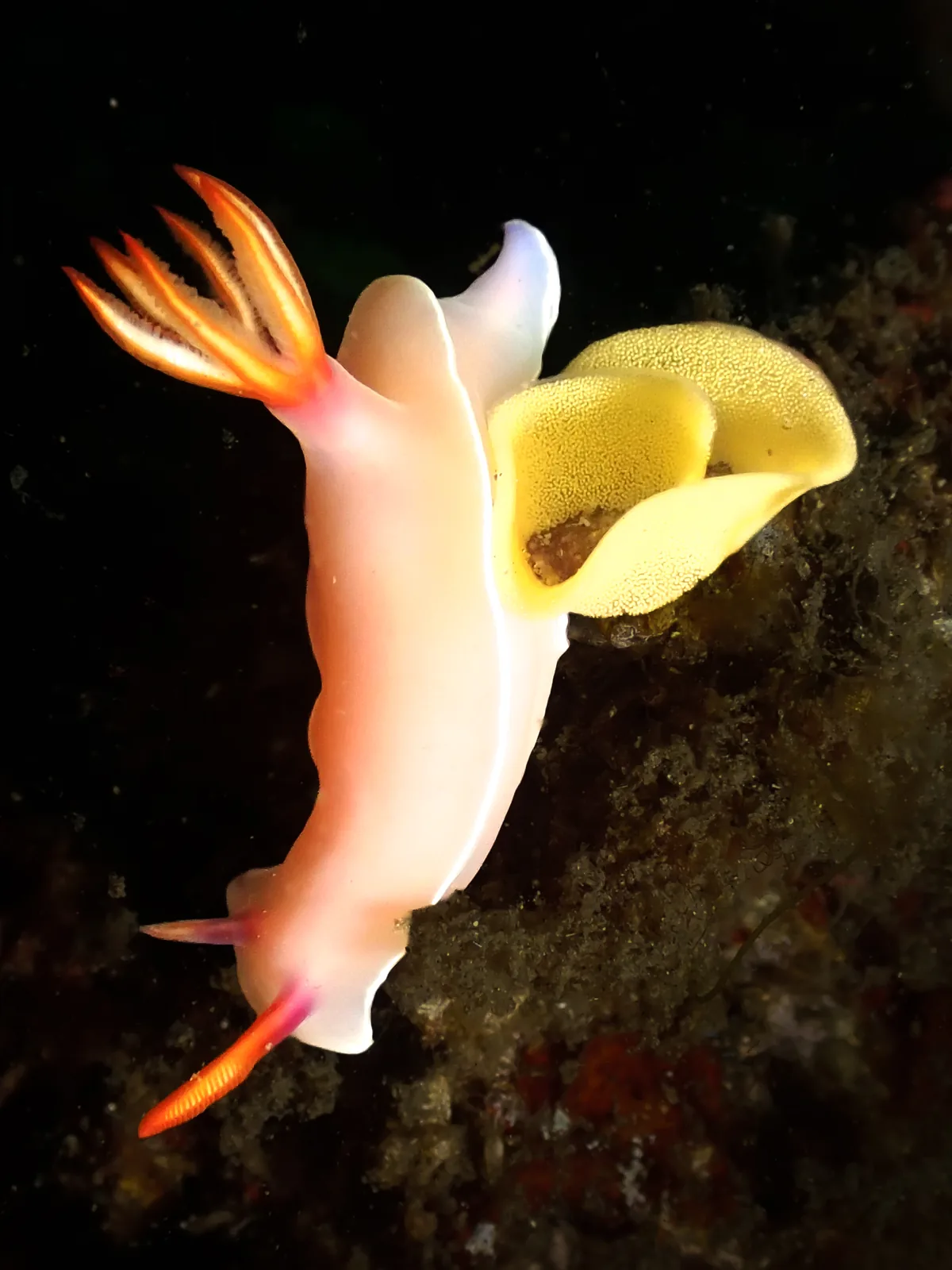
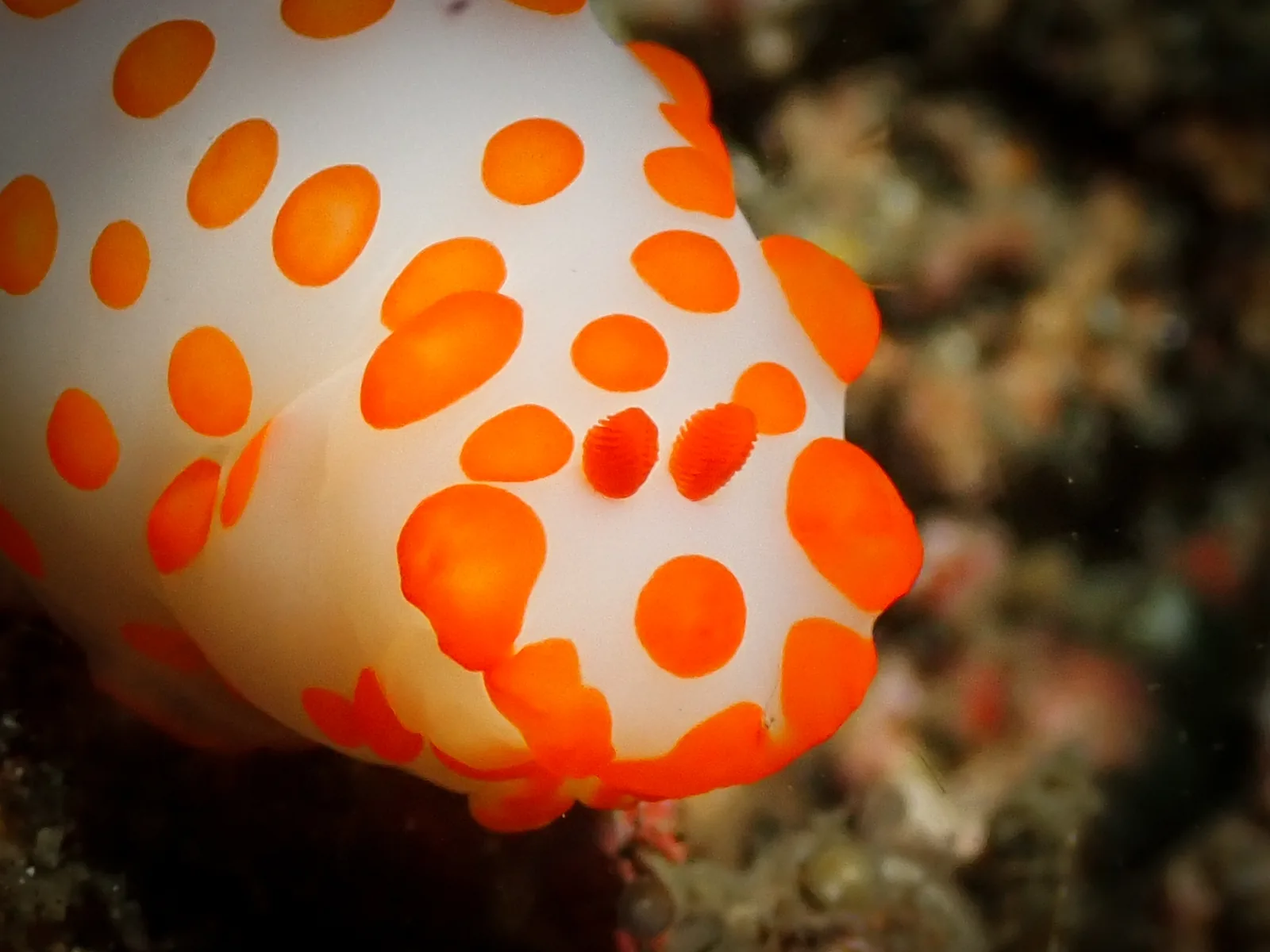
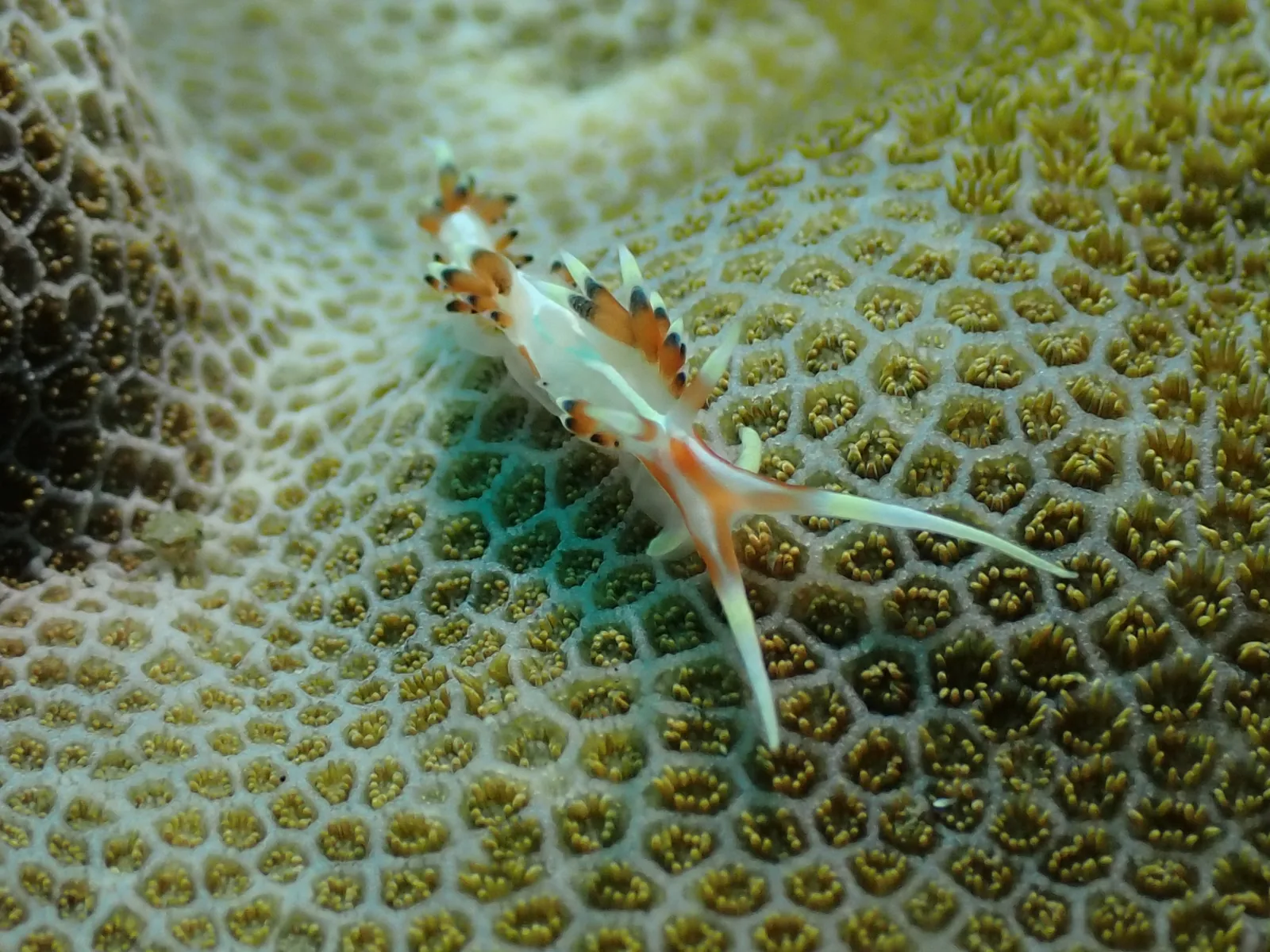
Nudibranchs are central to MacroDivers, and Lembeh offered a huge variety of colours, body forms and behaviours. Nudi Falls became one of our favourite sites of the whole stay.
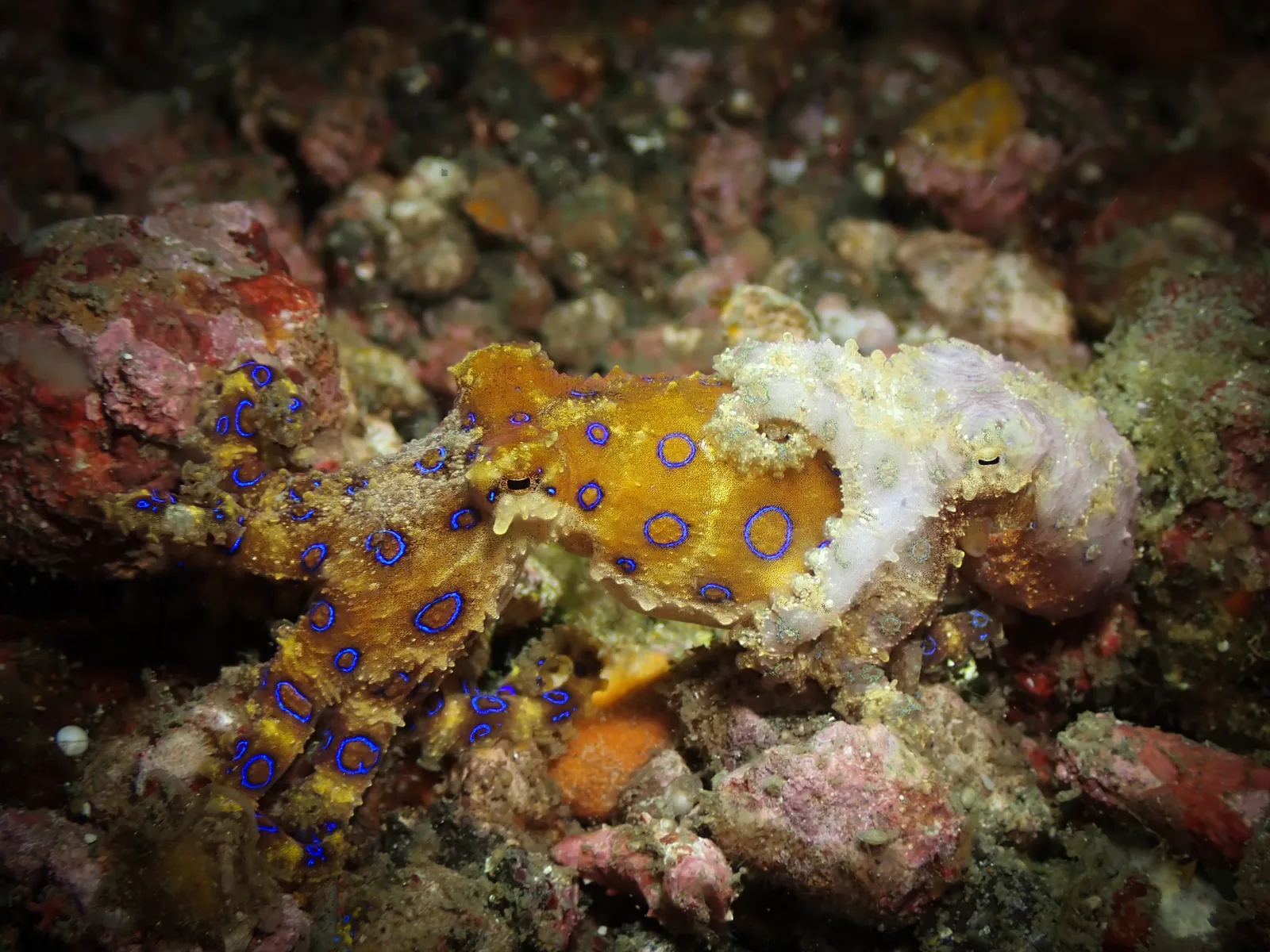
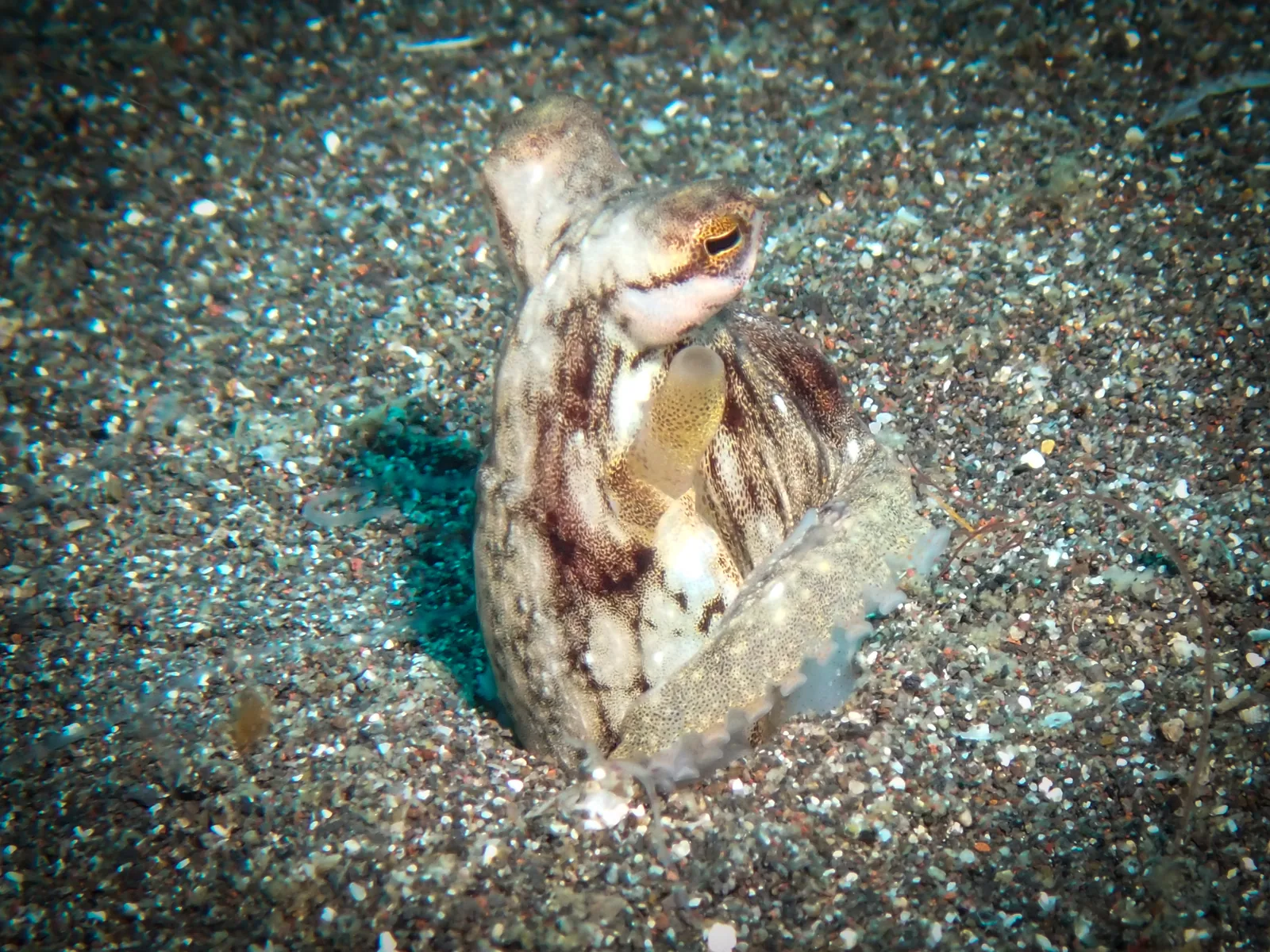
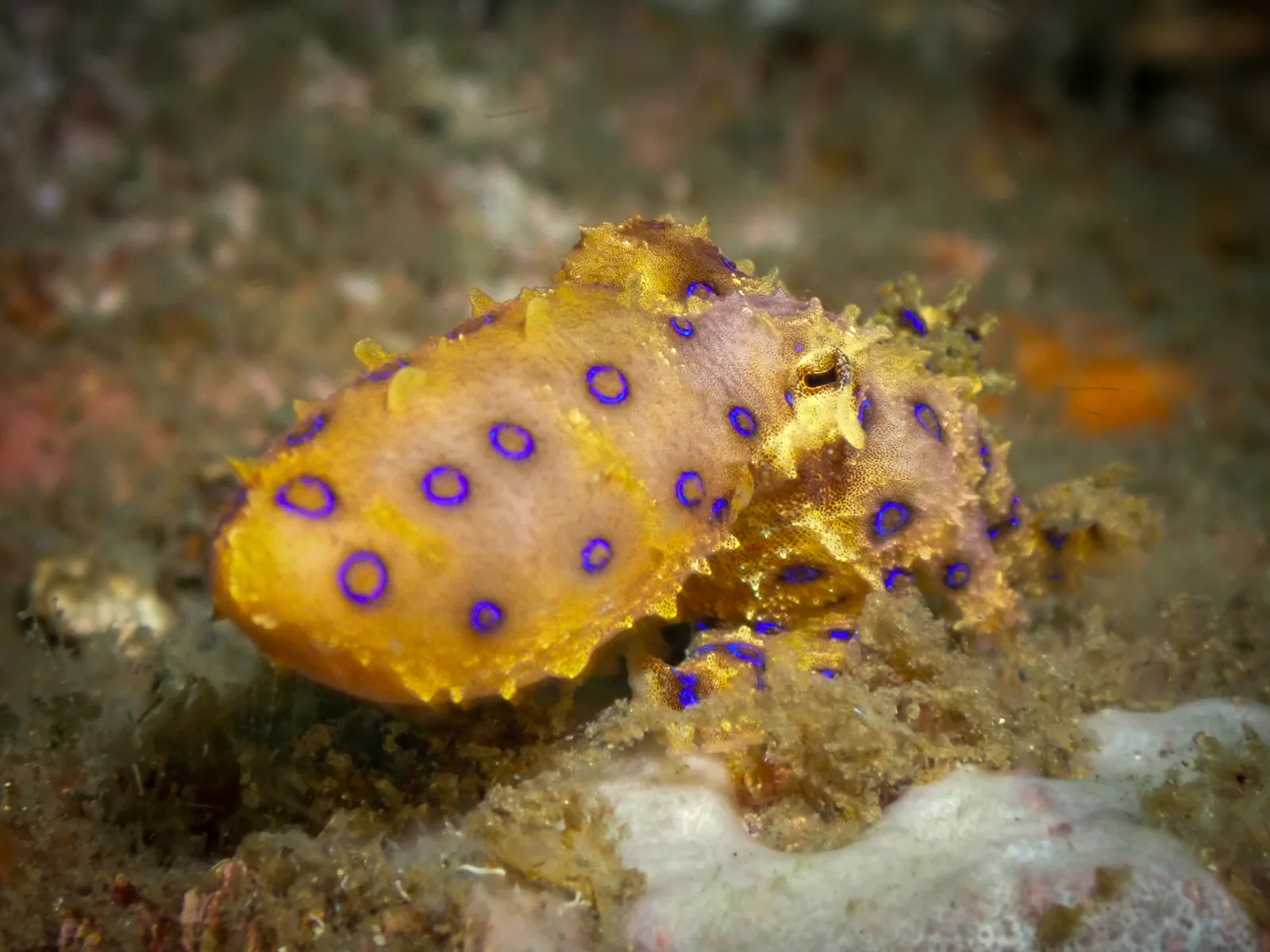
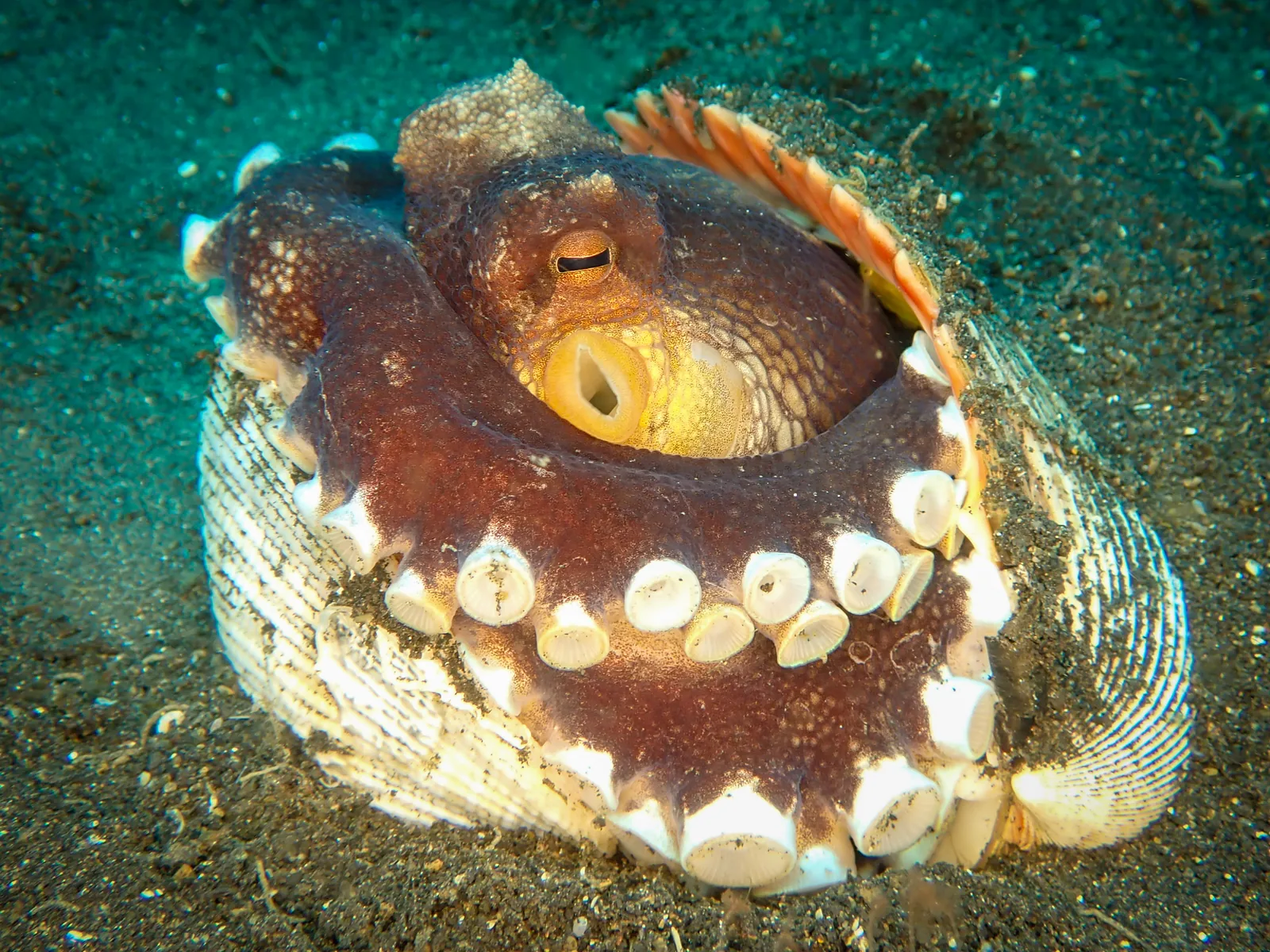
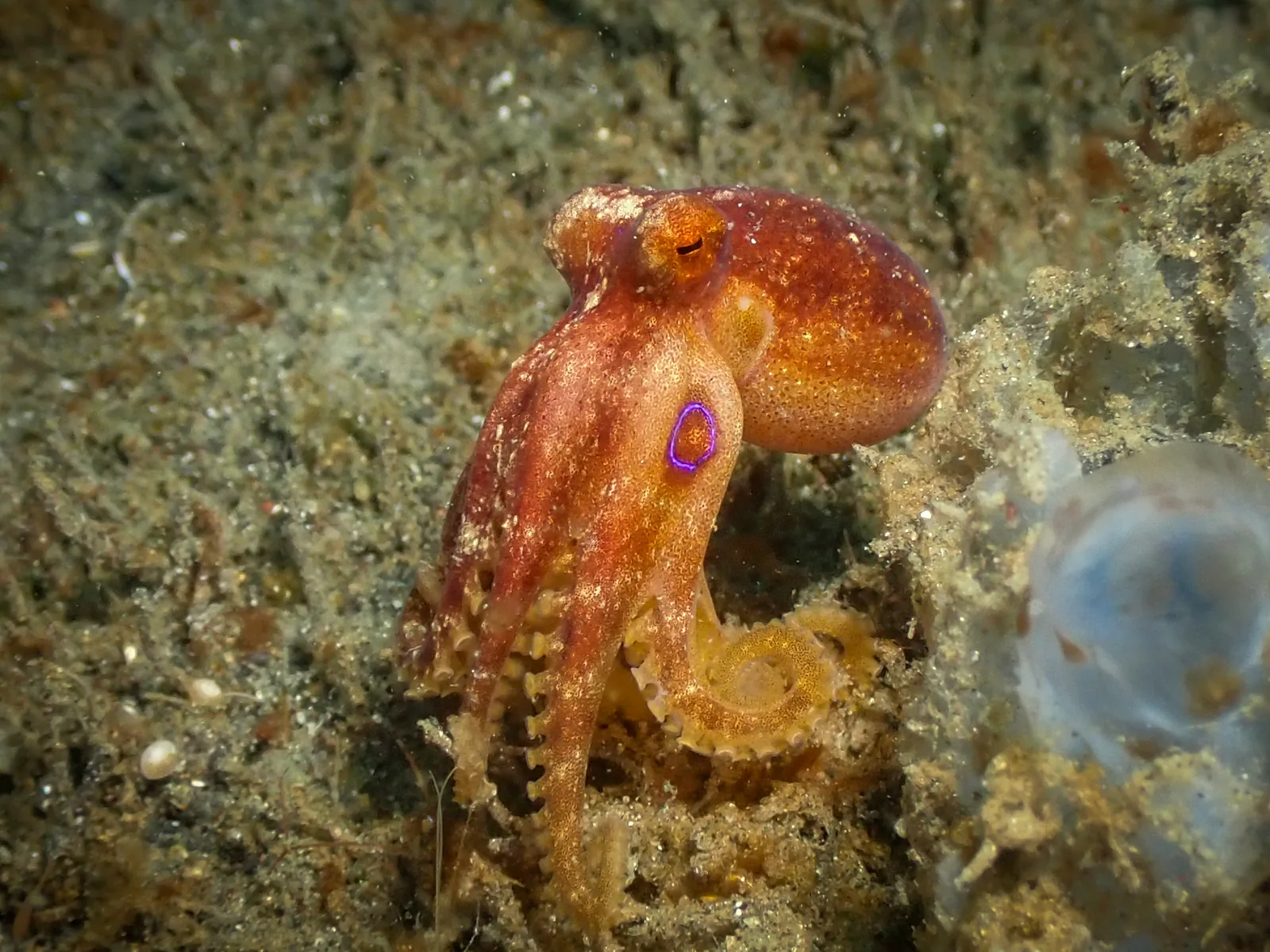
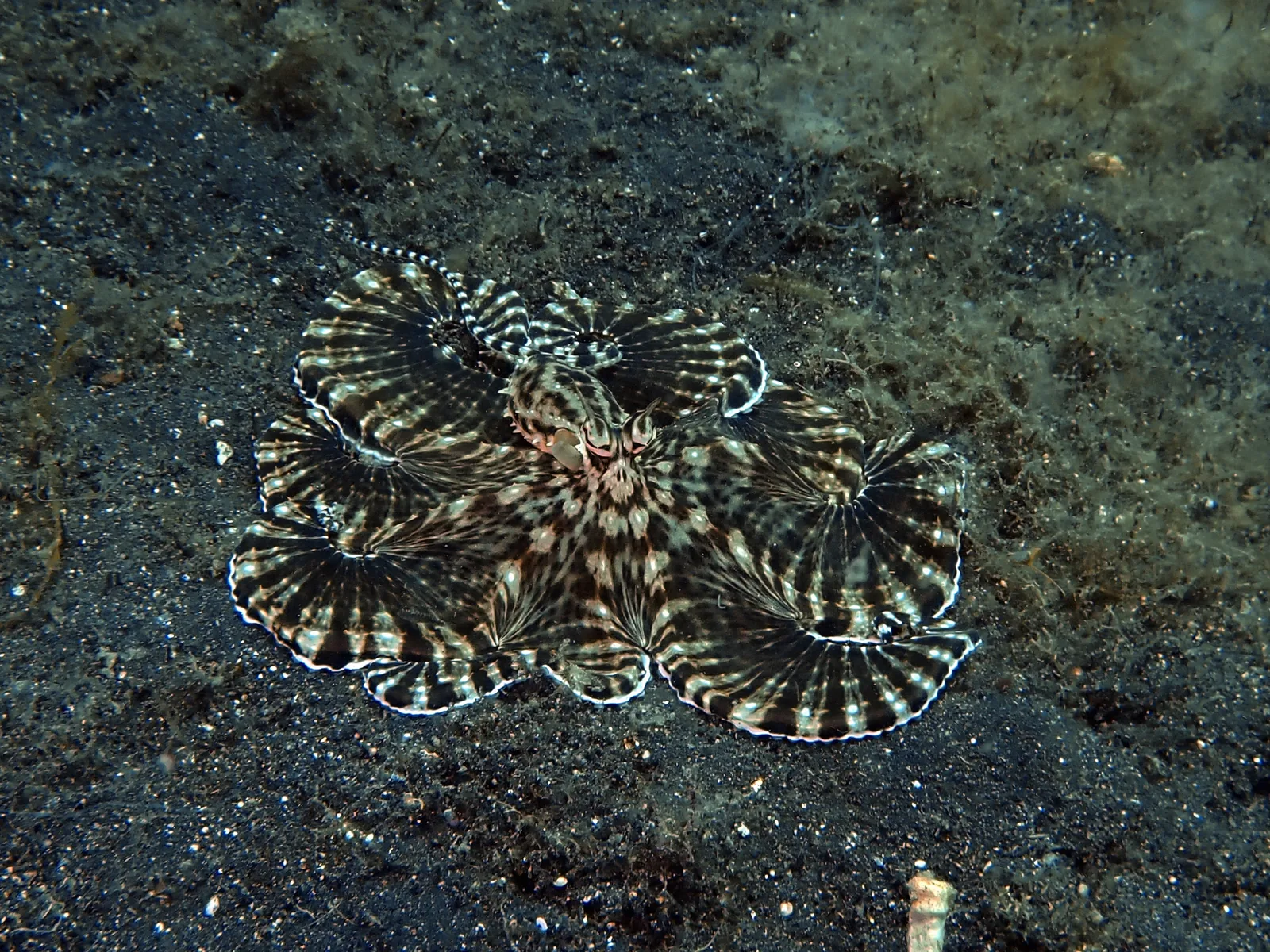
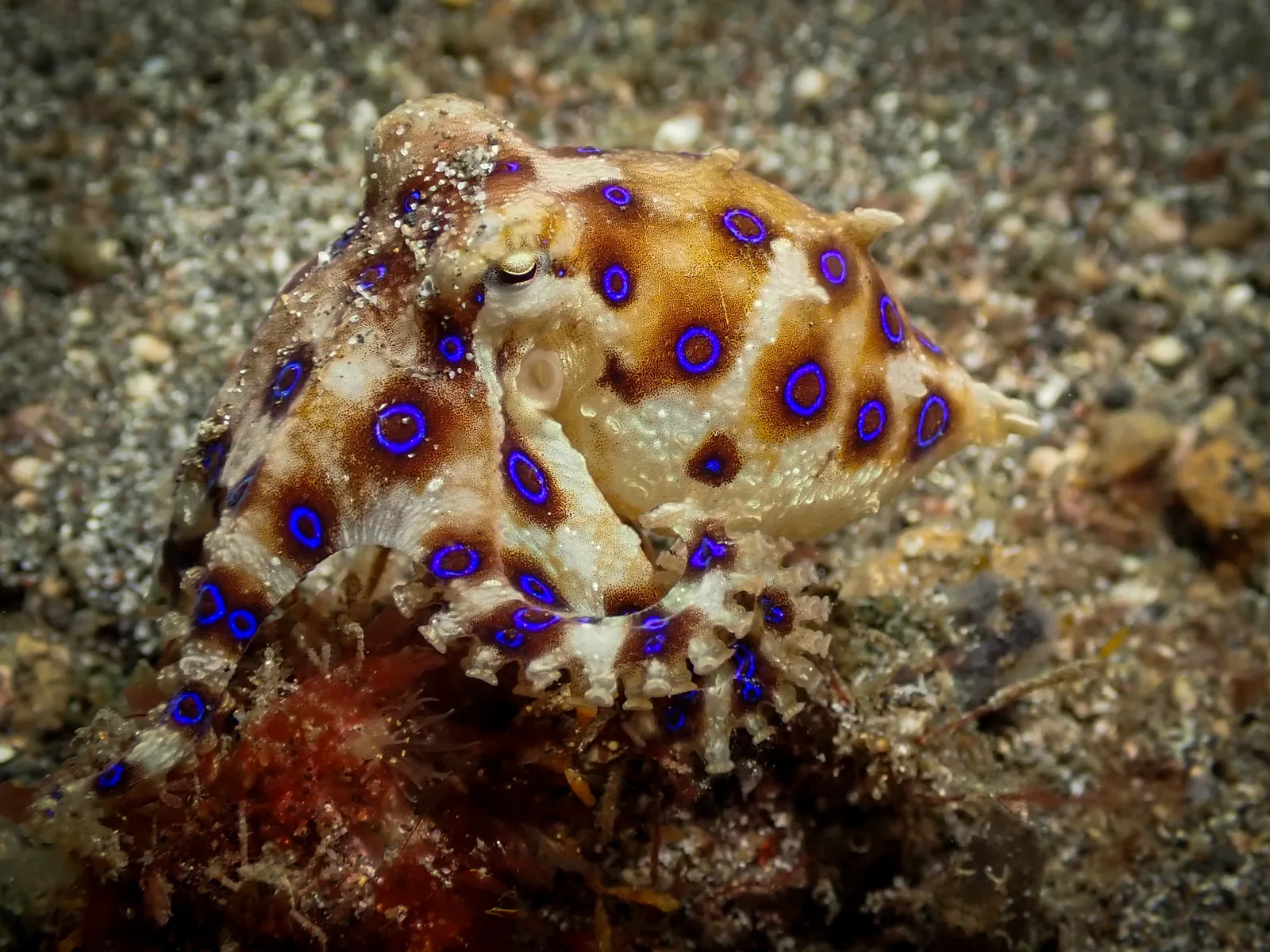
Octopus encounters were one of the highlights of the trip. At Nudi Falls we watched two greater blue-ringed octopuses mating—one of the most memorable encounters of our three weeks.
Macro focus
Much of Lembeh is classic muck diving: black volcanic sand, rubble and apparently ordinary seabed that comes alive when you slow down and start looking closely.
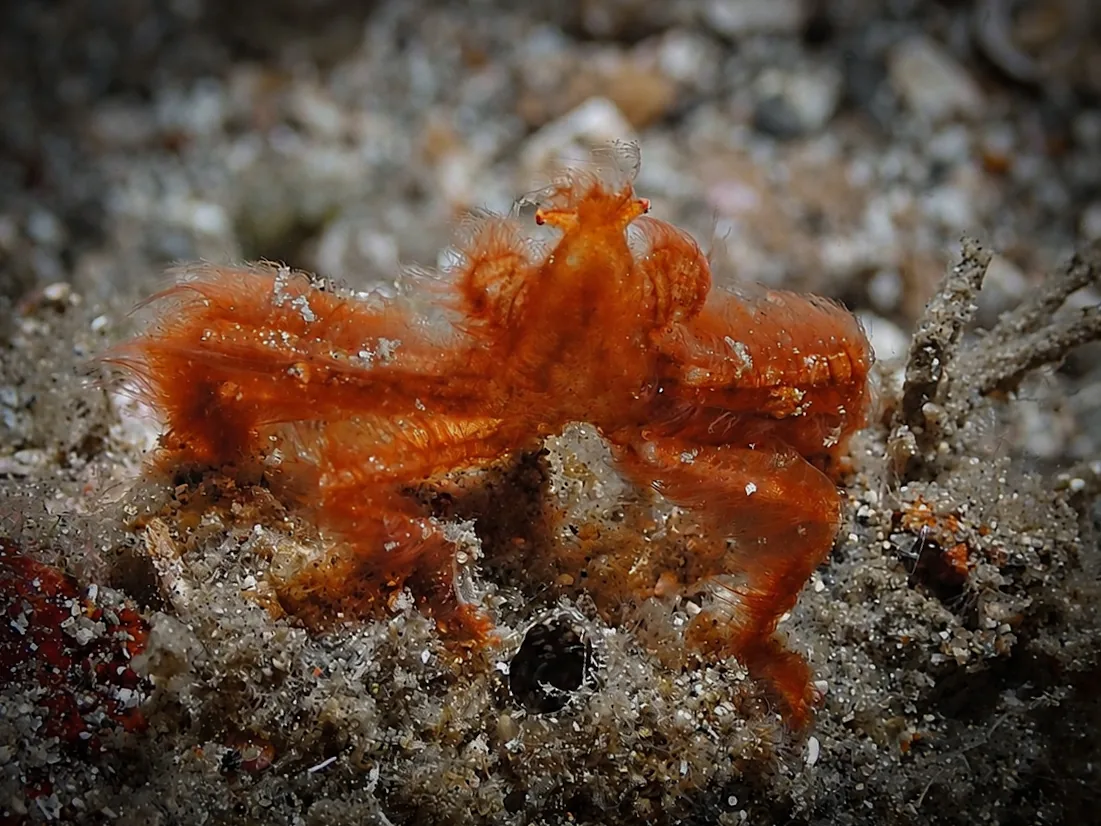
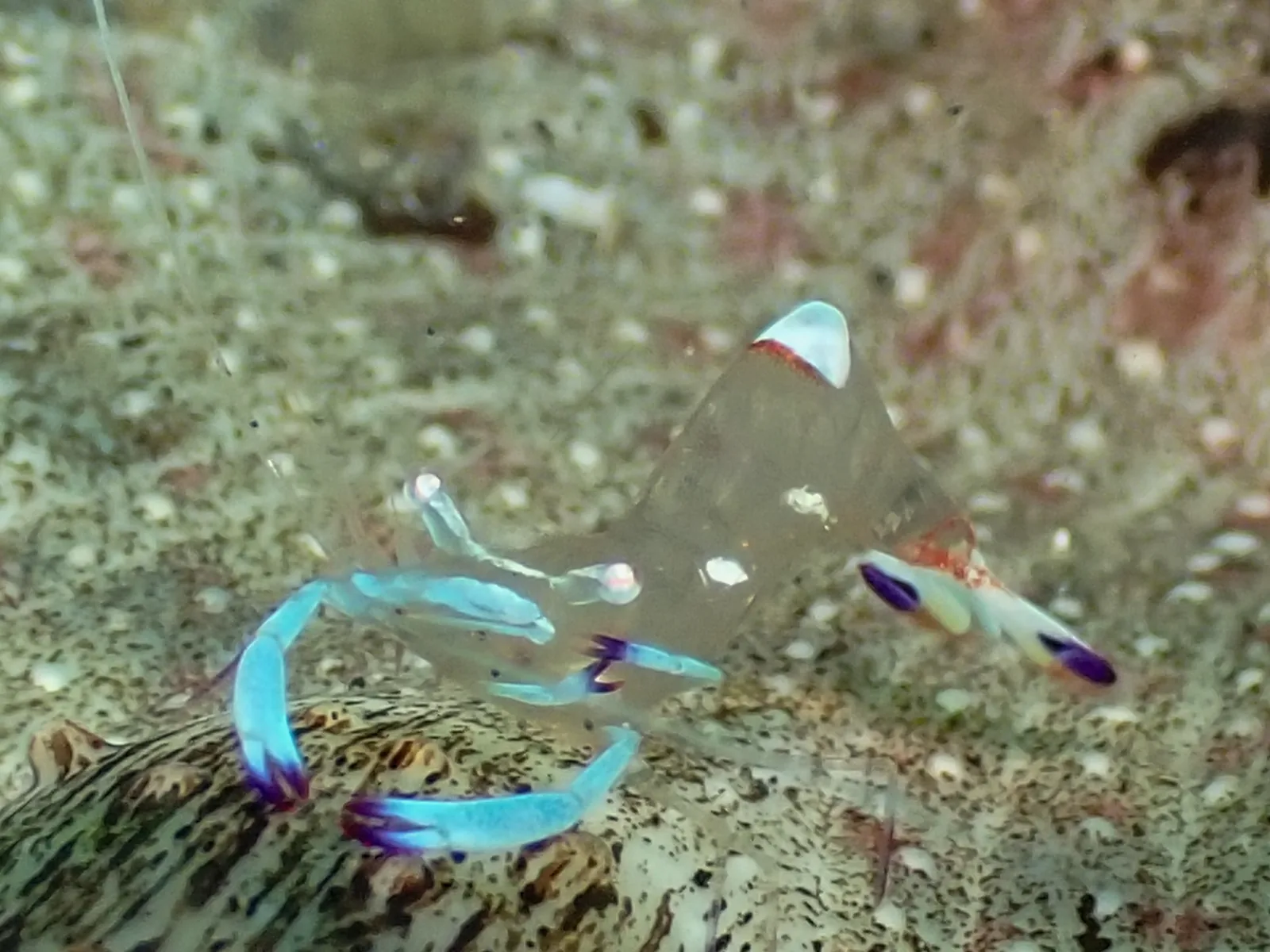
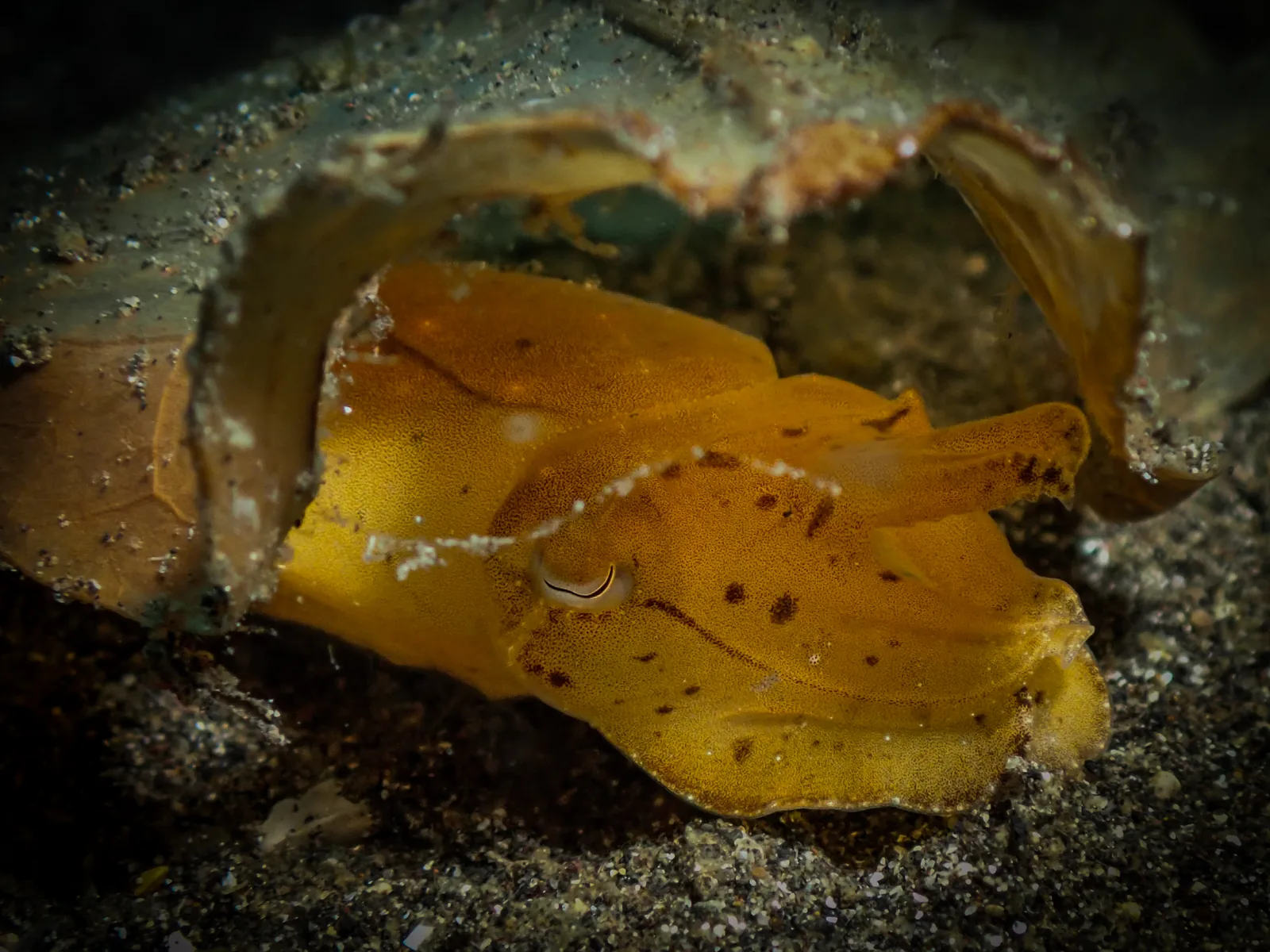
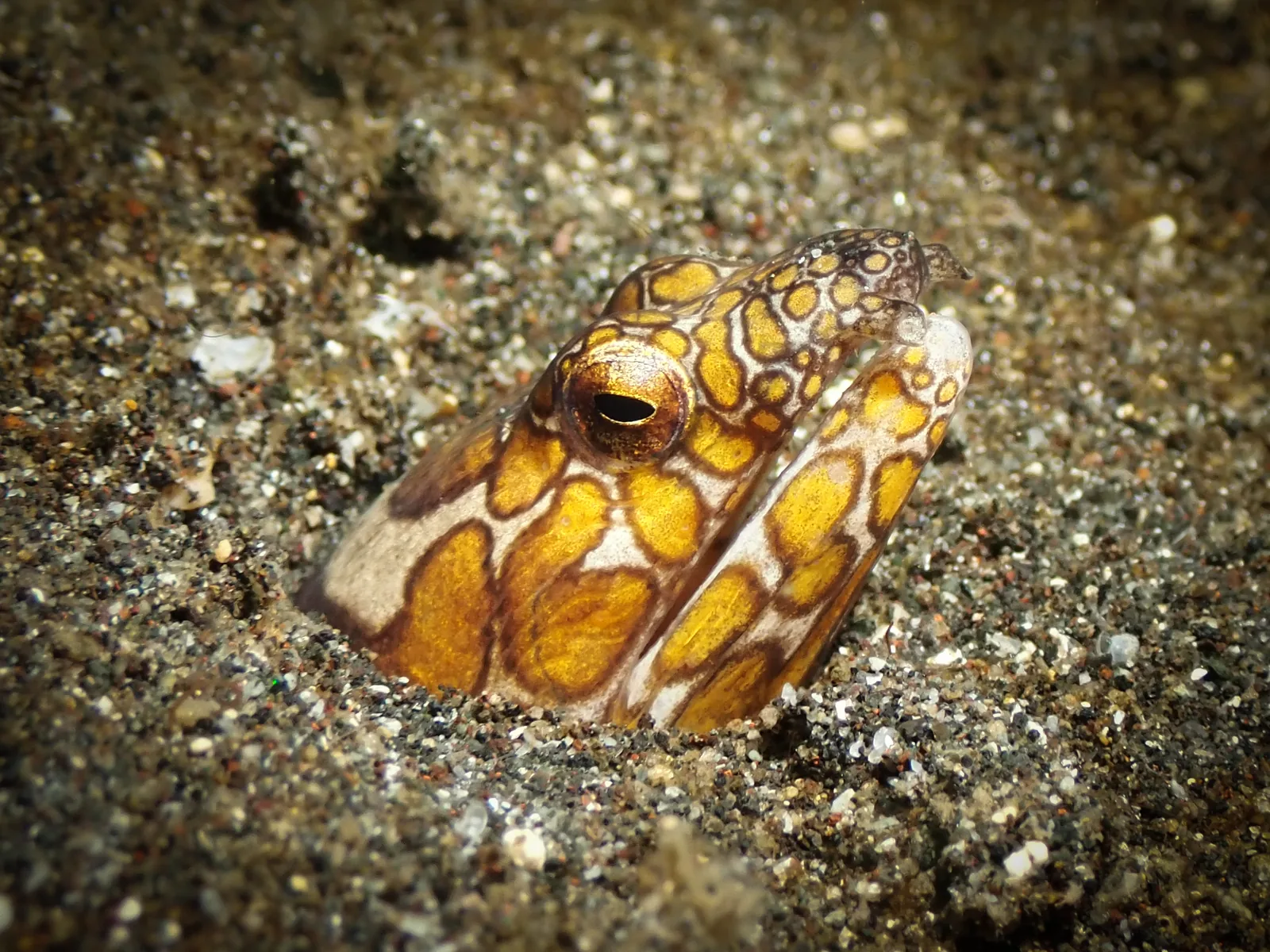
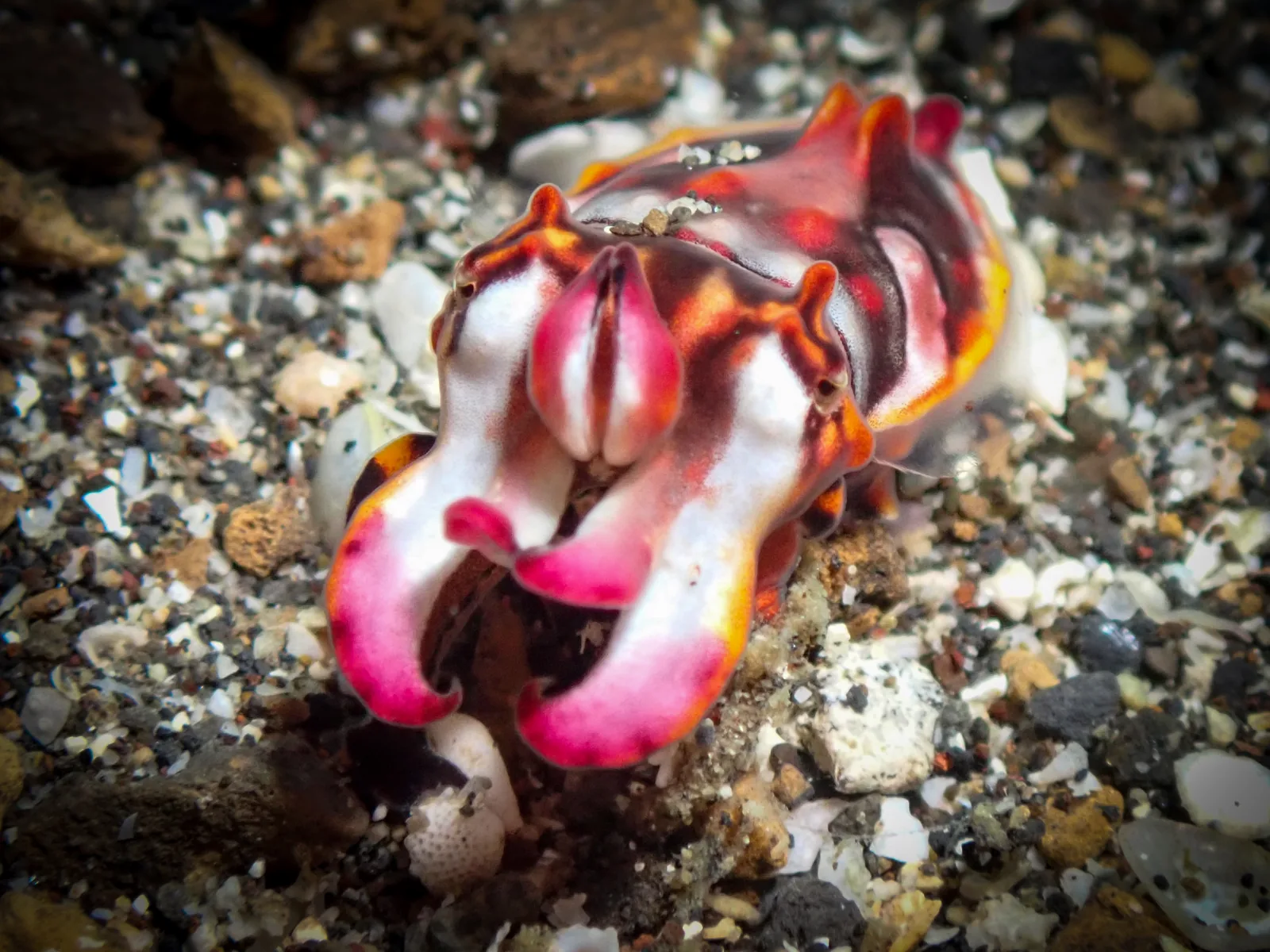
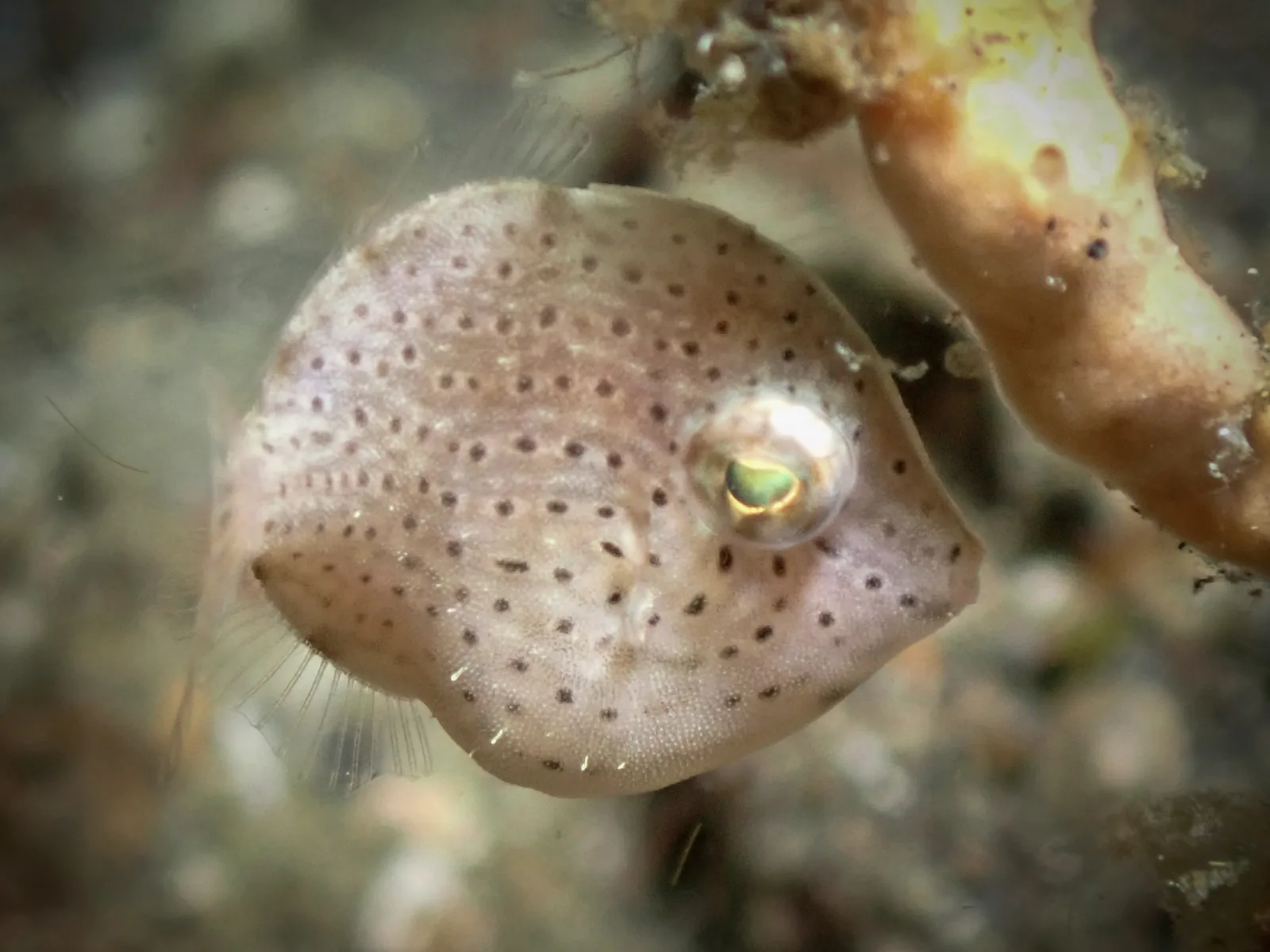
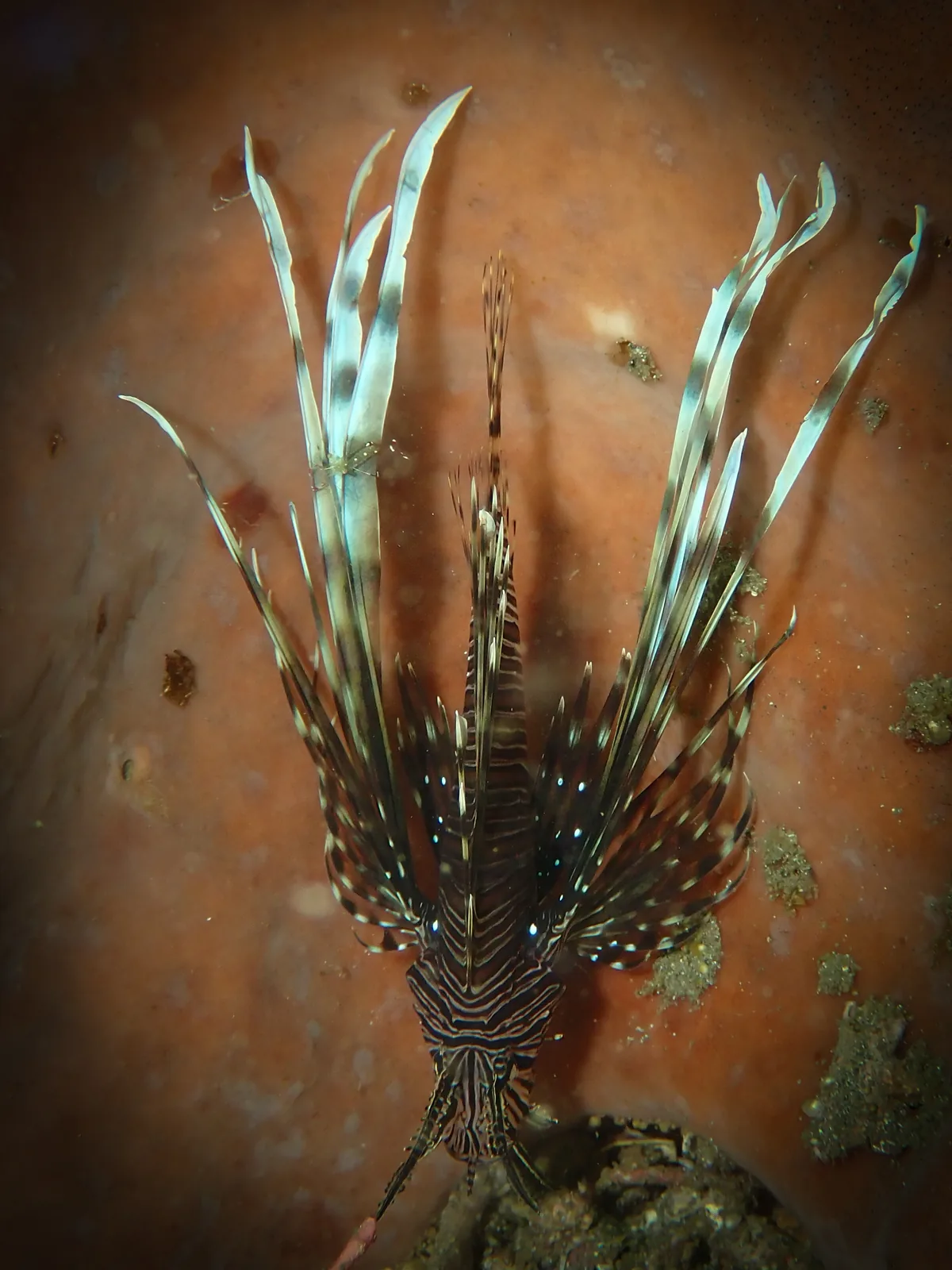
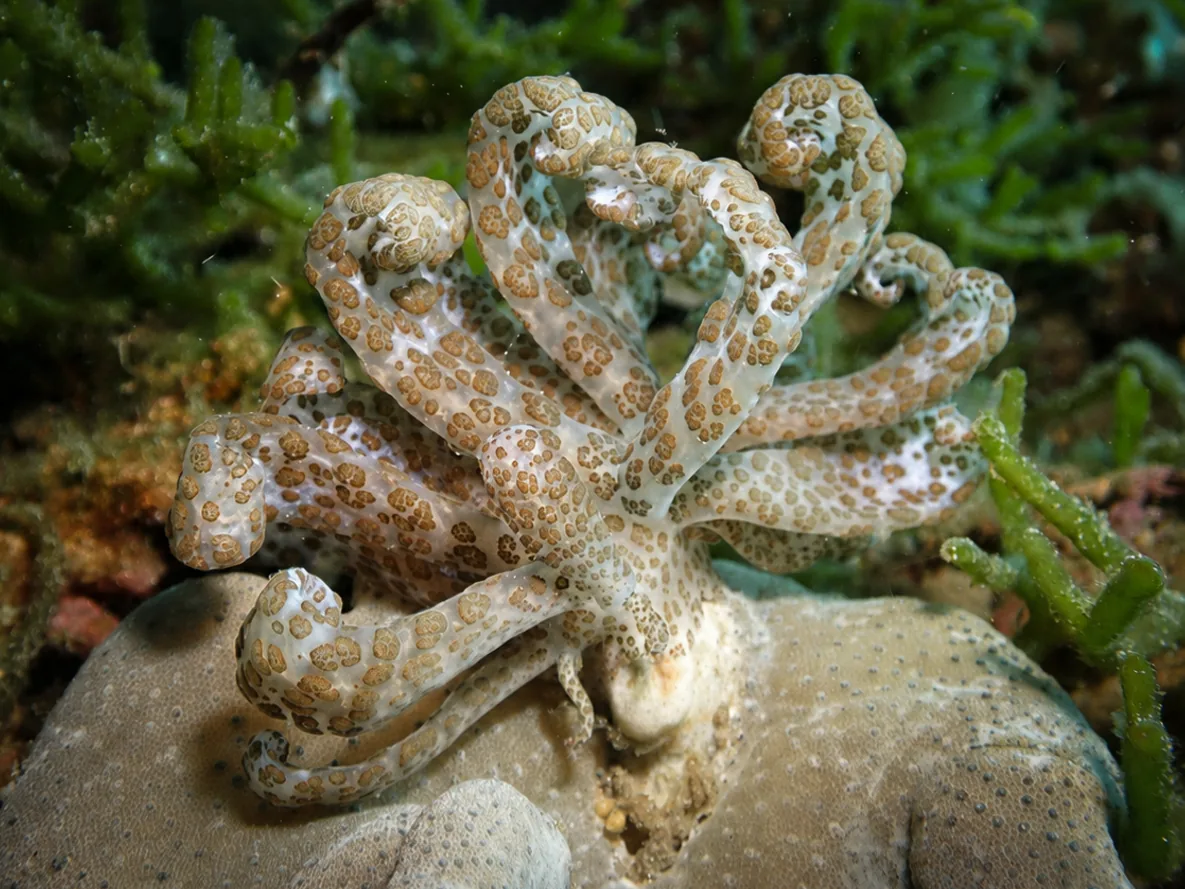
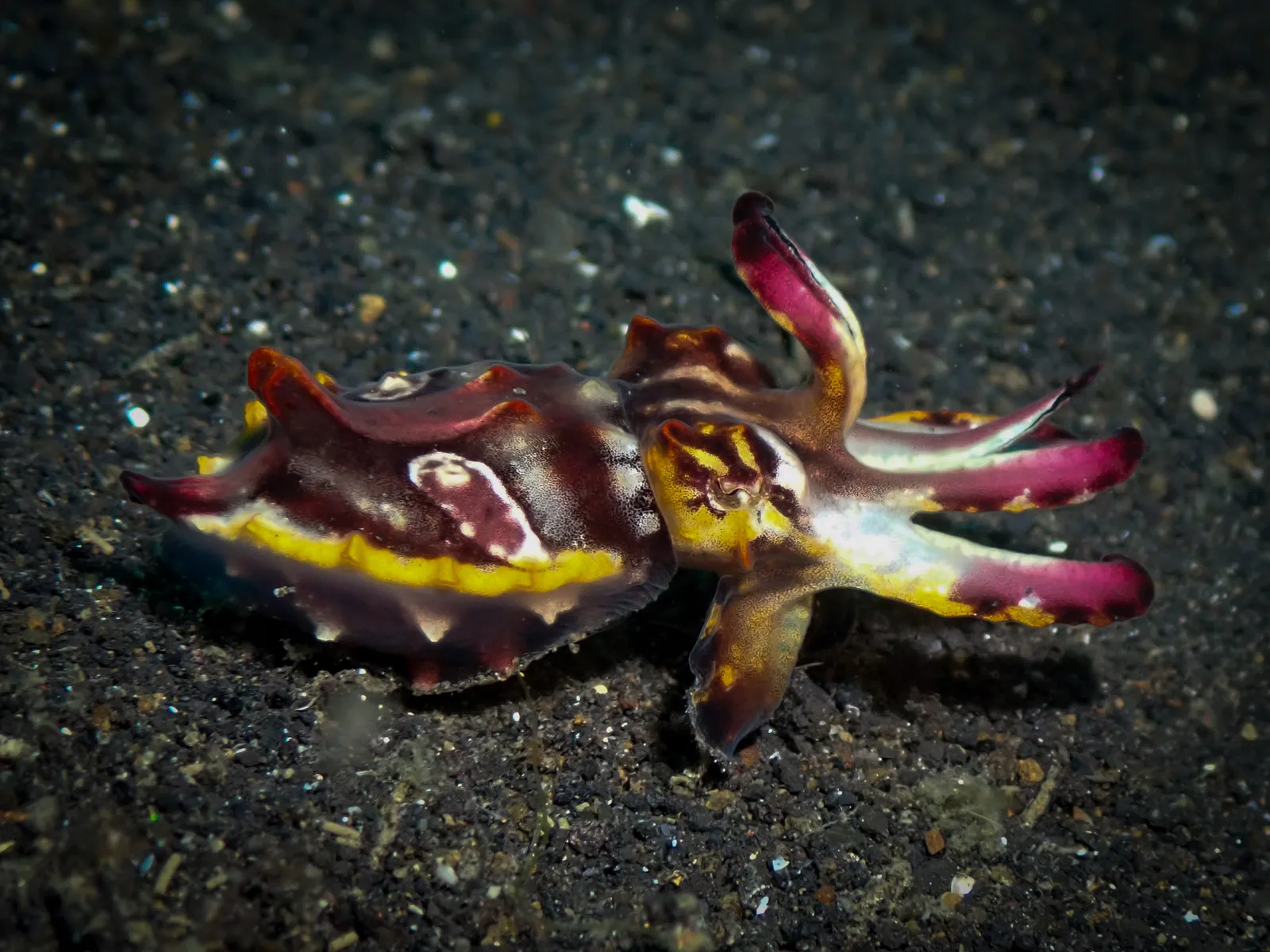
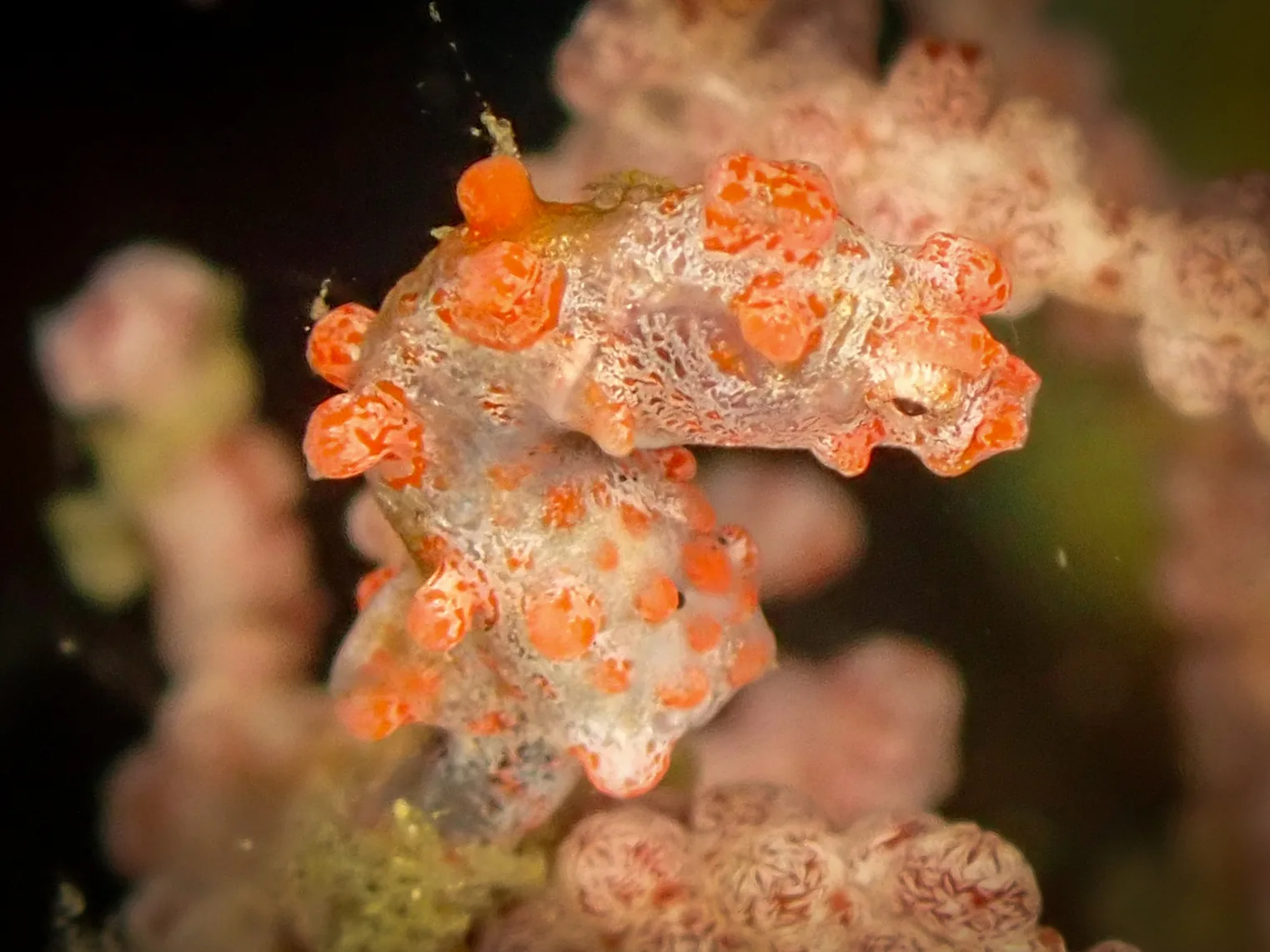
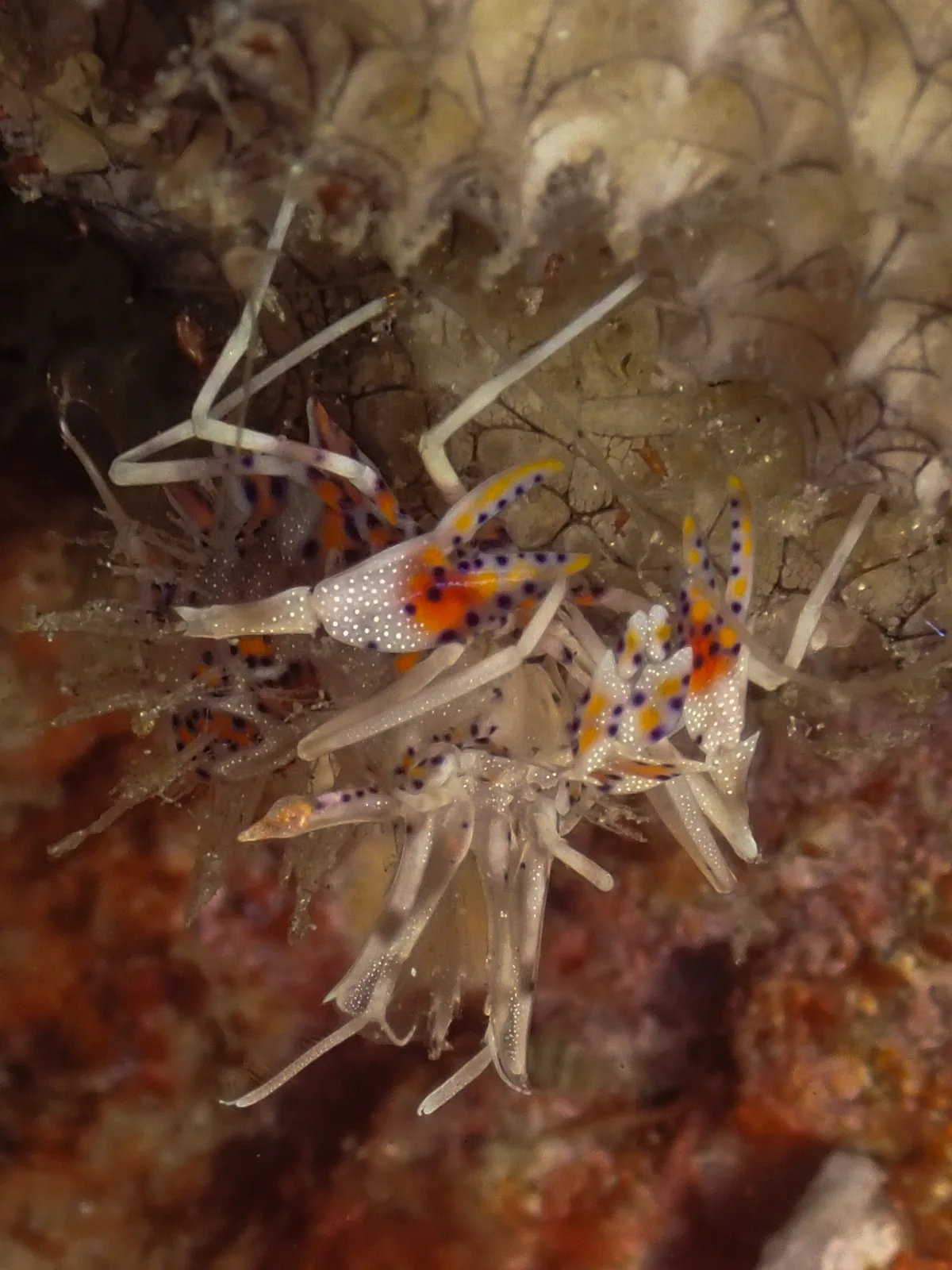
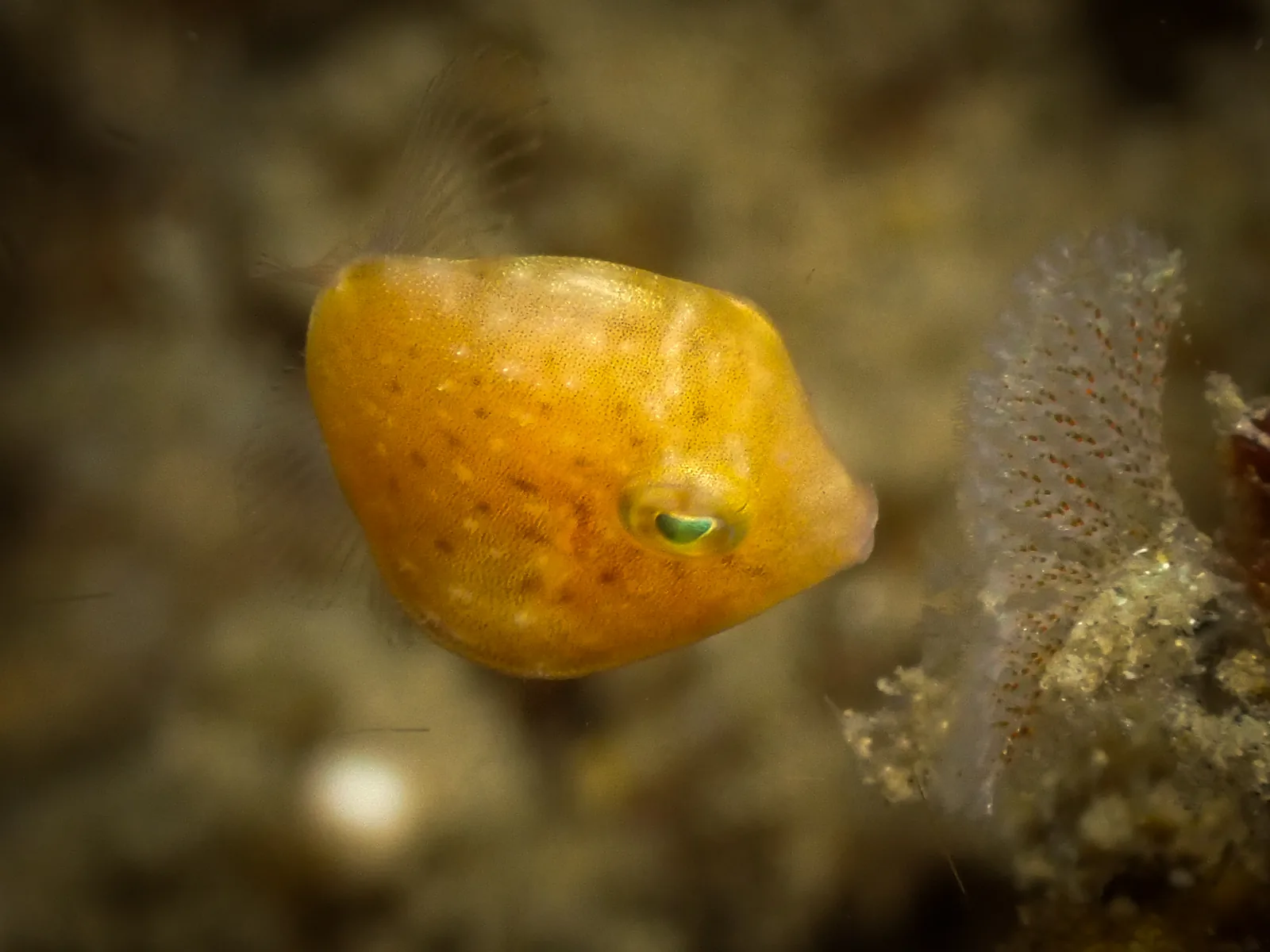
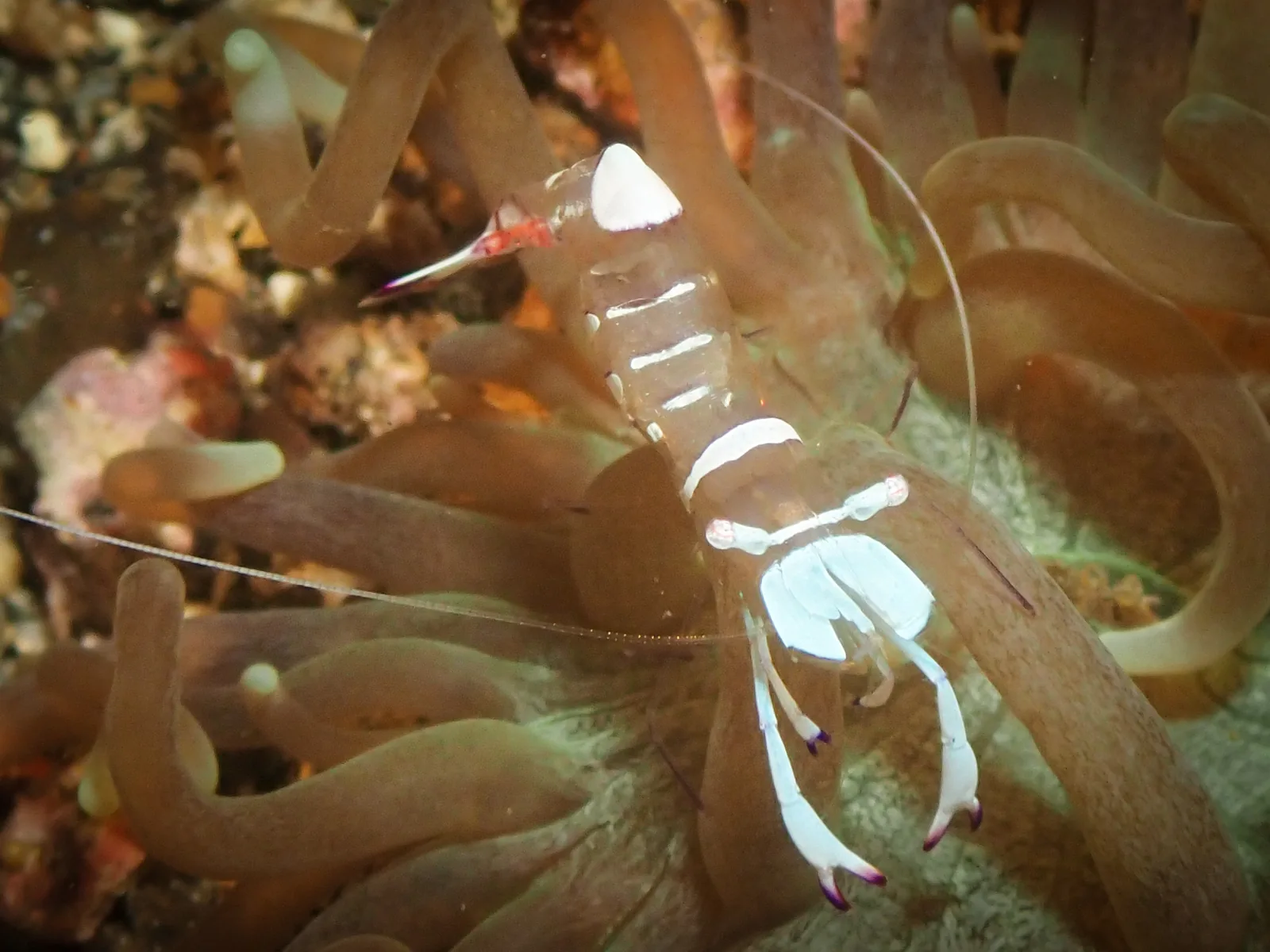
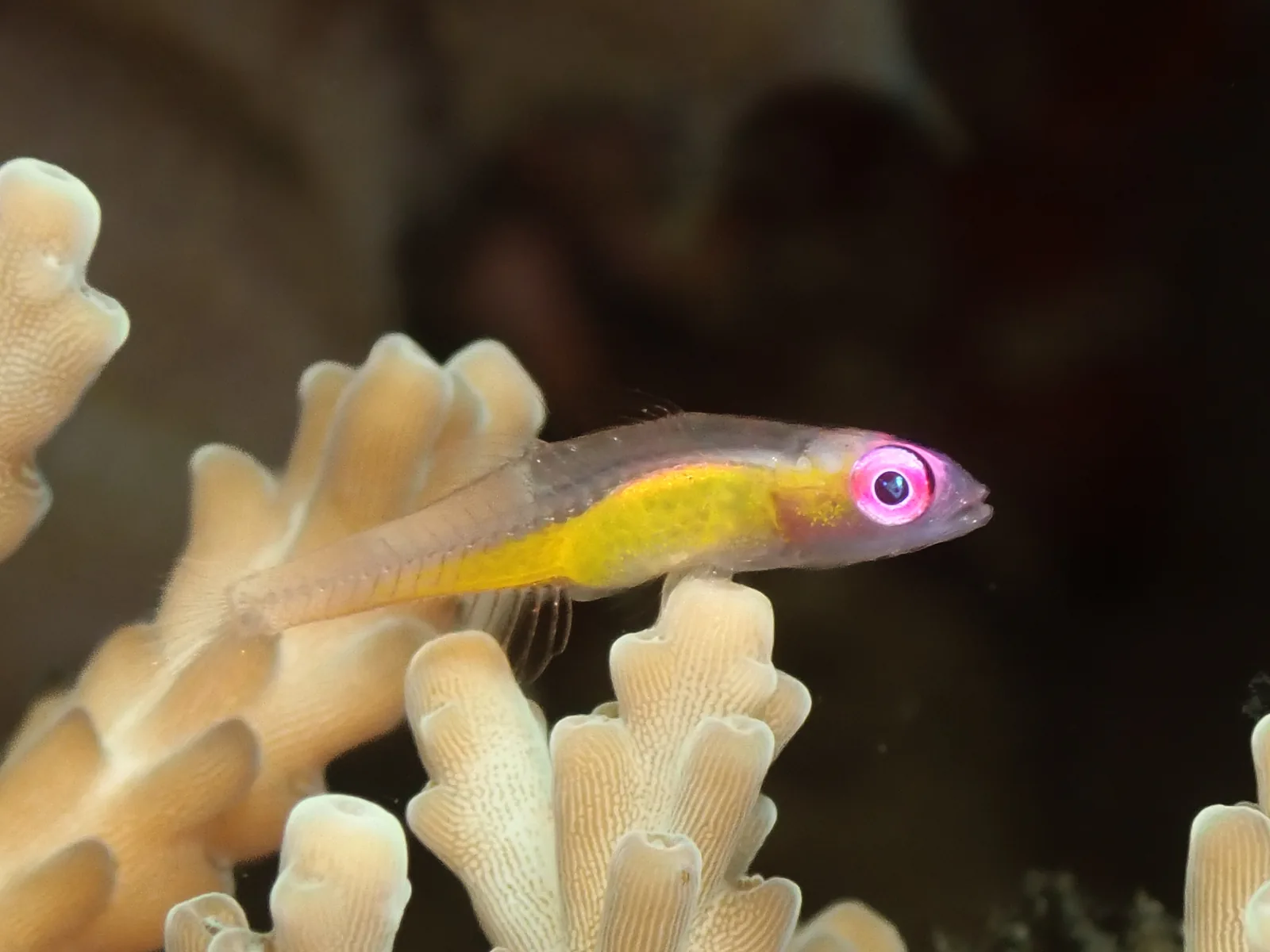
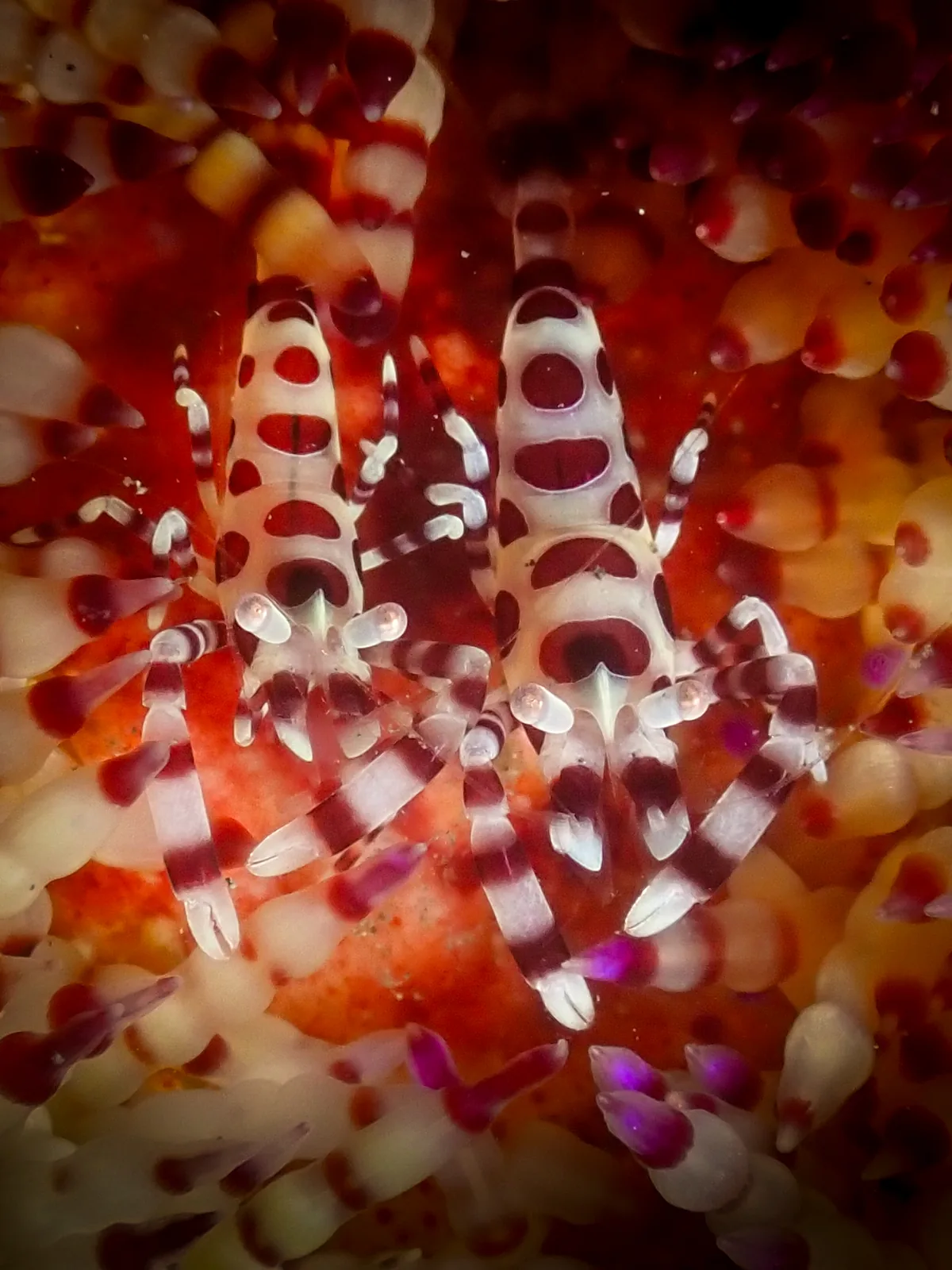
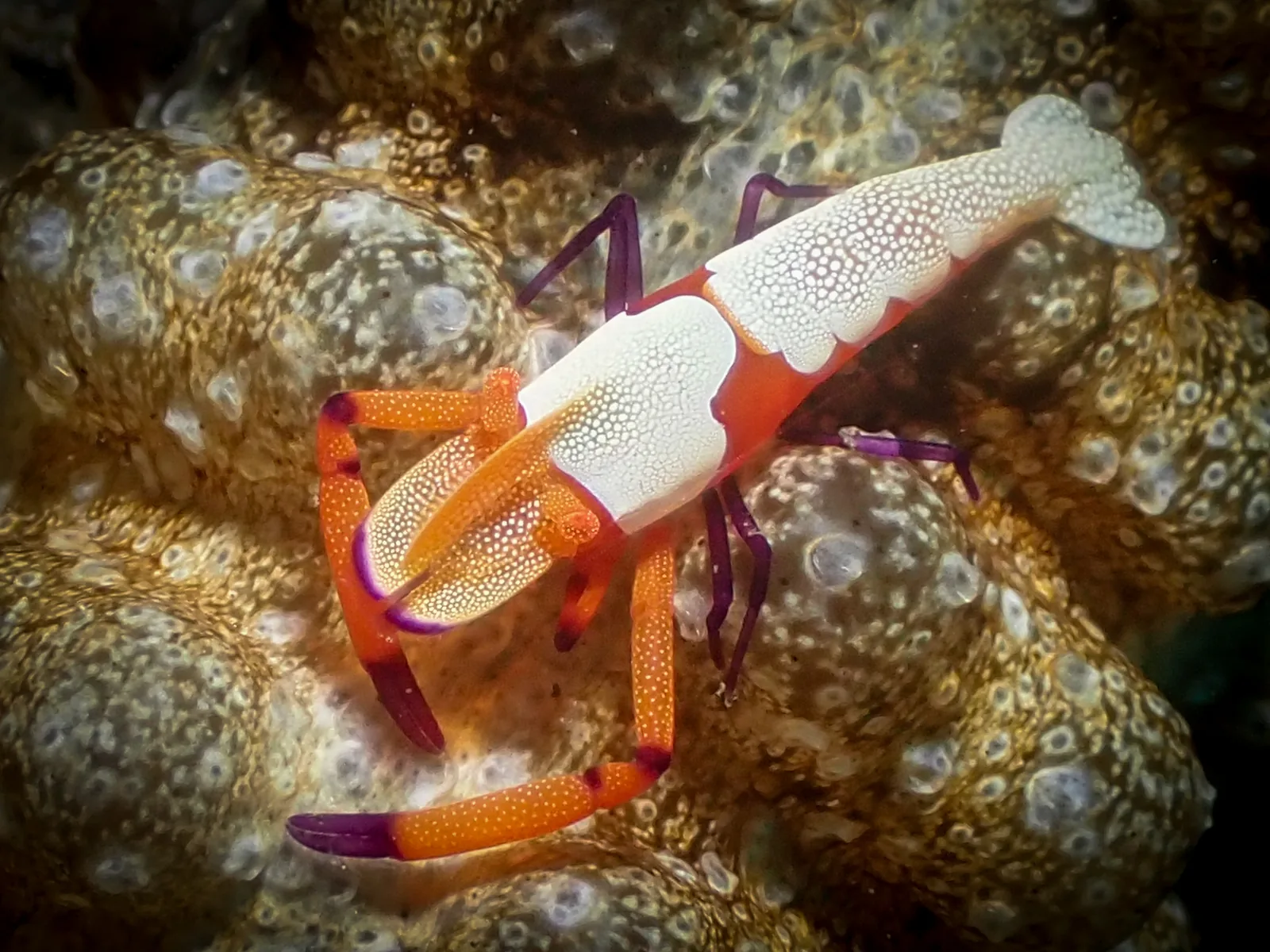
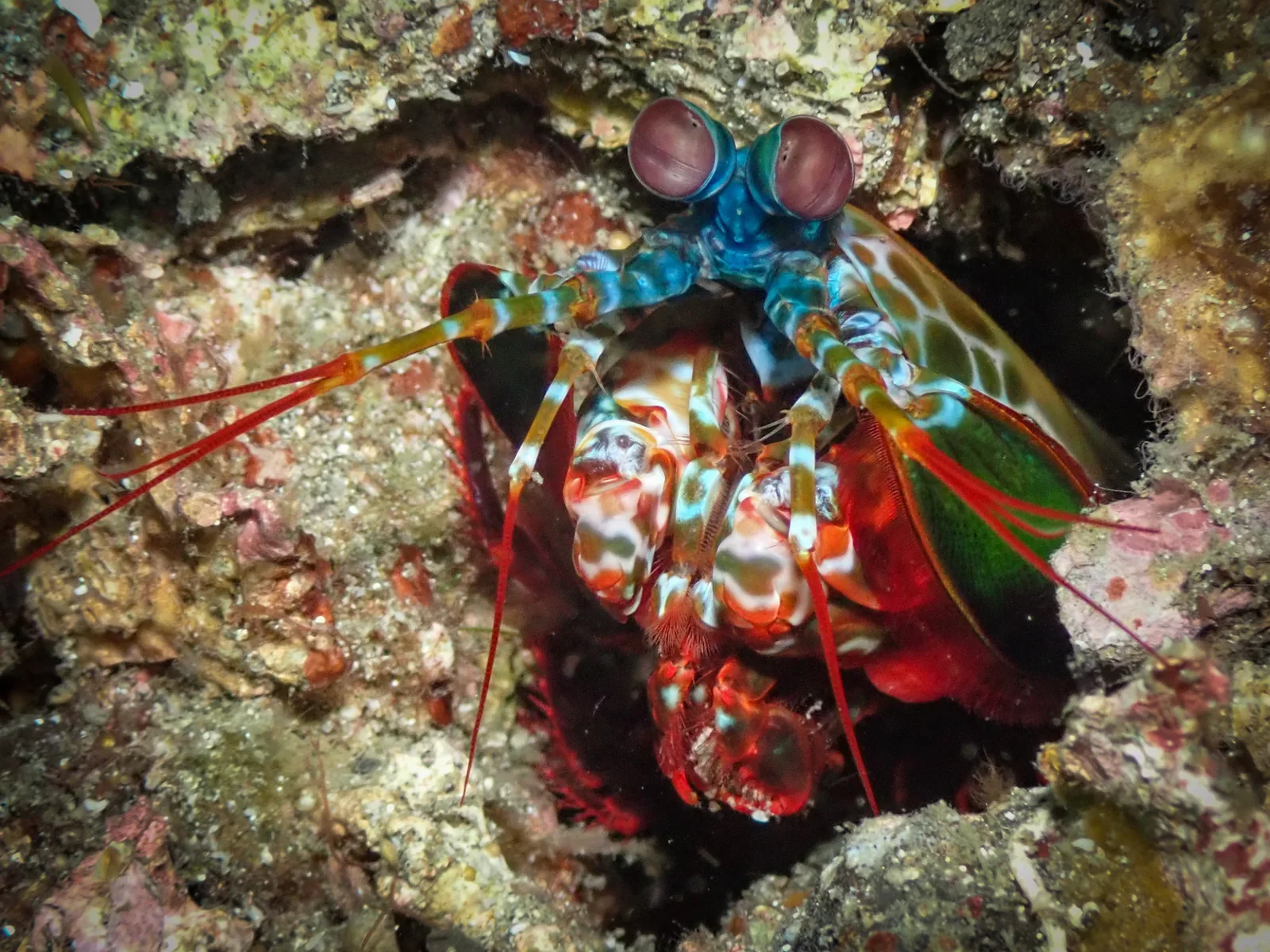
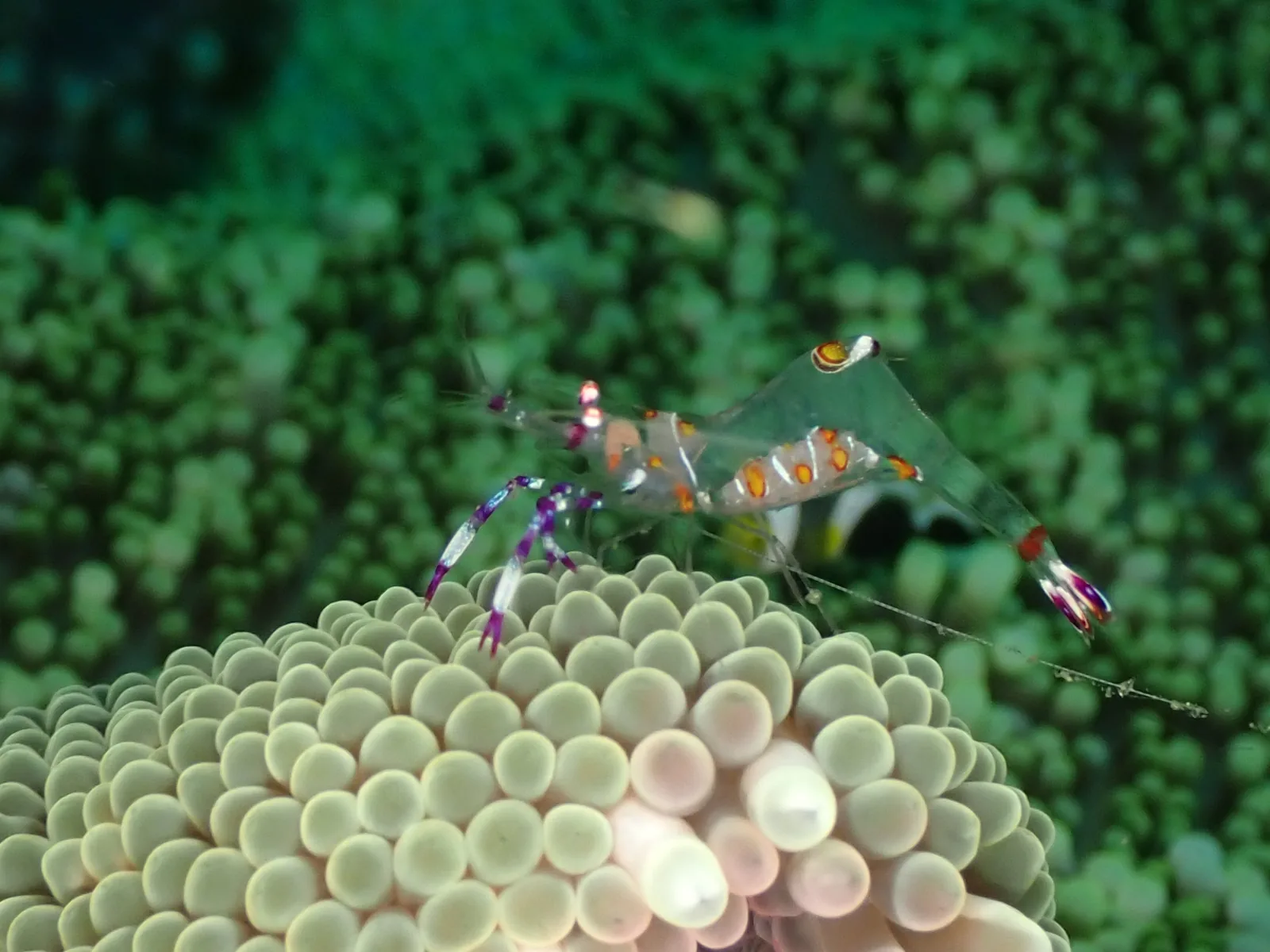
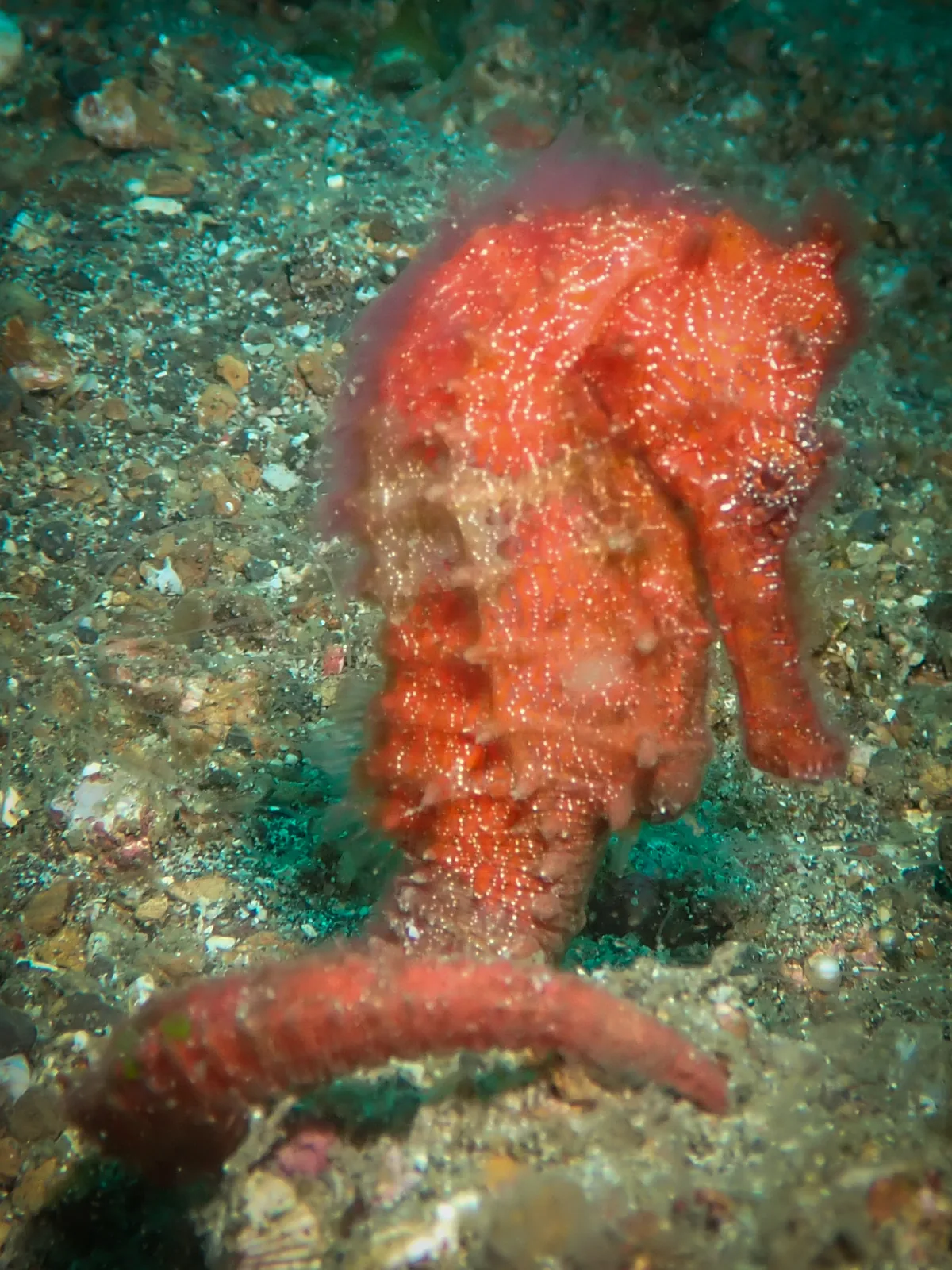
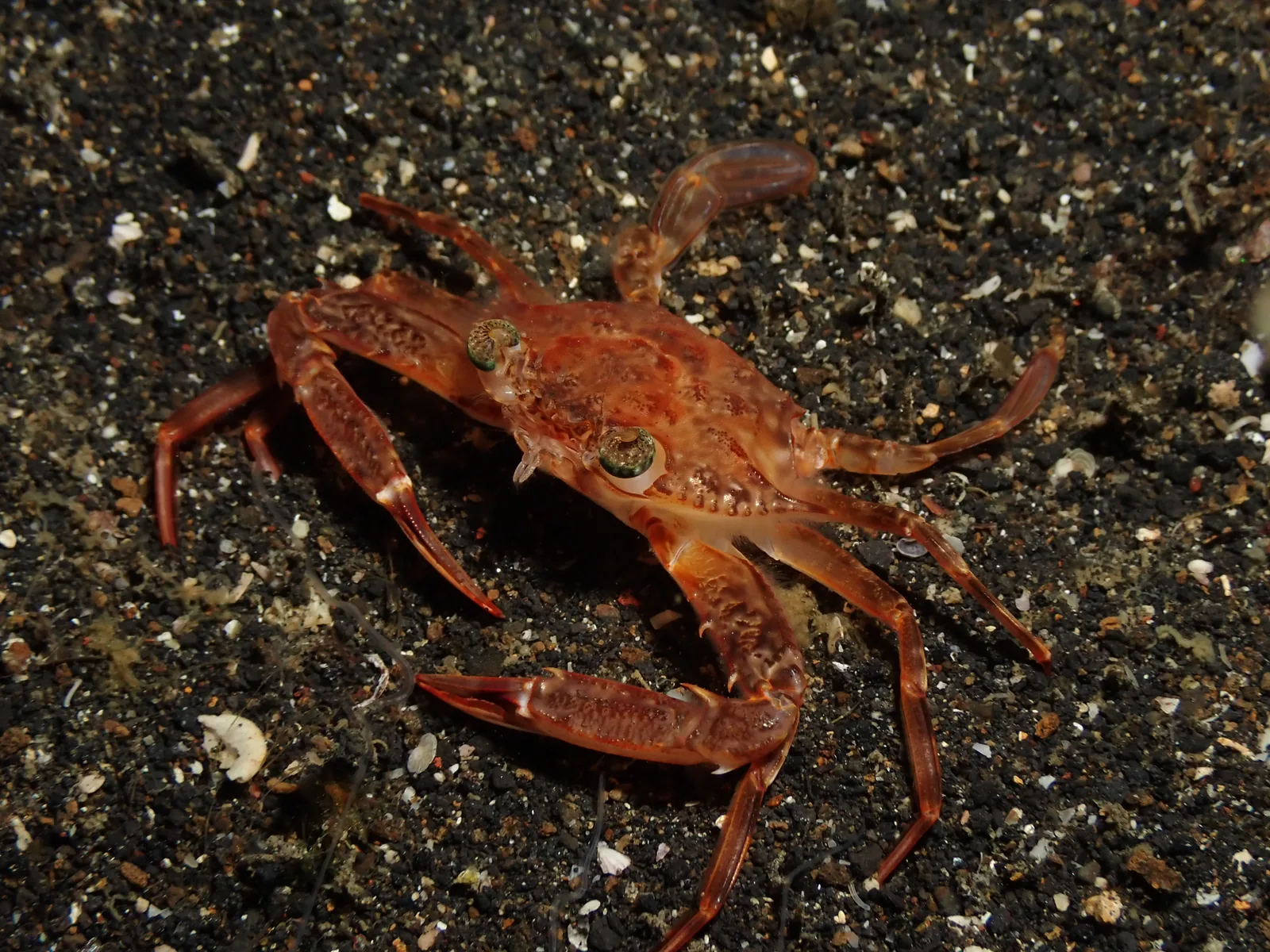
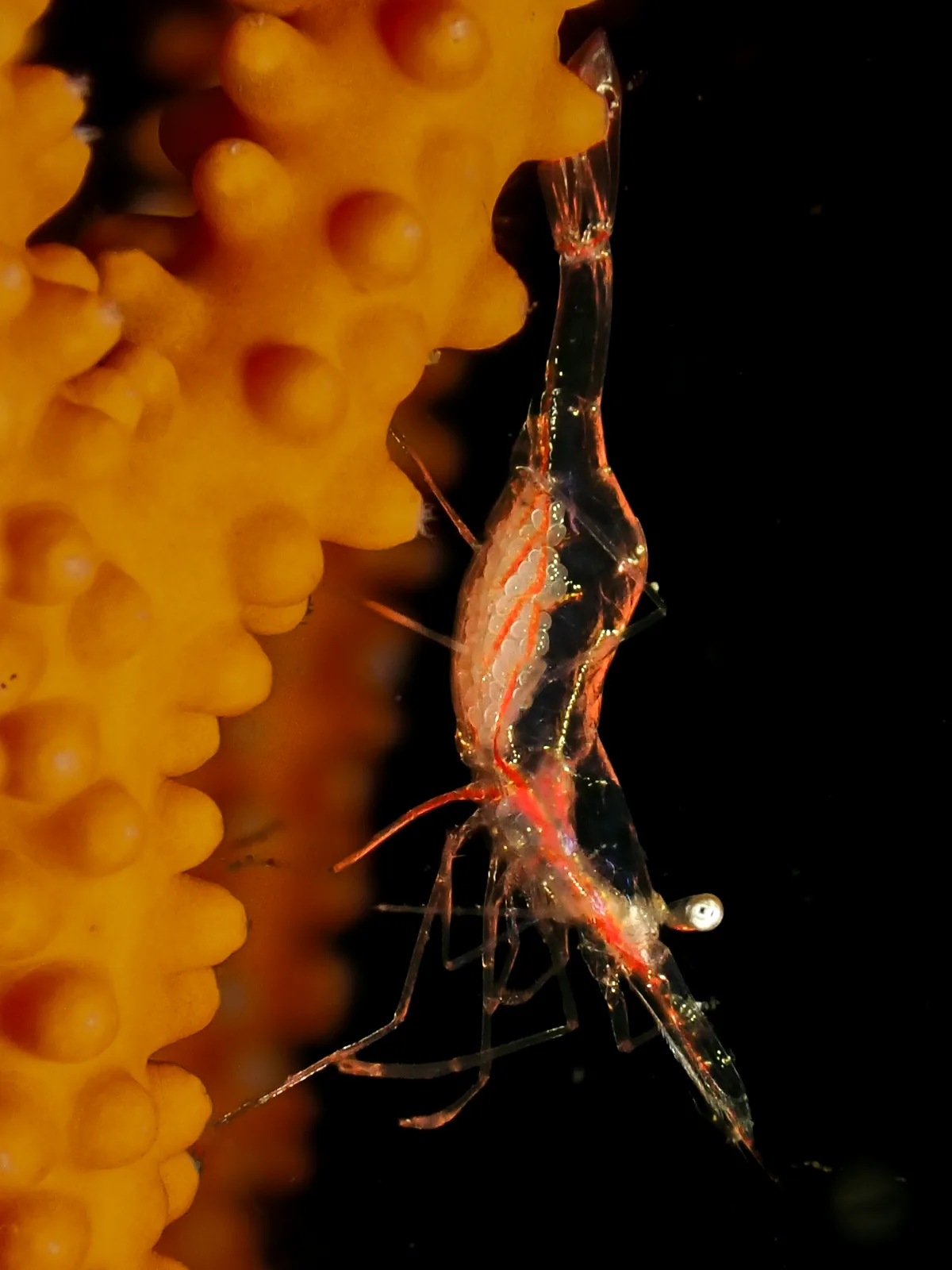
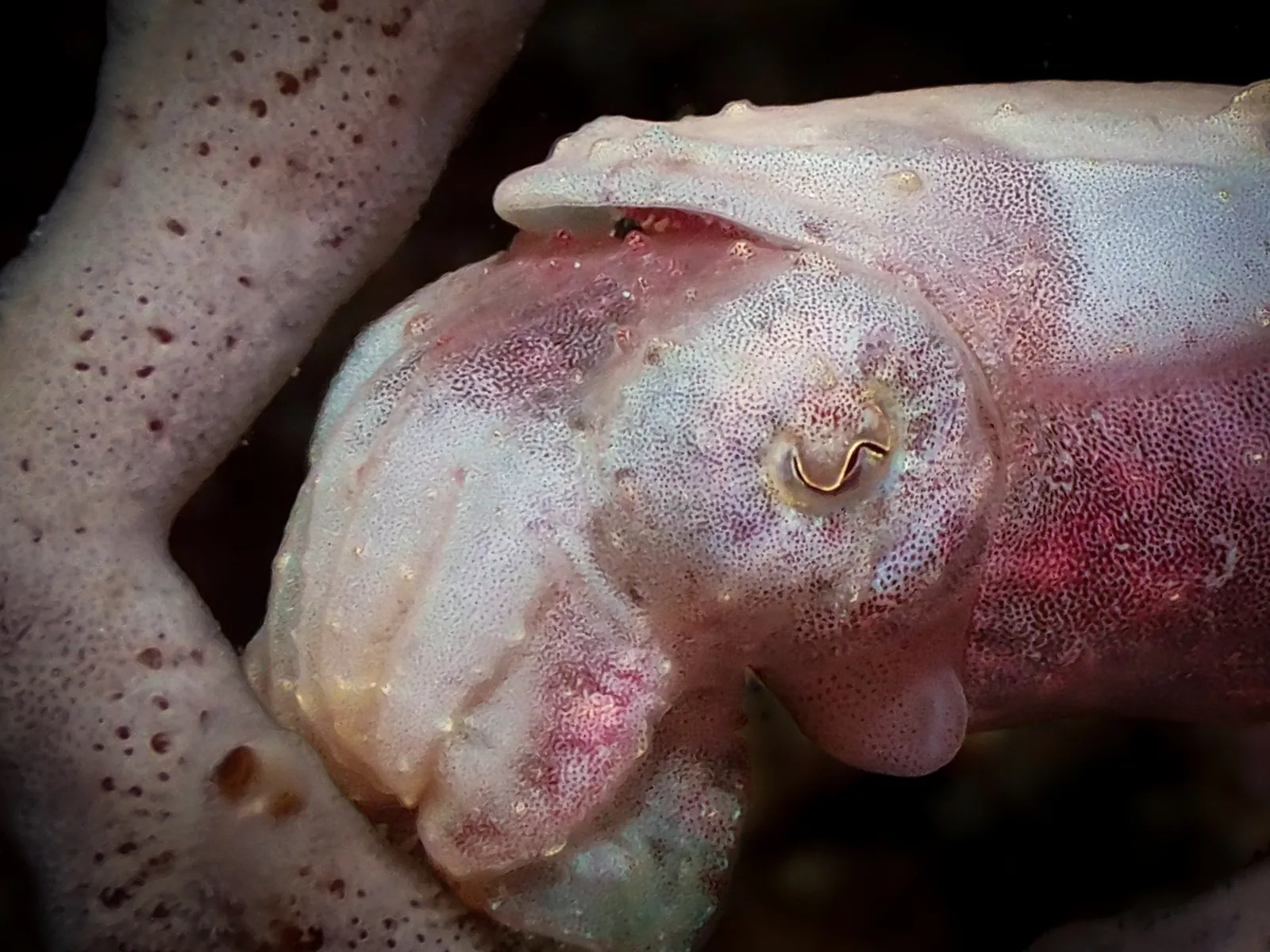
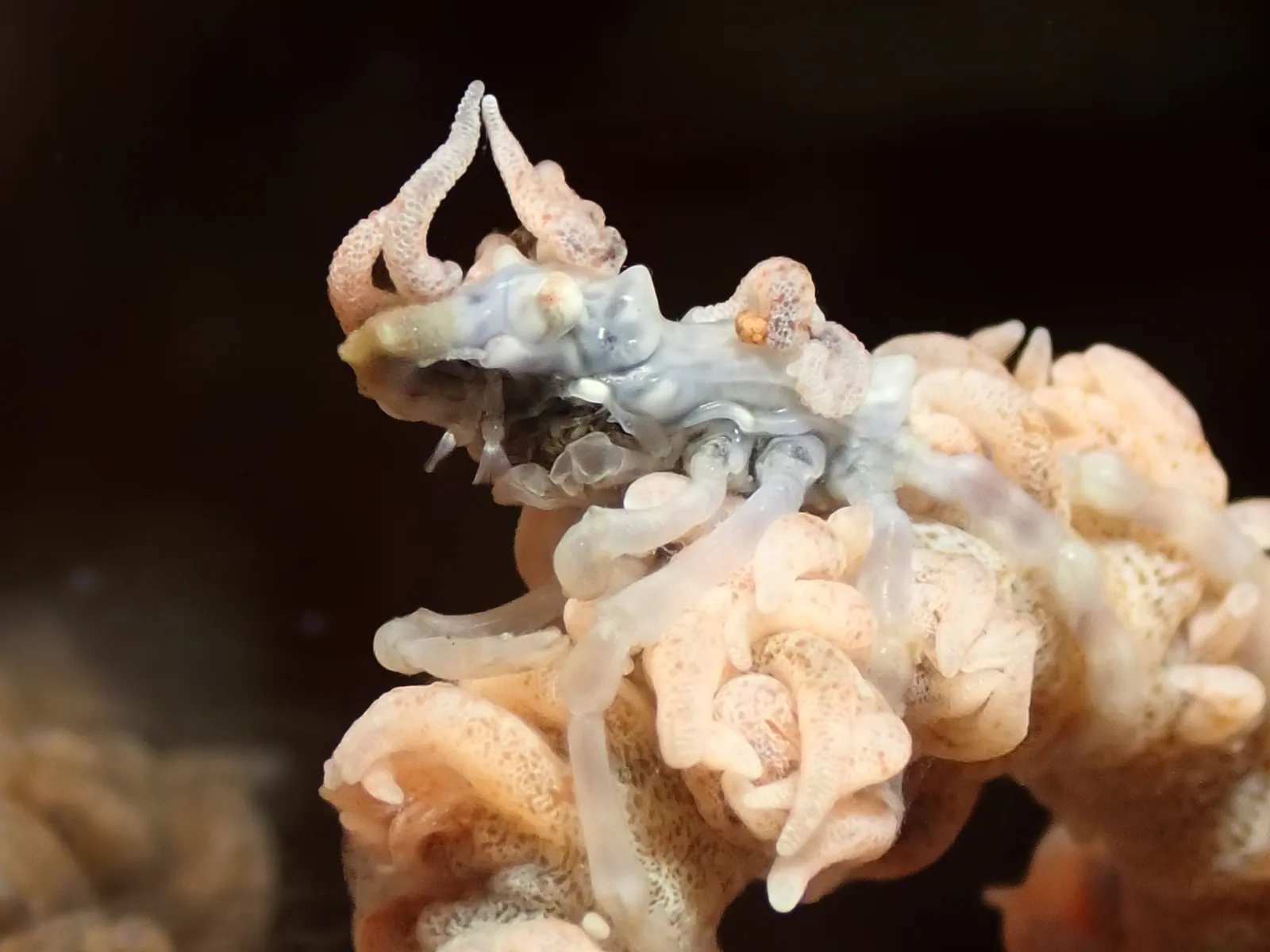
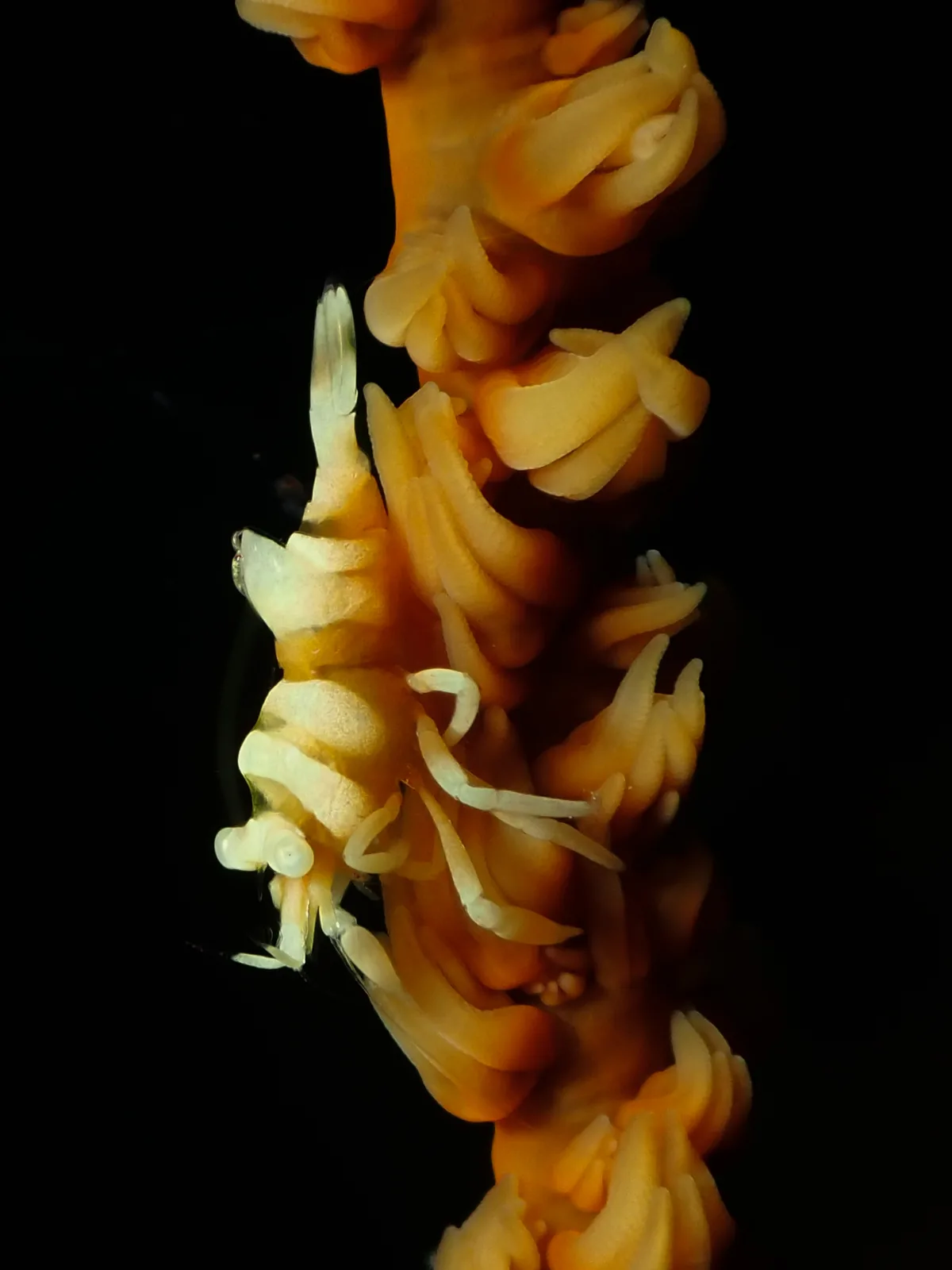
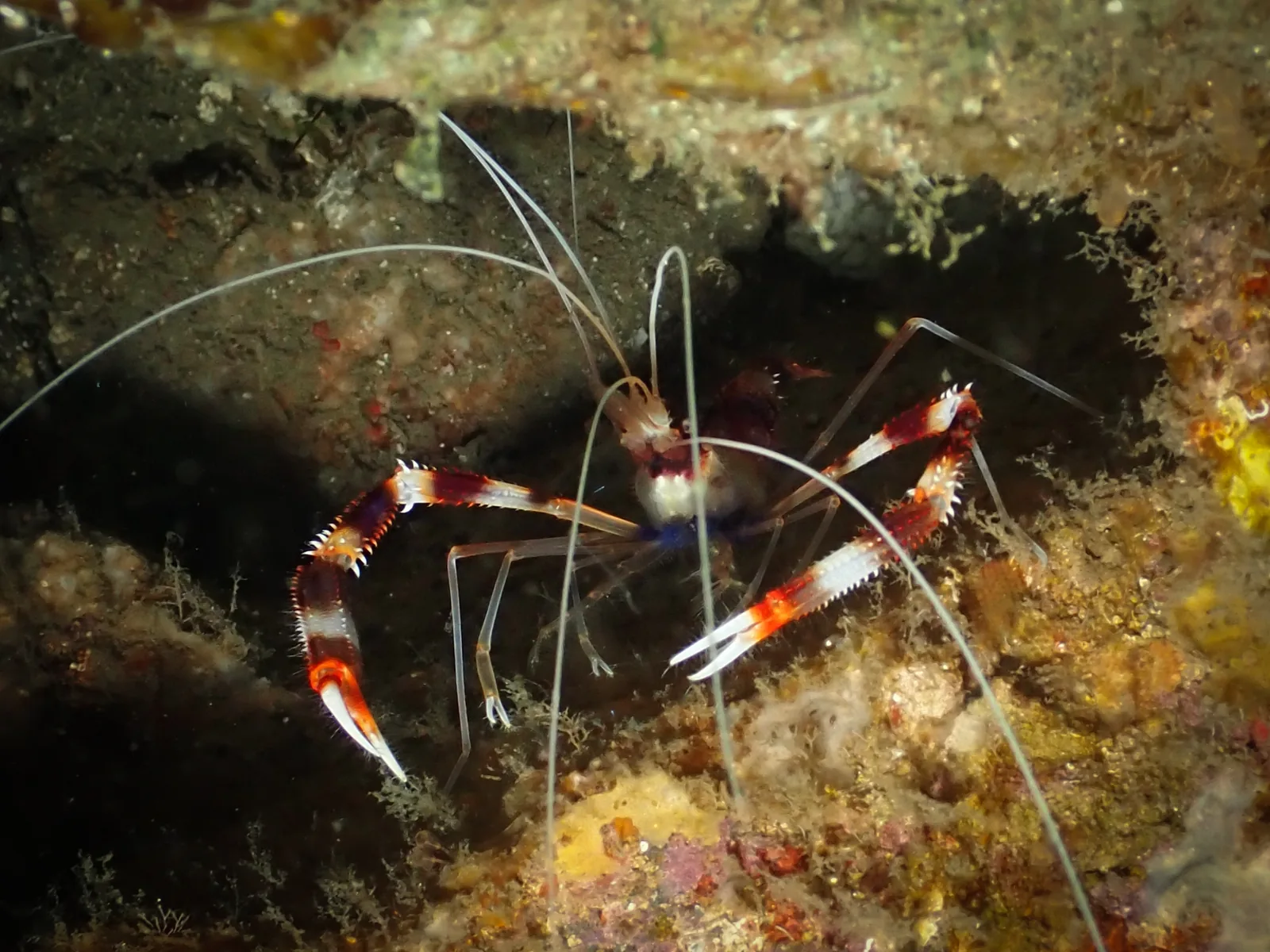
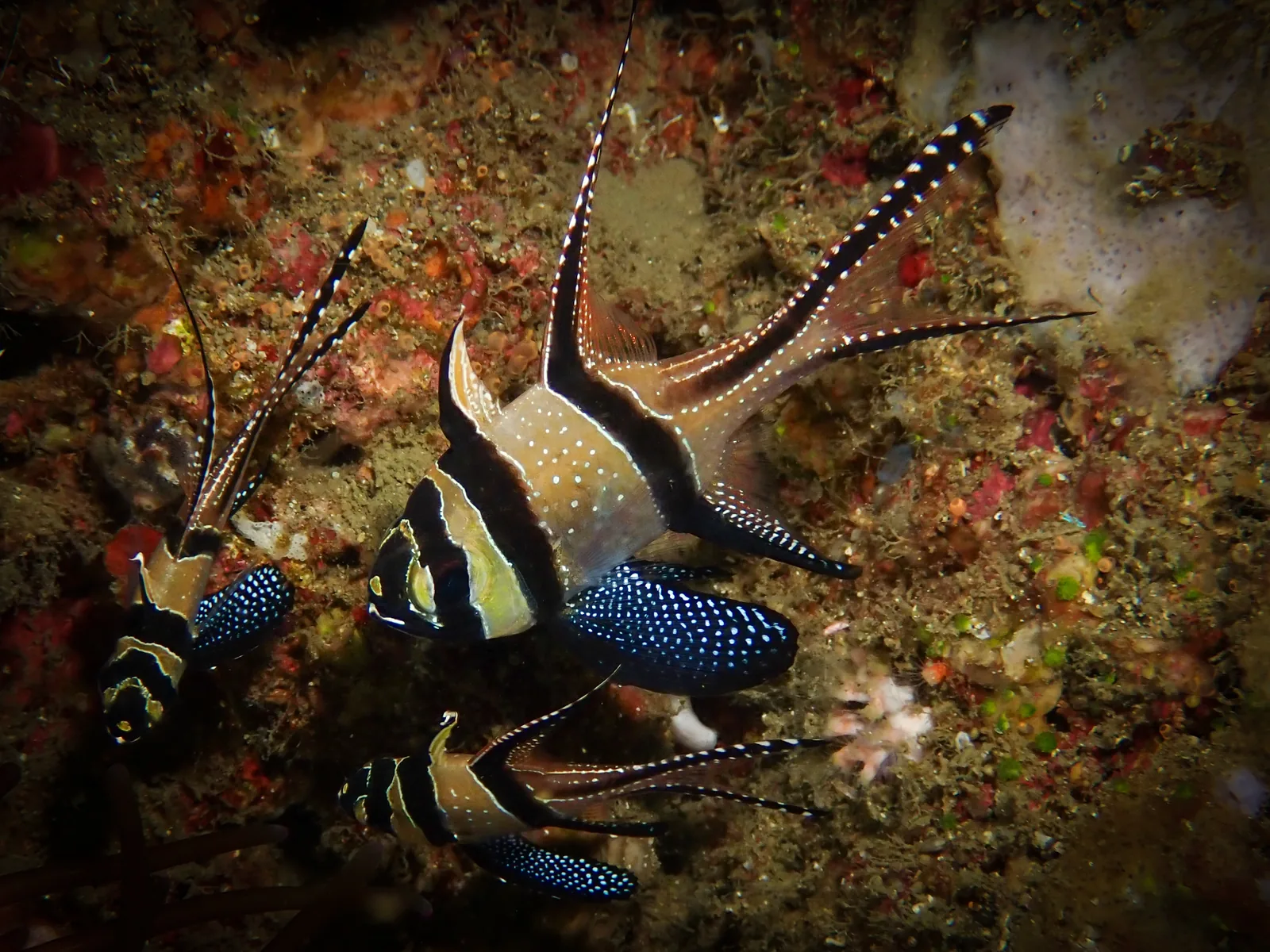
We saw an extraordinary range of animals, including frogfish, seahorses, Rhinopias, shrimps and crabs, flamboyant cuttlefish, mimic octopus, wunderpus, hairy octopus, blue-ringed octopus and the tiny Lembeh sea dragon. Large marine life is not the reason to come here, although we did see a few blue-spotted rays.
Nudi Falls was probably our favourite dive site, rewarding patient searching in one area and producing our blue-ringed octopus mating encounter. California Dreaming showed Lembeh's reefier side, with attractive, healthy-looking coral as well as plenty of holes and crevices to explore for macro subjects.
Andrew found the Olympus TG-7 with the Backscatter MF-2 particularly well suited to Lembeh's small subjects, close working distances, black-sand backgrounds and slow, critter-focused diving.
Personal review
A personal account of our stay at Dive Into Lembeh, the diving, photography facilities, food and overall experience.
We stayed at Dive Into Lembeh for three weeks during August and September 2026, on a trip booked through Diverse Travel. It was a long enough stay to settle into the resort's rhythm, but we still left feeling that there was much more to find in the strait.
Dive Into Lembeh arranged our transfer from Manado airport. The journey took roughly one hour, beginning on a smooth, modern toll road before the final stretch followed narrower, winding and bumpier local roads.
We stayed in a poolside villa, which was lovely. It felt private and had a pleasant outlook toward the Lembeh Strait, although trees partly screened the view and the massage room was nearby. The private balcony hot tub was one of our favourite features. It was warm rather than extremely hot, making it a comfortable place to warm up gradually after diving. In the evenings we sometimes sat there with a drink after dinner and watched the moon rise through the trees.
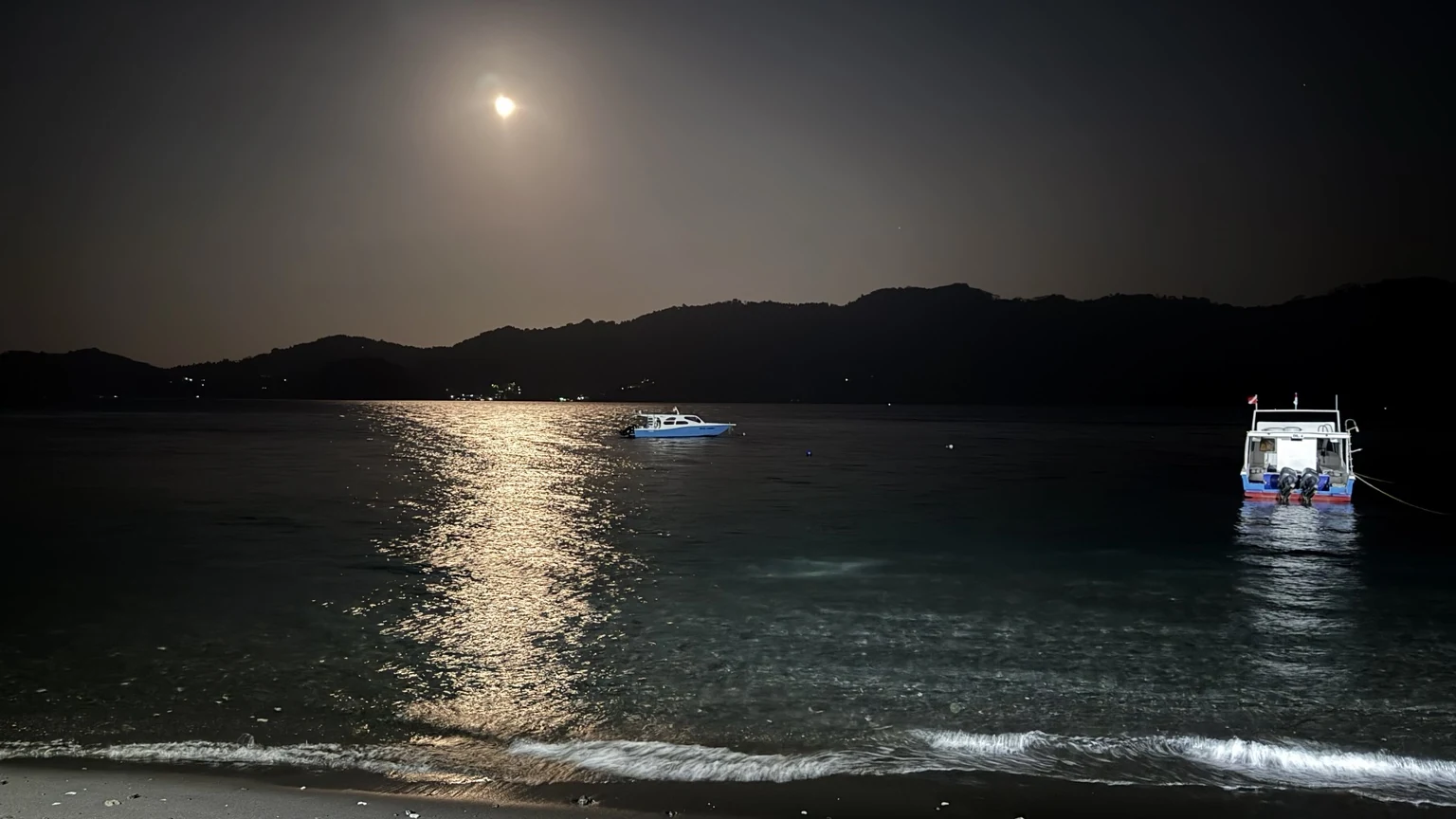
The dive operation felt relaxed but was very well organised. The first dive normally left before breakfast, with tea, coffee, fruit juice and biscuits available beforehand, and breakfast served after the first dive. Fast dive boats departed from the beach, and entries could be made by backward roll or giant stride. The helpful boat crew were equally happy for divers to climb the ladder in their equipment or to remove their BCD and weights in the water and pass them up.
The team assembled our dive equipment and carried it to and from the boats each day. Andrew still personally checked his own life-support equipment before every dive, as we would recommend every diver does. During the full three weeks, he did not find a single setup error.
The dedicated camera room was particularly good, with plenty of work space, strong lighting and ample charging points for cameras, strobes and lights. Once an assembled camera system was ready, it could be placed in the camera tank outside for the crew to take to the boat, creating a simple and effective rinse-and-tank workflow.
The diving repeatedly delivered the small subjects we had travelled for. Nudi Falls became one of our favourite sites because there always seemed to be something new to find, including an unforgettable encounter in which we watched two greater blue-ringed octopuses mating.
California Dreaming showed a different side of Lembeh. The coral there looked healthy and attractive, and although we explored it slowly as a macro site, it could also have made an enjoyable reef dive in its own right.
Vegetarian food was excellent during the first two weeks, when several vegetarian and vegan guests were staying and the selection was clearly separated from the meat dishes. During our final week, when Di and I were the only vegetarians, the choice became noticeably more limited. The kitchen prepared alternatives whenever required, so we never went hungry, but those dishes were simpler than the earlier selection. That inconsistency was disappointing at a resort of this quality, and we would like to see the same excellent vegetarian choice maintained regardless of the guest mix, though it did not outweigh the many strengths of our stay.
Overall, the critter diving, guides, camera facilities, boat operation and relaxed atmosphere worked exceptionally well for us. Di considers Dive Into Lembeh her favourite dive resort, and we both intend to return. The resort also organised our onward transfer to Murex Manado, so the travel arrangements at both ends were straightforward.
Continue browsing the MacroDivers destination pages, including Ambon, Anilao, Raja Ampat and Mozambique.
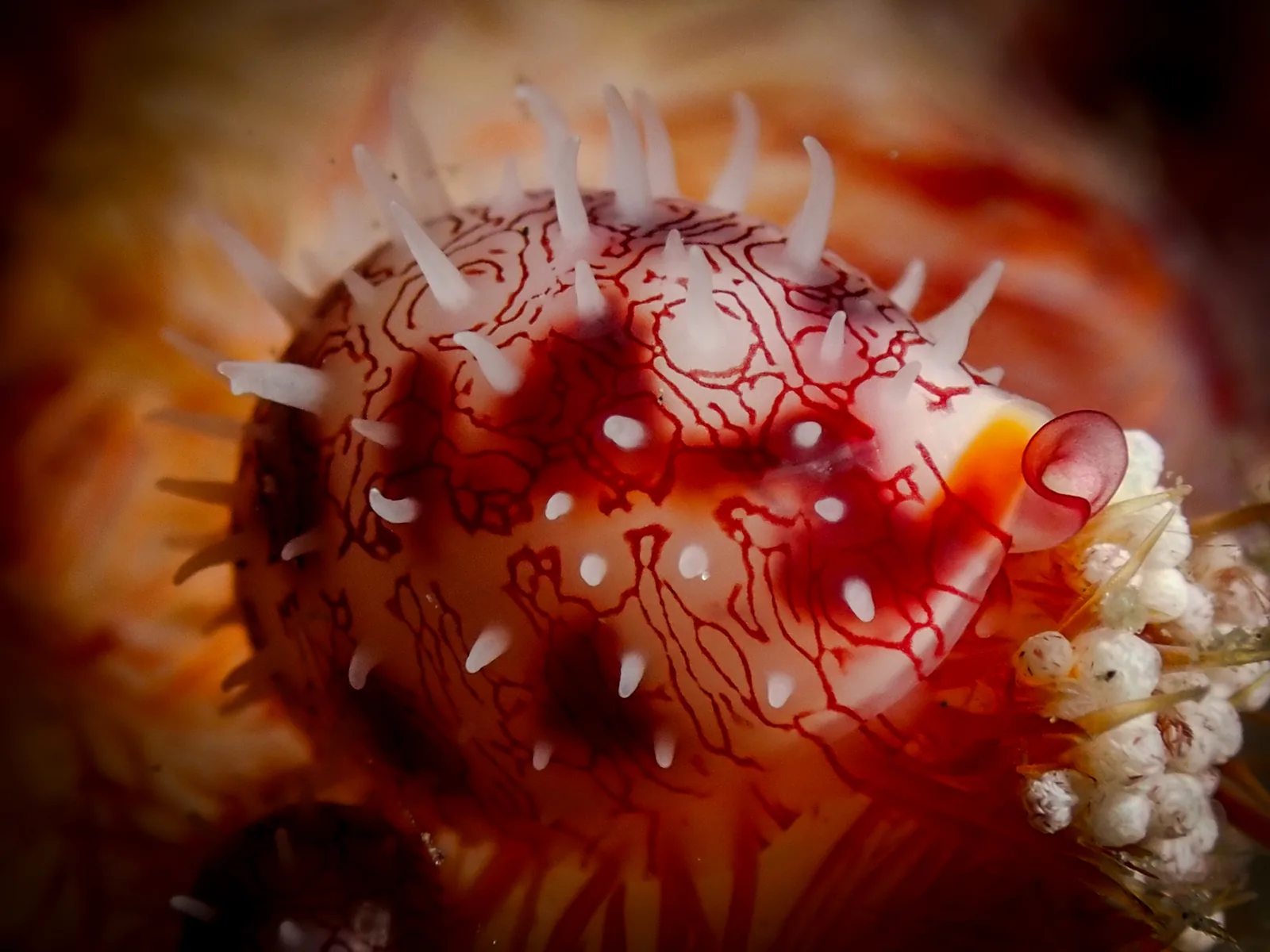
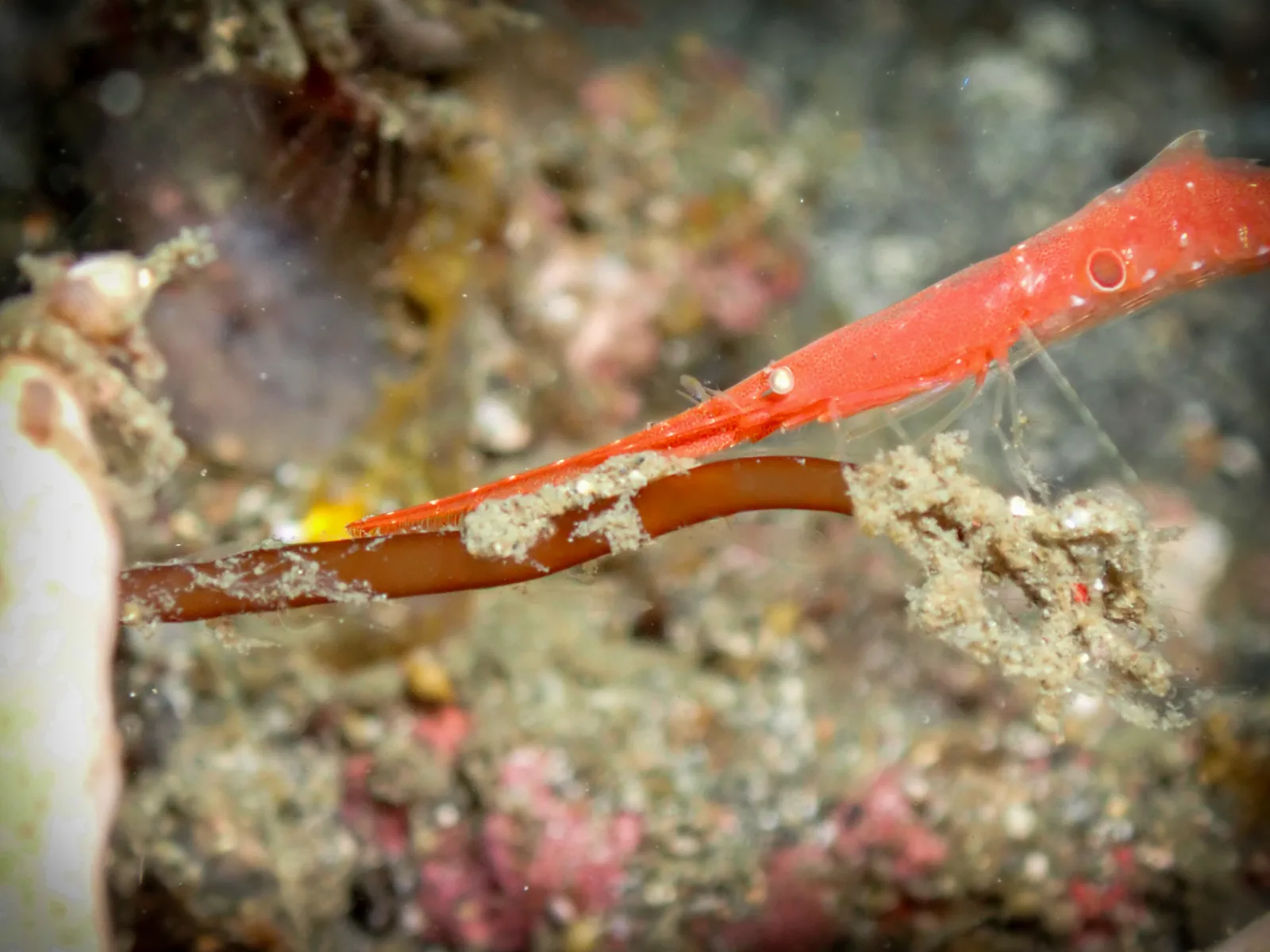
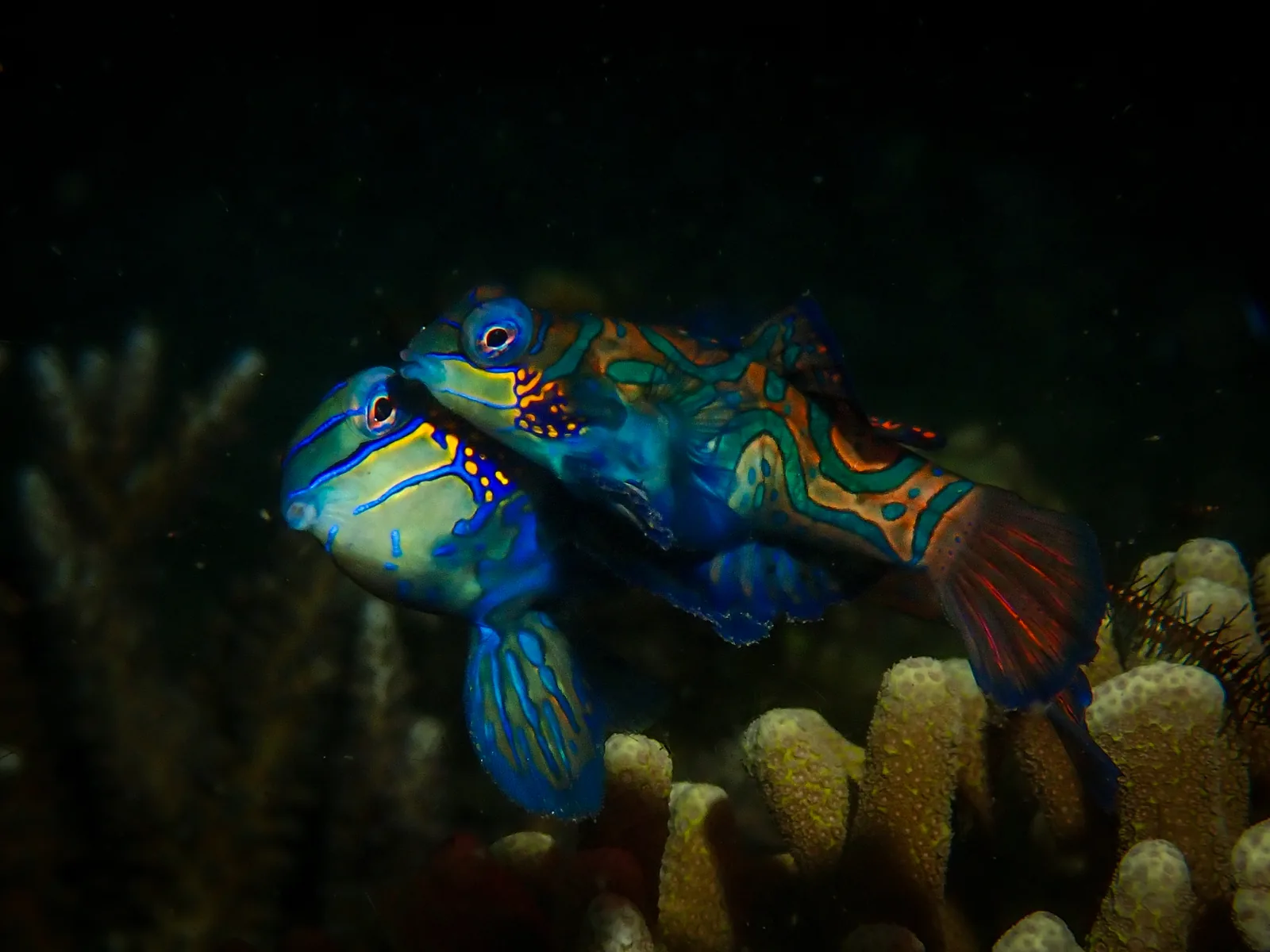
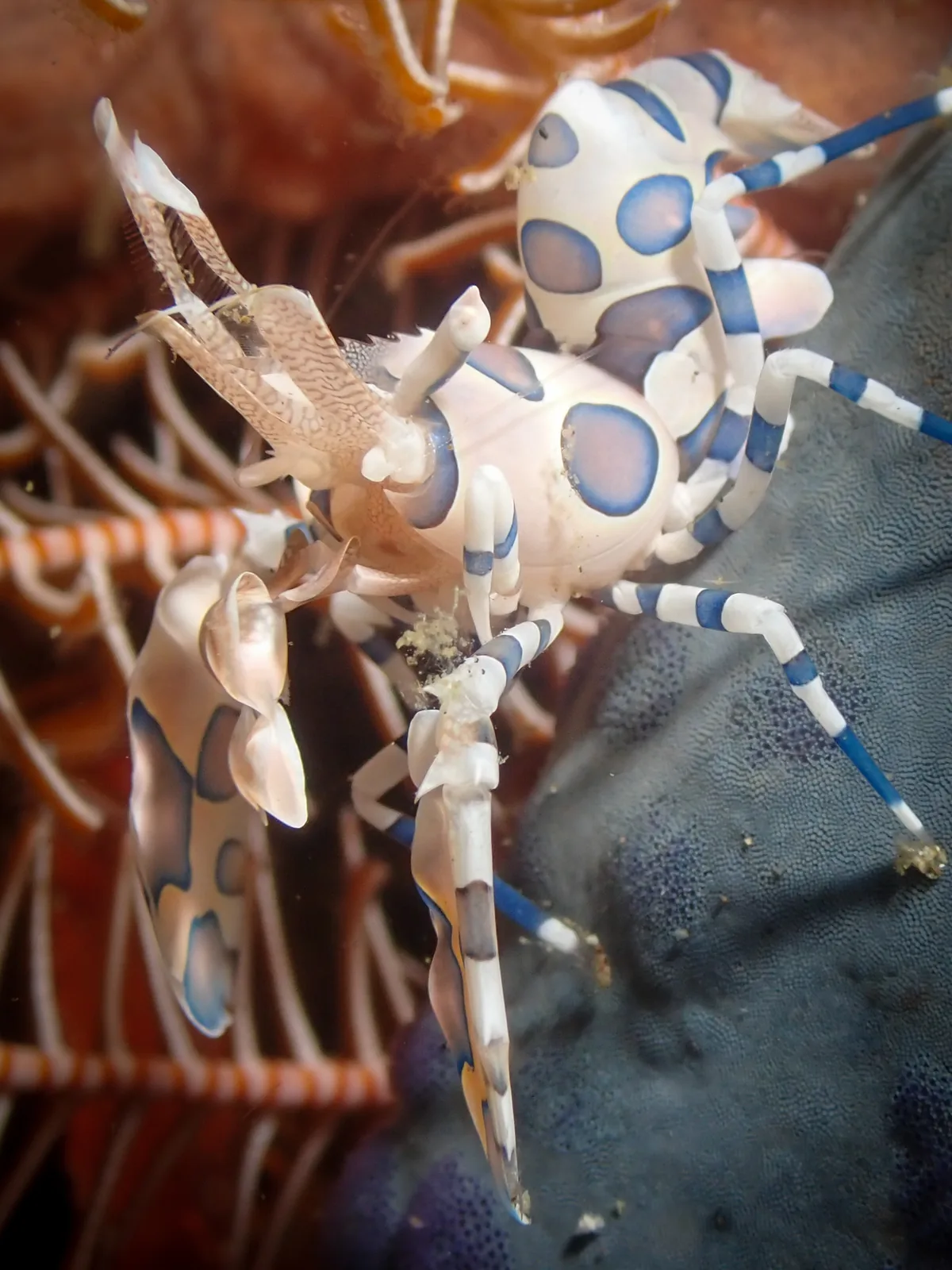
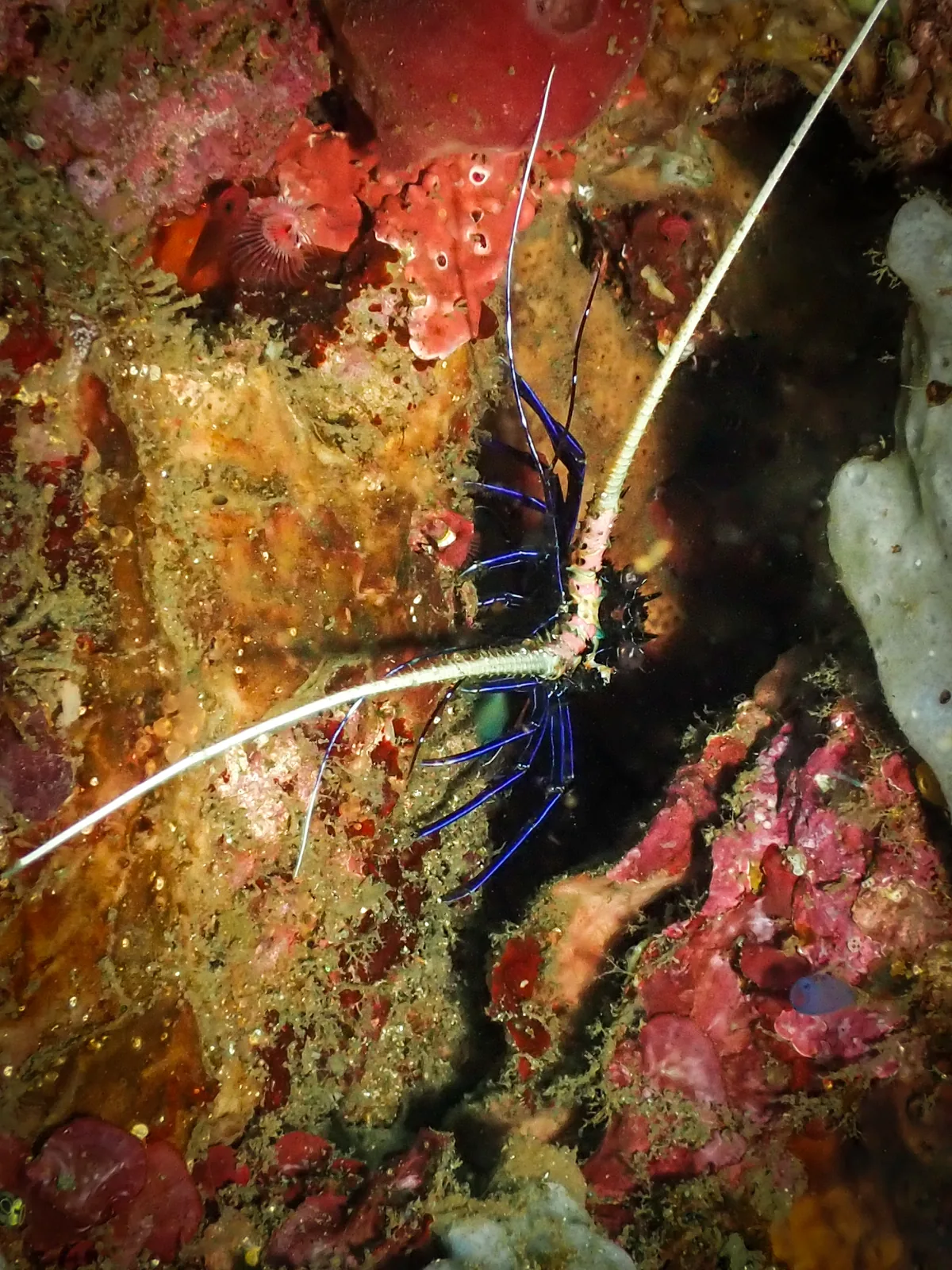
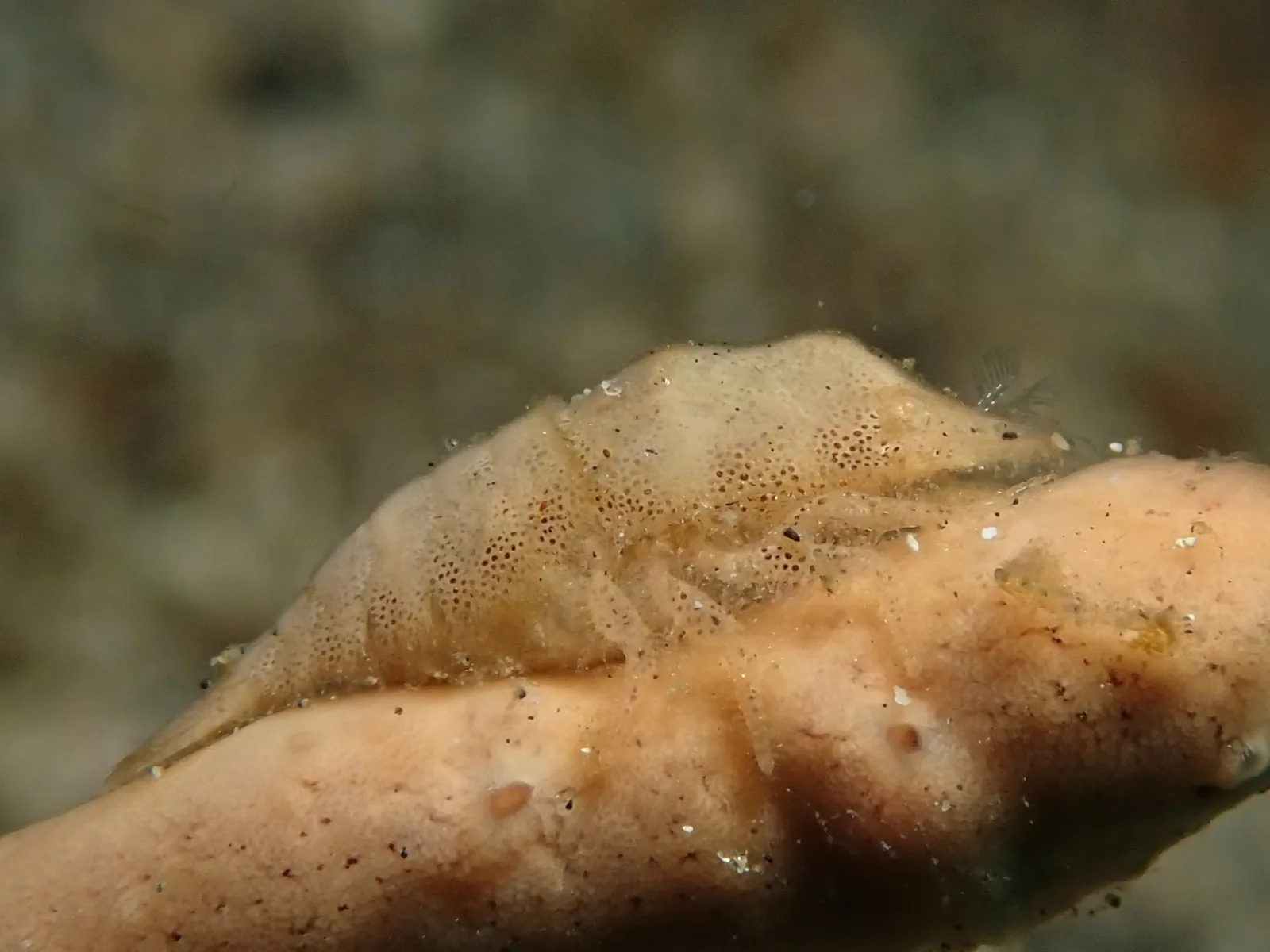
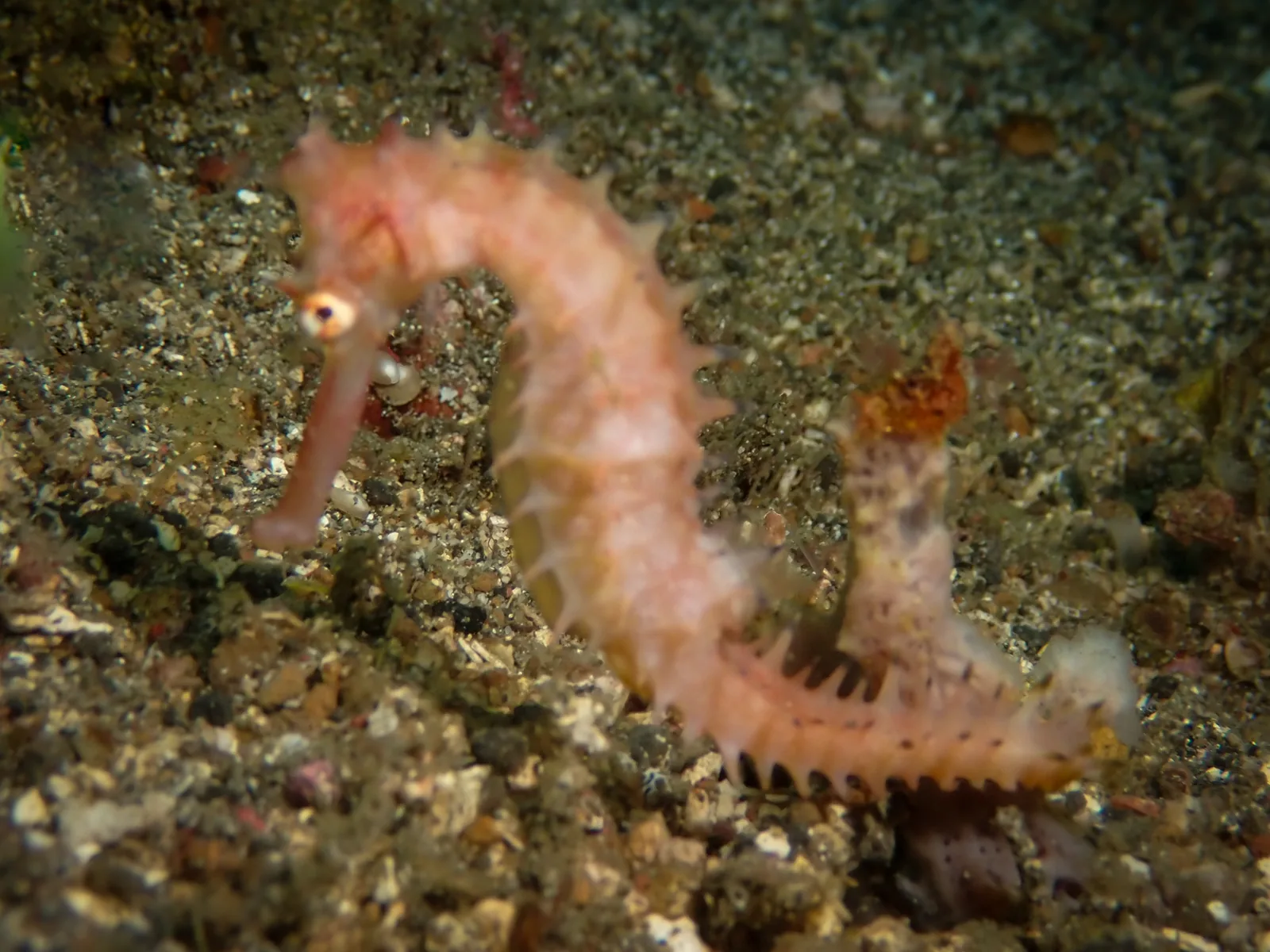
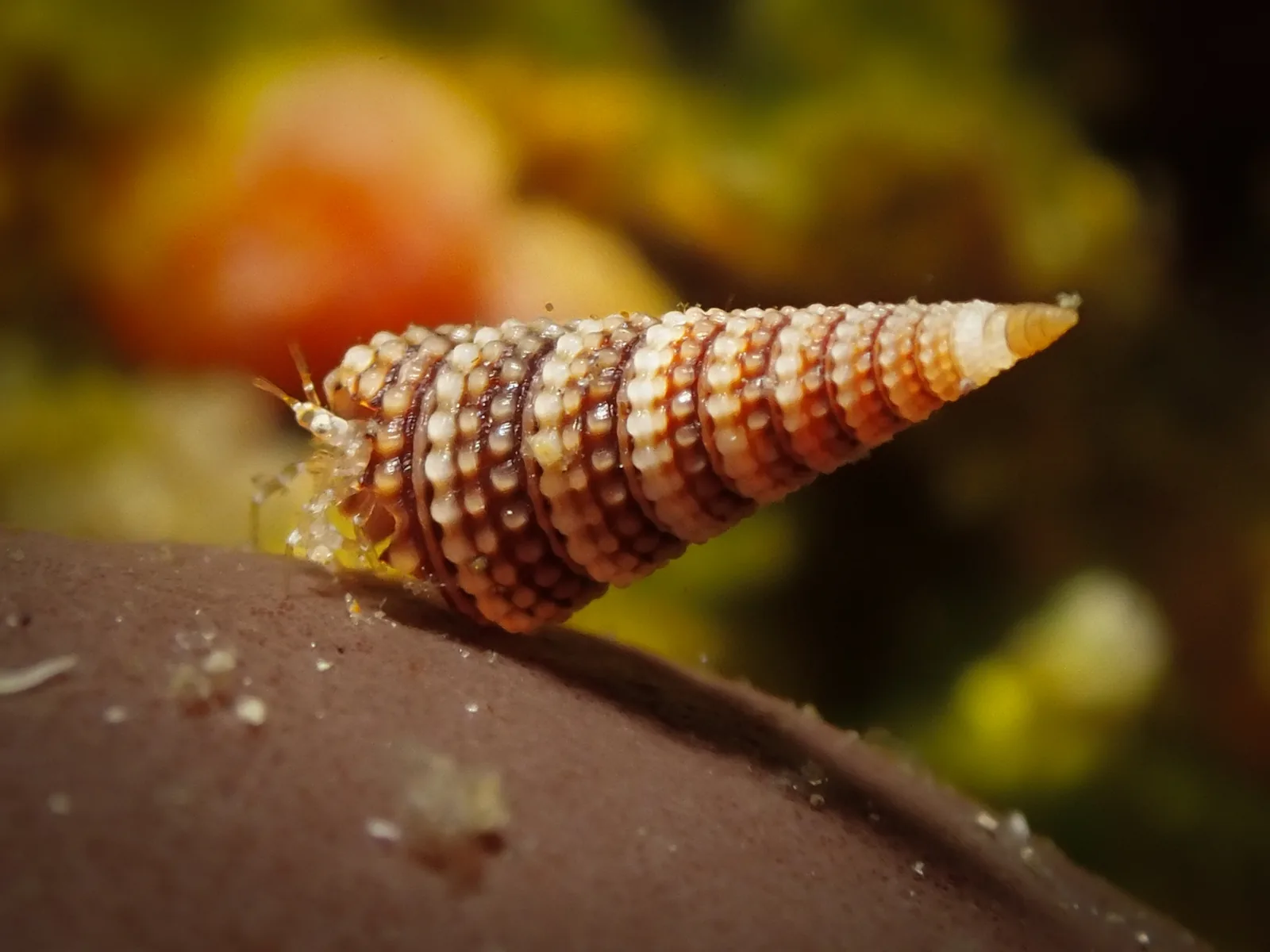
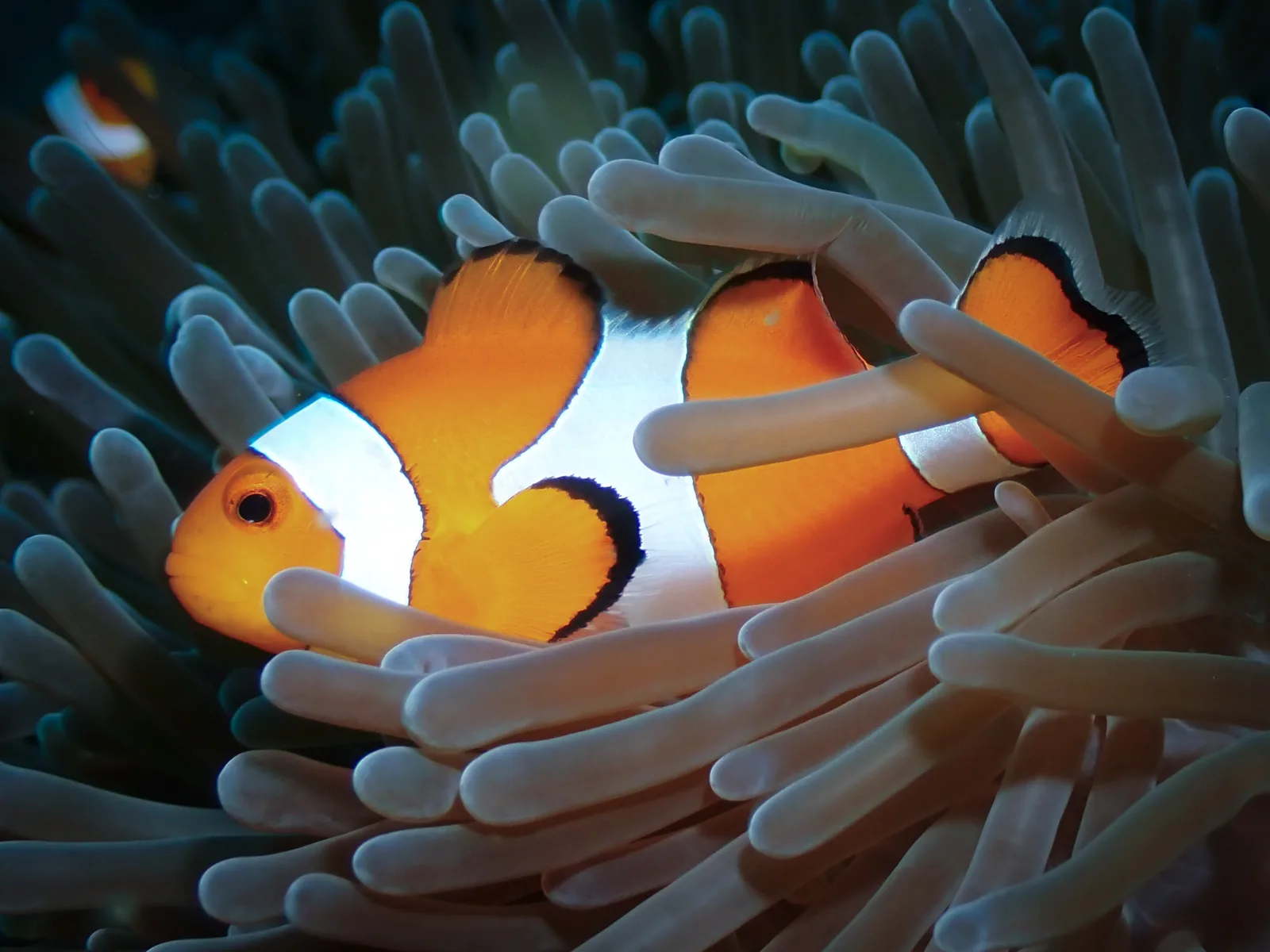
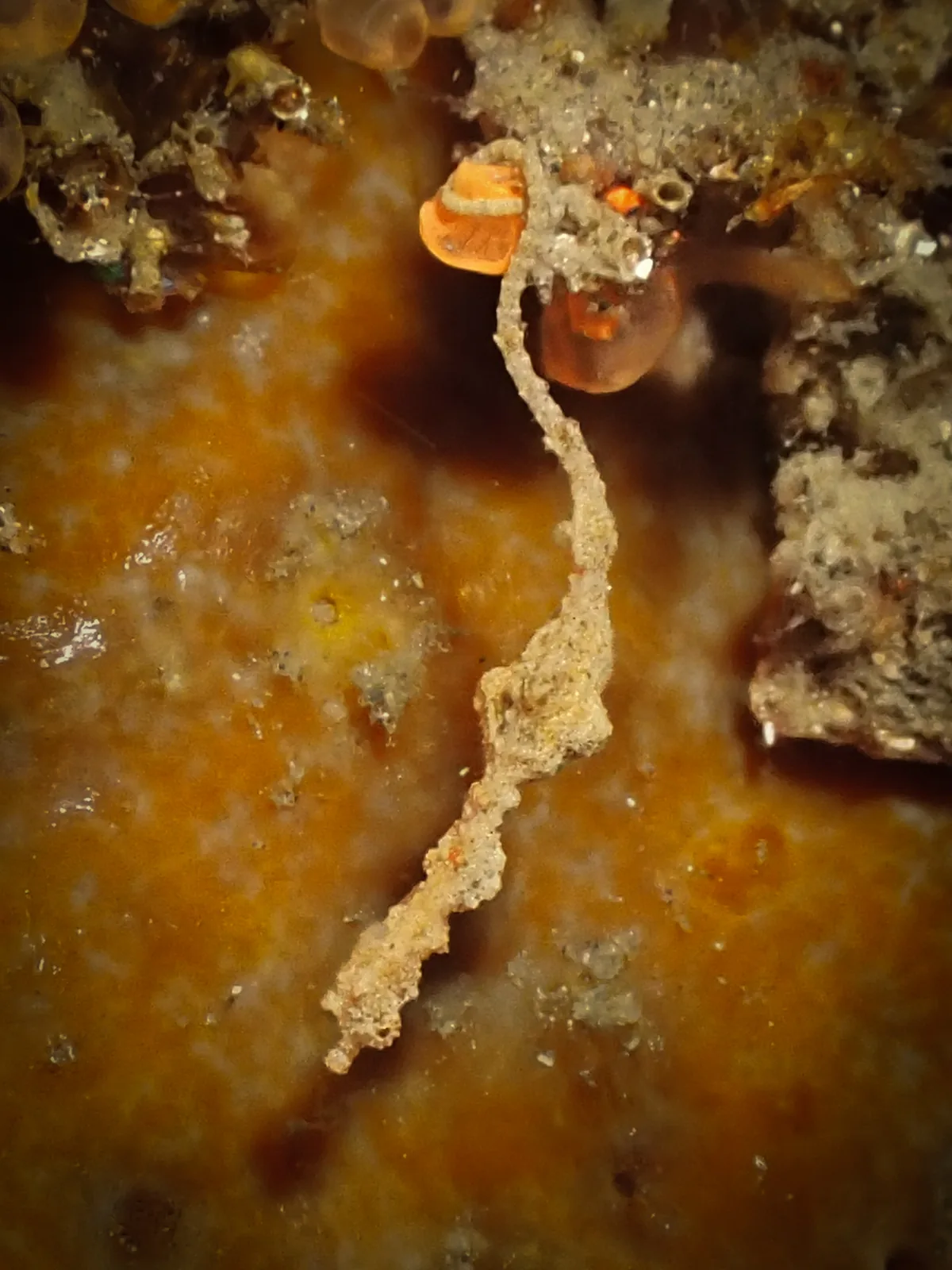
Back to destinationsSelected photographs from our August 2026 Lembeh diving, identified and prepared for the MacroDivers gallery. Photography: Andrew Grundy.
Yes. Lembeh's small subjects, close working distances, black-sand backgrounds and slow critter-focused diving make it especially rewarding for macro photographers.
Much of the diving is classic muck diving over black volcanic sand and rubble. Careful buoyancy, patient searching and an experienced guide help reveal the animals hidden in an apparently ordinary seabed.
Nudi Falls was our favourite for repeated critter encounters, including mating blue-ringed octopuses. California Dreaming offered a reefier contrast with attractive, healthy-looking coral.
Andrew used an Olympus TG-7 with a Backscatter MF-2. The compact setup suited Lembeh's small subjects and close working distances particularly well.
It was excellent during our first two weeks. The choice reduced during the final week when we were the only vegetarians, although the kitchen prepared alternatives whenever required.