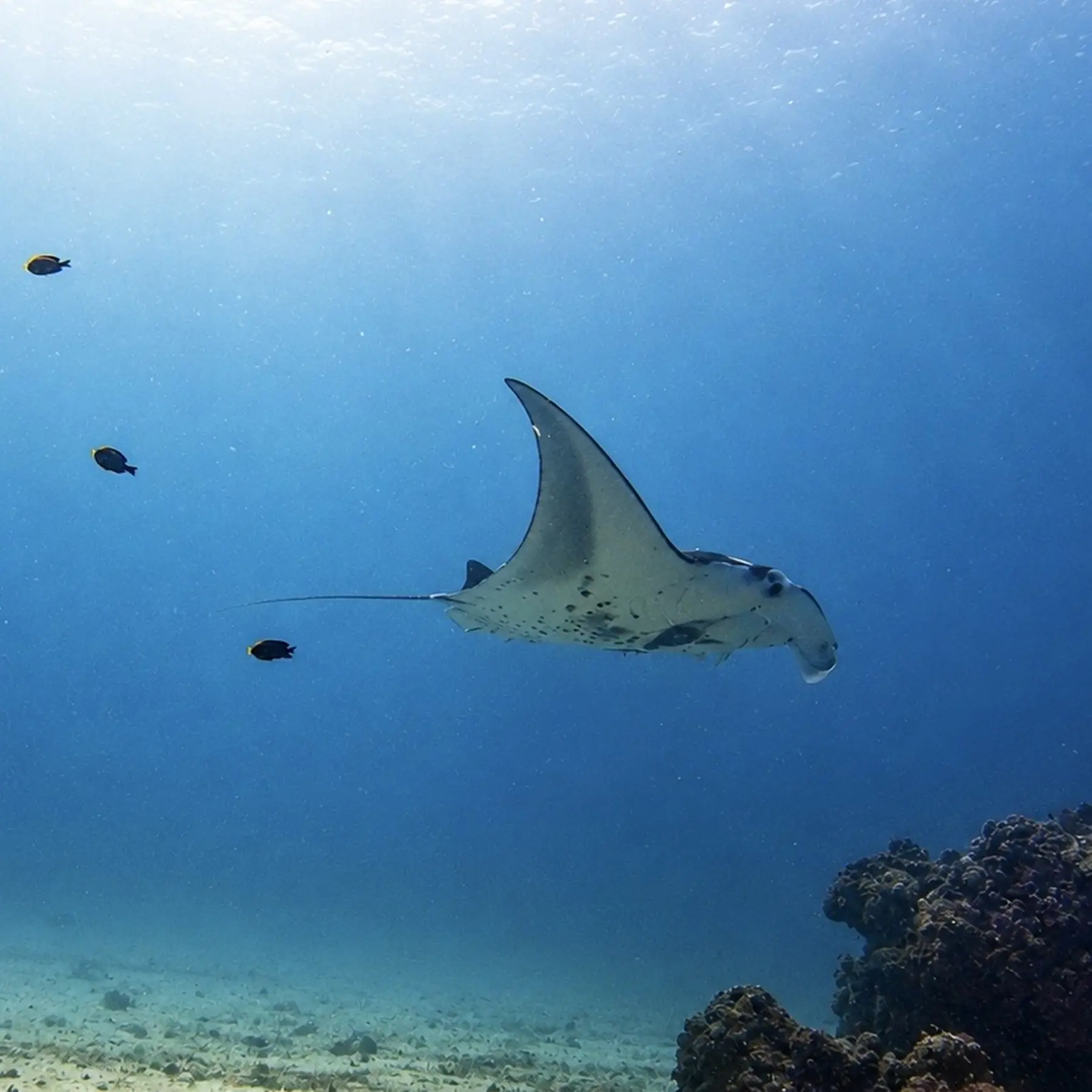
Oceanic manta rays
Raja Ampat is one of the great places to experience manta rays, with encounters that can completely dominate a dive in the best way.
Destination
From oceanic manta rays to tiny nudibranchs, Raja Ampat gave us the perfect mix of big encounters, reef colour and macro life.
We travelled to Raja Ampat in November 2025 as part of a Dive Worldwide Critters and Kings dual centre trip, combining world class reef diving with the small subjects that make macro photography so addictive.
November 2025
Our Raja Ampat trip was part of a Dive Worldwide Critters and Kings dual centre itinerary. It was exactly the kind of trip that suits MacroDivers: spectacular big animal encounters alongside the smaller, stranger and more easily missed creatures that reward patient divers.
Raja Ampat is one of those rare destinations where the wide angle and macro worlds sit side by side. One dive can be about reef slopes, schooling fish and manta rays; the next can be about slowing down, looking closely and finding nudibranchs, shrimps, pipefish and other tiny animals hidden in the reef.
Destination: Raja Ampat, Indonesia
Travelled: November 2025
Tour Operator:
Dive Worldwide
Trip type: Dive Worldwide Critters and Kings dual
centre trip
Dive Resort:
Waiwo Resort, Waisai
Dive operator:
Dive Into Raja Ampat
Focus: Manta rays, reefs, nudibranchs and macro
life
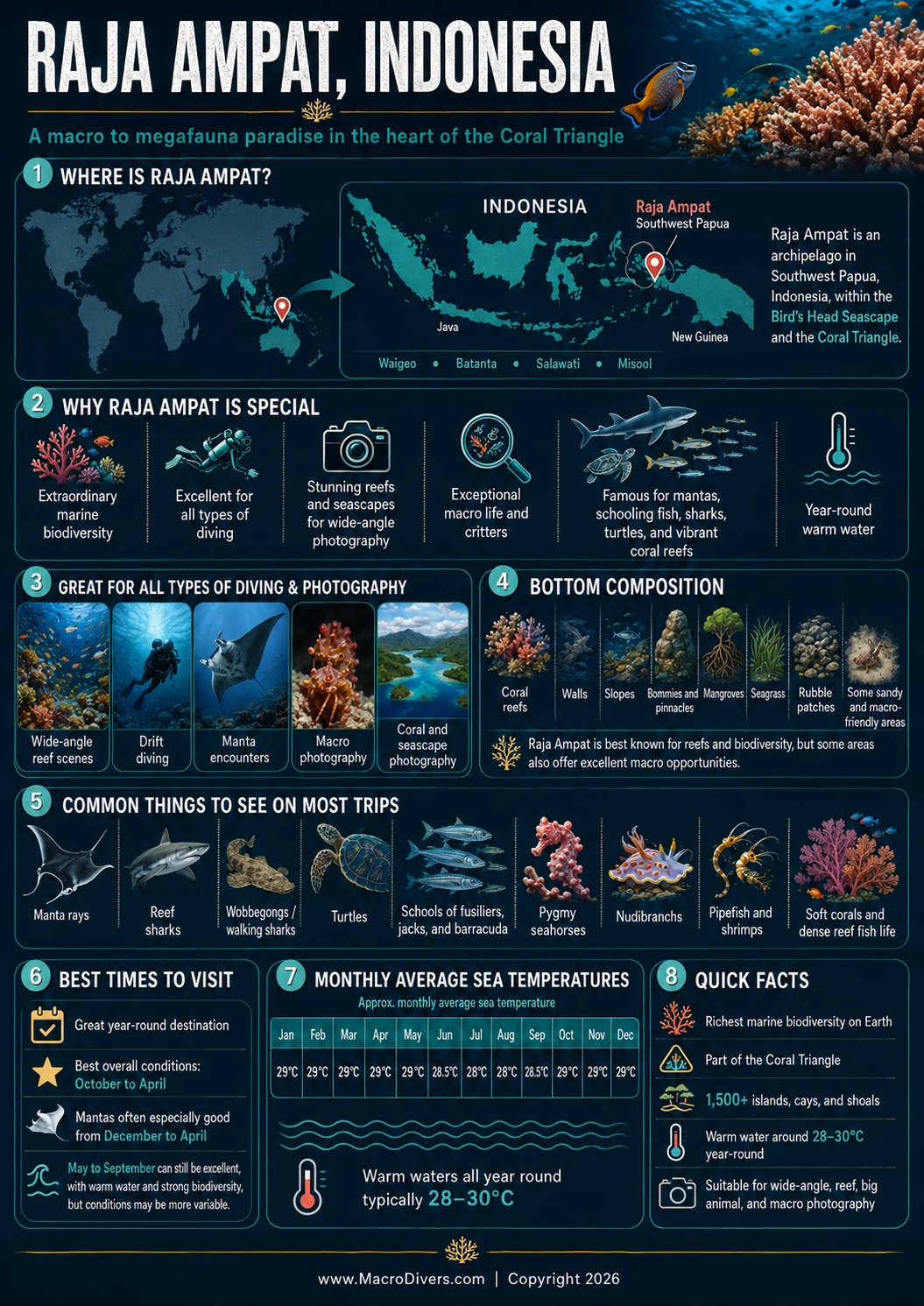
A quick visual guide to where Raja Ampat is, why it is one of the world's great diving and photography destinations, the typical bottom composition, what divers commonly see and when to visit.
We dived with Dive Into Raja Ampat, a well run dive operation located around a 15 minute drive from the ferry terminal. That made the arrival and transfer process straightforward, which is always welcome after the longer journey required to reach Raja Ampat.
The operation felt organised and practical, with the kind of local knowledge that matters in a place where tides, currents and site choice can shape the whole diving day.
Dive operation
Dive Into Raja Ampat has dive teams that know when to visit each site, how to work with the current and where to look for both the headline animals and the smaller subjects hiding in plain sight.
Marine Life
The range of marine life was the real strength of this trip. We saw everything from large oceanic manta rays to nudibranchs, making Raja Ampat a superb destination for both dramatic encounters and careful macro photography.
Raja Ampat is one of the great places to experience manta rays, with encounters that can completely dominate a dive in the best way.
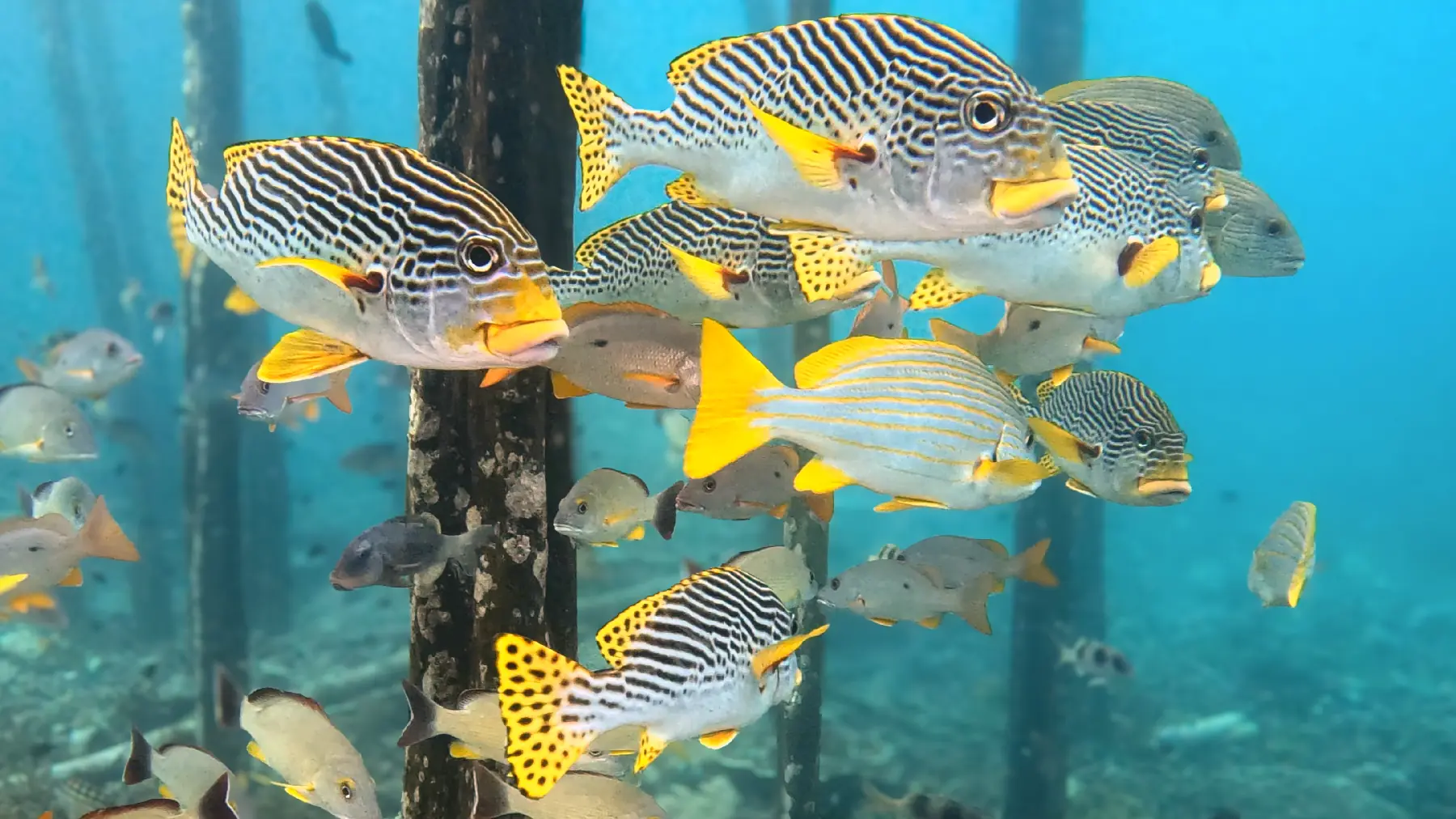
Healthy reef scenes, soft corals and busy fish life make Raja Ampat visually overwhelming in the best possible sense.
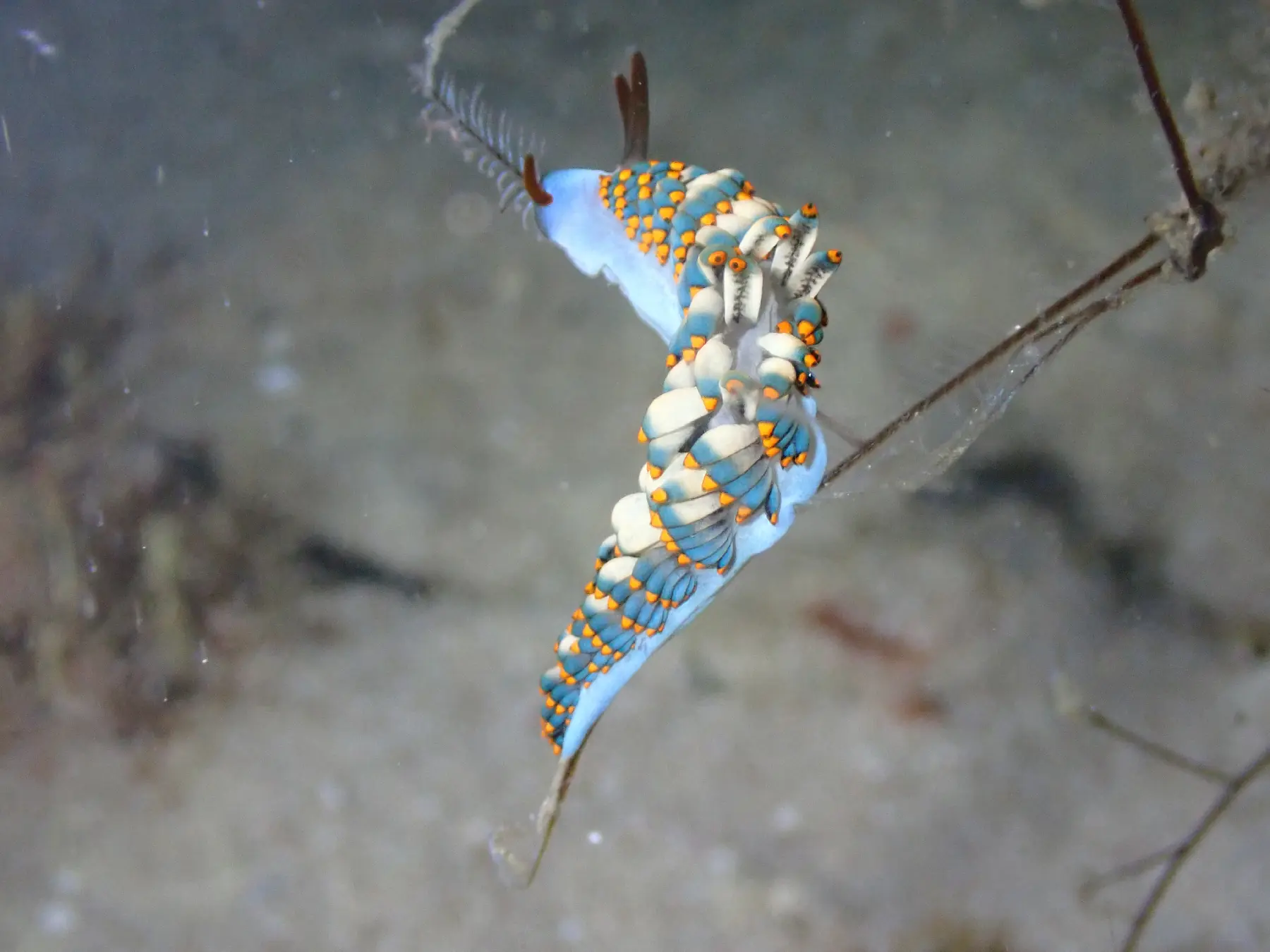
For MacroDivers, the nudibranchs and smaller critters are just as important as the big encounters. Raja Ampat delivered both.
Macro lifeMacro focus
Raja Ampat gave the trip a broad, dramatic opening: reefs, current, colour and manta rays, with enough small life to keep the macro cameras busy.
That mix matters because it shows that macro photography does not only belong in classic muck-diving destinations. Raja Ampat offers reef scale and big encounters while still rewarding slow, careful diving for smaller subjects.
Personal review
A personal account of our stay, diving, and overall experience.
We visited Raja Ampat in November 2025 as the first part of our Dive Worldwide “Critters and Kings” trip, before continuing on to Ambon.
After arriving in Jakarta, we had a day room to rest before taking the overnight flight to Sorong. From there, the journey continued with a wait in a hotel lobby, followed by the afternoon ferry across to Raja Ampat and a short road transfer to the resort. It was a long travel route, but that is very much part of reaching somewhere as remote and special as Raja Ampat.
We stayed at Waiwo Resort, which felt like a perfect little oasis. Our room was literally only a couple of metres from the beach, and one of the real pleasures of the stay was lying on the bed, looking out across the sand, and listening to the waves gently lapping against the shore. It was simple, peaceful, and exactly the kind of setting that makes you slow down.
Meals were served as a small buffet, which suited the size of the resort and the number of guests. The buffet itself was limited, and vegetarian choices were not always obvious, but the kitchen team looked after us very well. At every mealtime, the chef prepared something separately for us, which was brought directly to our table. In the end, the food worked very well for us as vegetarians, and we appreciated the care taken.
Diving was run by Dive Into Raja Ampat, the PADI dive centre based at the resort. The operation was professional and well organised, with fast boats that had onboard toilets, making the longer journeys much more comfortable. Space for kitting up was a little limited, but everyone had their own individual storage area, there were plenty of rinse tanks, and the camera room was very well set up. There was also a small air blower/compressor available for drying camera gear after dives, which is a small detail but very useful when you are diving with cameras every day.
Our dive guide was very good and clearly knew the area well. The only slight mismatch was that he seemed naturally drawn to pointing out smaller macro subjects, whereas the main reason for this part of the trip was to look for the larger “king” species that Raja Ampat is famous for. That said, we did see several wobbegong sharks and, on a trip to one of the known manta locations, a couple of giant oceanic mantas.
One of the reasons we chose this location was its connection with Dive Into Lembeh. Di has stayed at Dive Into Lembeh a number of times, and it is one of her favourite resorts, so there was already a level of confidence in the dive centre family before we arrived. We will also be heading to Dive Into Lembeh later this year, which made the Raja Ampat stay feel like part of a wider journey rather than a one-off trip.
Overall, Raja Ampat was a beautiful and memorable start to the trip. For us, it was less about luxury and more about the setting, the remoteness, the reef life, and the feeling of being somewhere truly special. Waiwo Resort gave us a peaceful base, Dive Into Raja Ampat ran a solid dive operation, and the whole experience made a strong first chapter before moving on to Ambon for the critter-focused second half of the journey.
We would definitely return to both Waiwo Resort and Dive Into Raja Ampat.


Yes, but it is not only a macro destination. Raja Ampat is famous for biodiversity and reef life, with macro subjects forming part of a much broader diving experience.
No. Raja Ampat is better known for reefs, biodiversity and colourful marine life, but nudibranchs and other small subjects can still be part of the experience.
Raja Ampat is more about broad reef biodiversity, while Ambon and Anilao have a stronger macro, muck or critter-diving focus.
Yes. Raja Ampat can suit both wide-angle and macro photographers, depending on the sites, conditions and the subjects found on each dive.
Raja Ampat sits within the Coral Triangle and represents one of the richest marine environments we visit, including both dramatic reef life and smaller subjects.