Watch your fins
Keep fins up and kick slowly. Fin wash can destroy fragile habitats and bury small animals in silt.
Academy > Diving Skills
Small habitats. Big responsibility.
Muck diving can look plain at first glance, but sand, rubble, hydroids, sponges, algae and soft corals are full of small life. Nudibranchs, frogfish, shrimps, pipefish, octopus and other critters depend on these habitats.
Responsible muck diving is about slowing down, protecting the bottom, watching your fins and giving animals space. It also makes you a better observer and a better underwater photographer.
The aim is simple: leave only bubbles, take only images and make sure the next diver gets the same chance to enjoy the site.
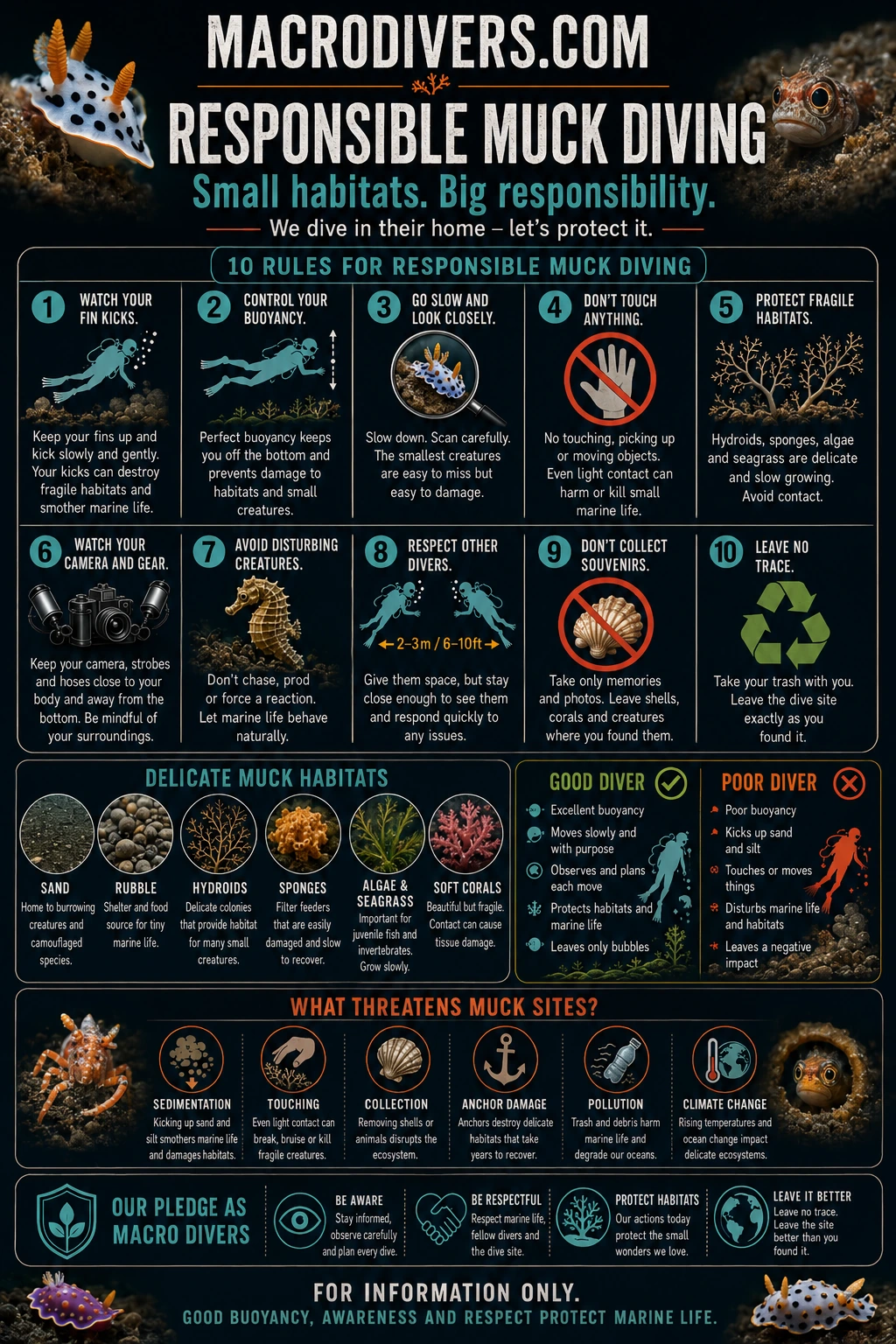
Good muck divers are controlled, aware and patient.
Keep fins up and kick slowly. Fin wash can destroy fragile habitats and bury small animals in silt.
Stay off the bottom and use calm, controlled breathing and small adjustments rather than grabbing the reef.
The smallest creatures are easy to miss. Slow diving protects the site and improves sightings.
Do not pick up, move or reposition animals or objects for a photograph. Natural behaviour matters.
Hydroids, sponges, algae, seagrass and soft corals may be slow-growing and easily damaged.
Take your litter with you, leave shells and corals where they are, and avoid collecting souvenirs.
Responsible muck diving is not just an environmental idea. It changes how the whole dive feels. You see more, disturb less, use less effort and usually come back with better photographs.
Camera gear adds extra risk because strobes, arms, lanyards and gauges can drag or swing into the bottom. Keep everything close, check your surroundings and back away from subjects carefully.
No image is worth damaging the habitat, stressing an animal or blocking another diver from a safe exit.
Responsible muck diving means exploring sandy, silty and rubble habitats without damaging the bottom, stressing animals or moving subjects for a photograph. The aim is to leave the site exactly as you found it.
Good buoyancy keeps fins, knees, gauges and camera gear away from fragile habitat. Many muck sites look empty at first glance, but the sand, algae, sponges and rubble can hide tiny animals and delicate life.
No. Divers should not touch, prod, lift, move or reposition macro subjects. Moving animals can stress them, expose them to predators, damage their feeding behaviour and spoil the experience for other divers.
Get only as close as you can while staying stable, calm and clear of the bottom. If the animal changes behaviour, closes up, turns away or tries to escape, back off and give it space.
Yes. Poor finning, kneeling, dragging equipment or crowding subjects can damage small animals, eggs, algae, hydroids, sponges and other fragile life on the seabed. Slow, controlled diving greatly reduces that risk.
Approach slowly, settle your breathing, keep your camera rig compact, control your lighting and take fewer, better-composed shots. Patience, buoyancy and good strobe position usually improve photographs more than getting closer.
These pages are for information and skill awareness only. They do not replace formal scuba training, in-water coaching, professional instruction, local dive briefings or good judgement. Practise new skills with a qualified instructor or experienced mentor in suitable conditions.
These skills work together. Good buoyancy, responsible behaviour and camera awareness make safer, calmer and lower-impact macro dives.
Buoyancy Skills Camera Awareness Scuba Hand Signals Back to Diving Skills & Safety