What are rhinophores?
Rhinophores are paired sensory organs on the head of nudibranchs and many other sea slugs. They help detect dissolved chemicals in seawater, including clues from food, mates and the surrounding environment.
MacroDivers Academy
A practical guide to the sensory "antennae" that help sea slugs smell, navigate and find food, and help divers identify them.
Rhinophores are paired sensory structures on the heads of sea slugs. They occur in pairs, although it is not uncommon to find a slug that has lost one to predation.
There is a huge range of rhinophore types found on sea slugs, and the names given in books and websites do not always agree. To keep things simple, MacroDivers uses five basic types based on a very simple visual grouping.
These groups are horizontal, vertical, smooth, rolled and ornate / complex. They are field-identification categories rather than strict scientific divisions, but they give divers and underwater photographers a useful way to describe what they are seeing.
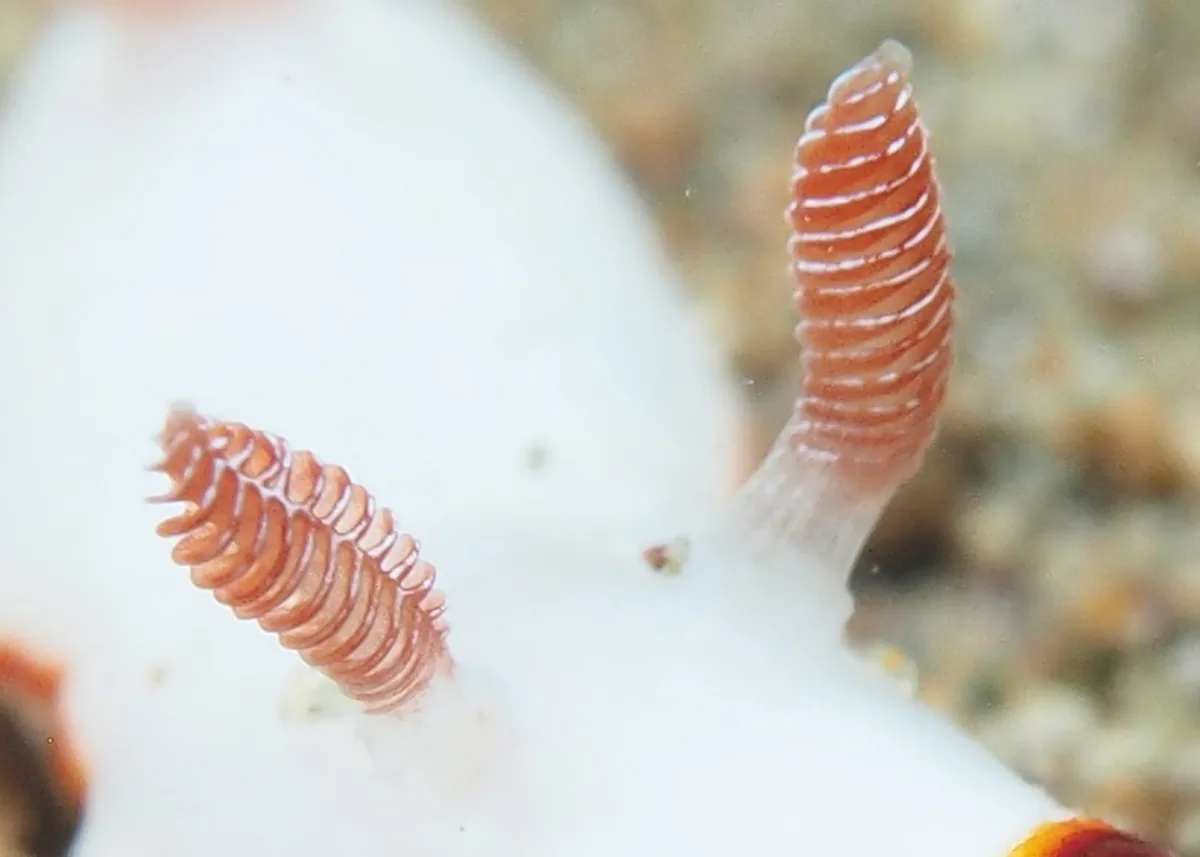
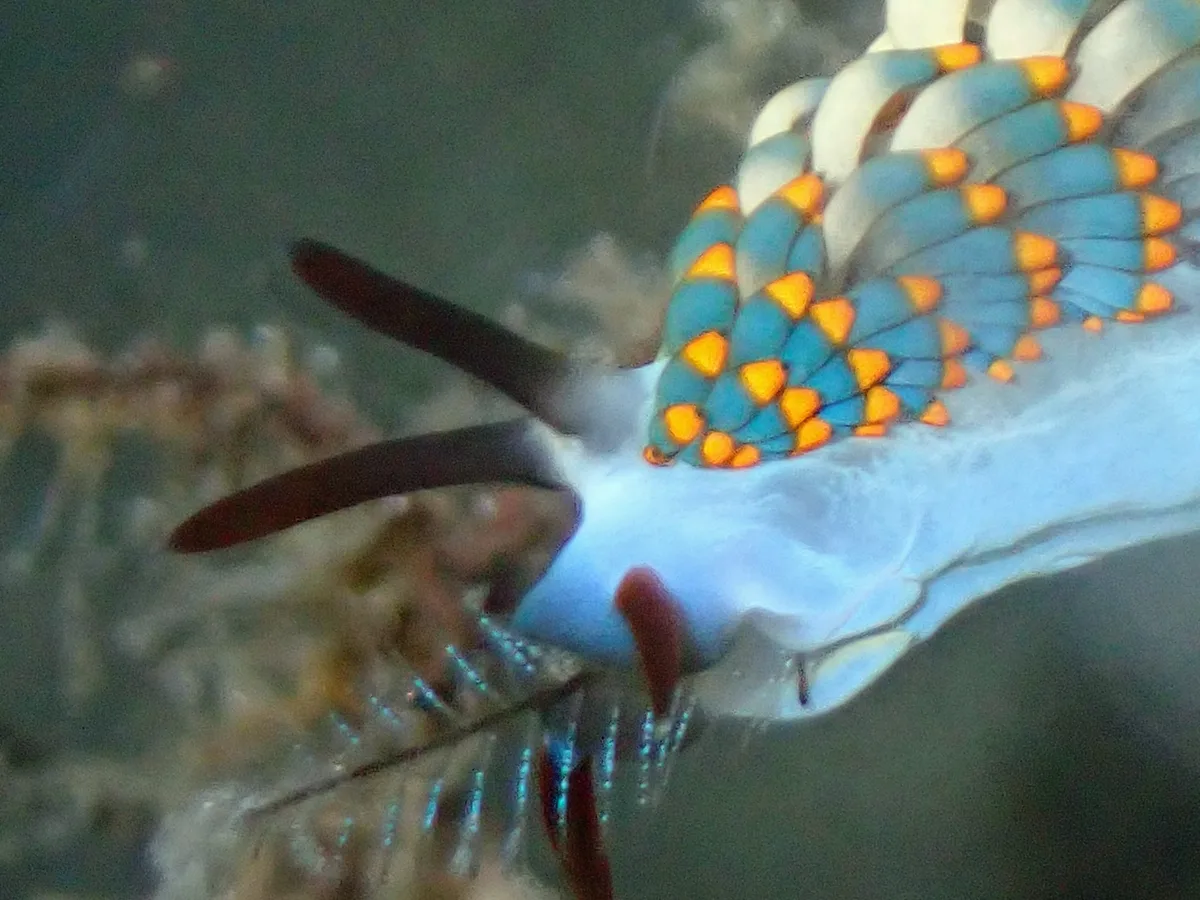
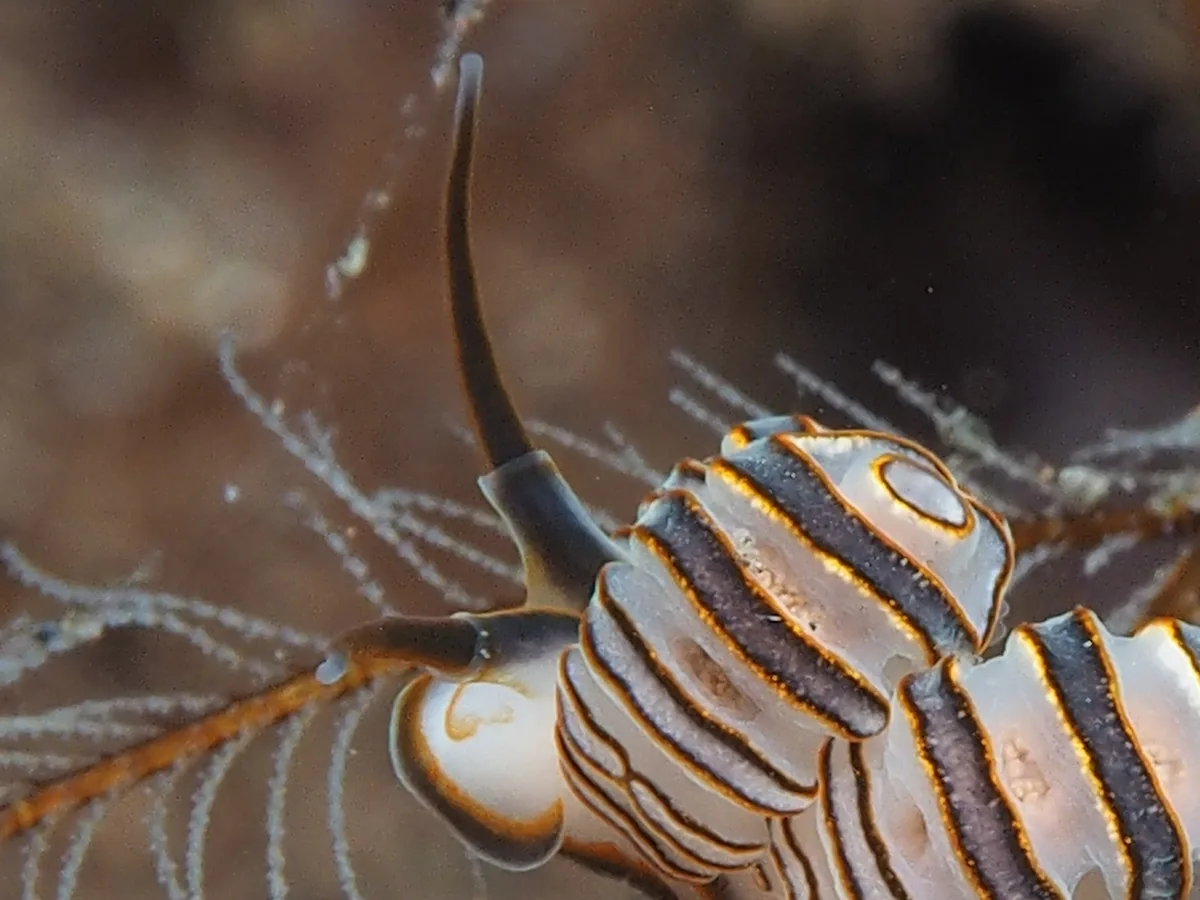
Horizontal rhinophores are the most common type. This describes lines, folds or leaflets that go across or around the rhinophore. This arrangement significantly increases the surface area, making it easier for the slug to detect chemical clues in the water.
Look for: repeated bands, plates or leaflets running across the rhinophore rather than along its length.
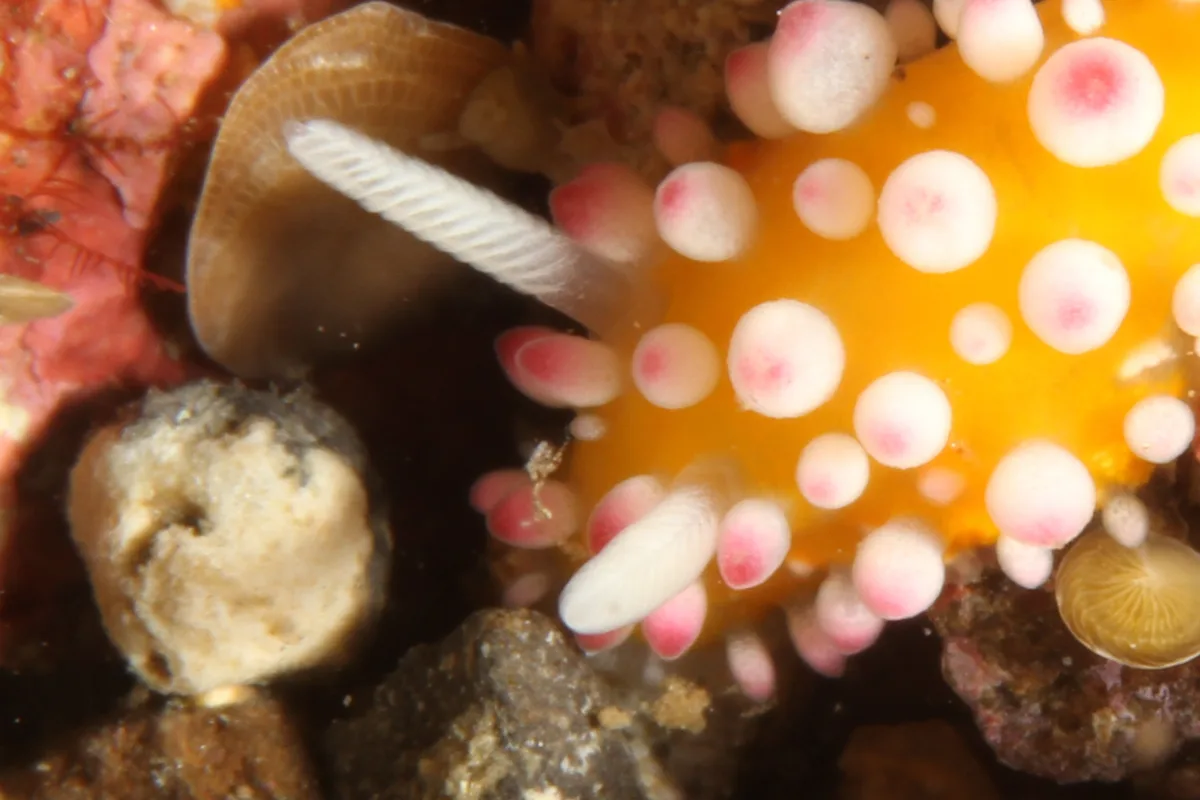
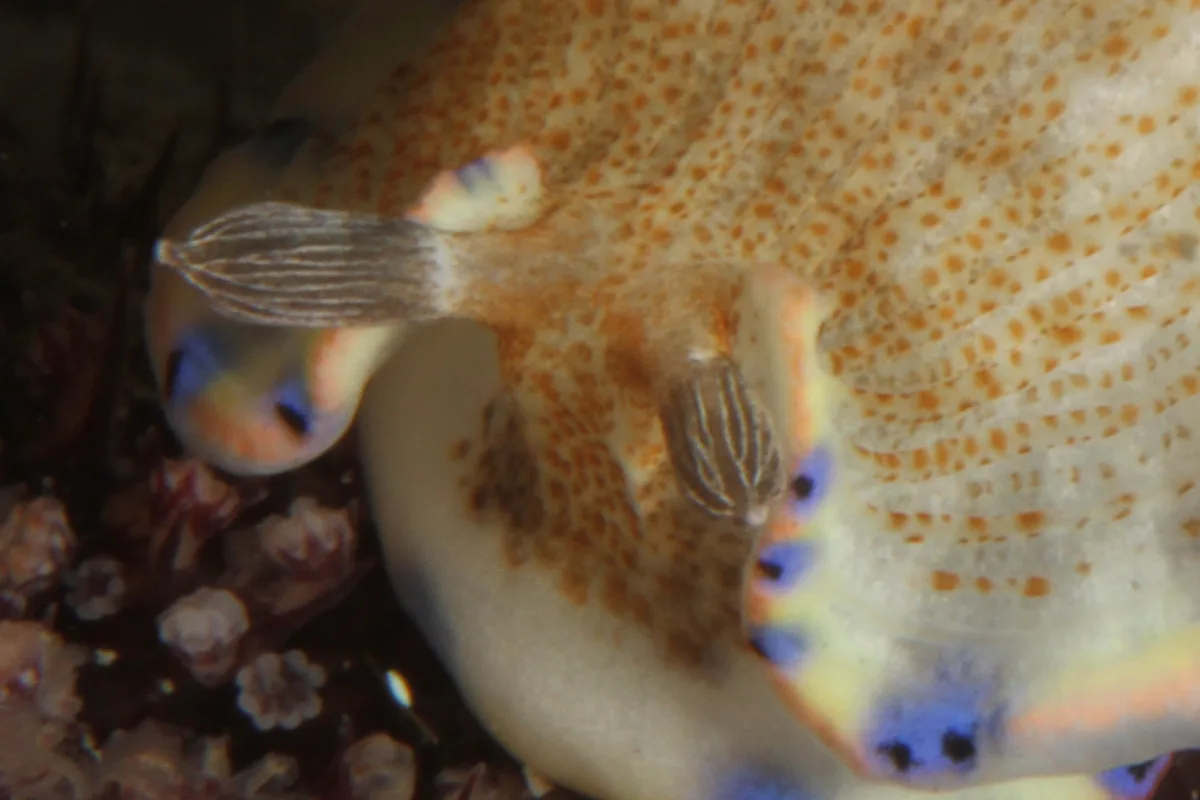
Vertical rhinophores have lines running vertically up and down the rhinophore. The ridges help increase the detection ability of the slug. MacroDivers includes clubbed and bulbous forms in the vertical category. Often the tip is a different colour. This type is common on Armina, Dermatobranchus and Gymnodoris.
Look for: lengthwise grooves, a clubbed shape, or a coloured tip rather than rings around the rhinophore.
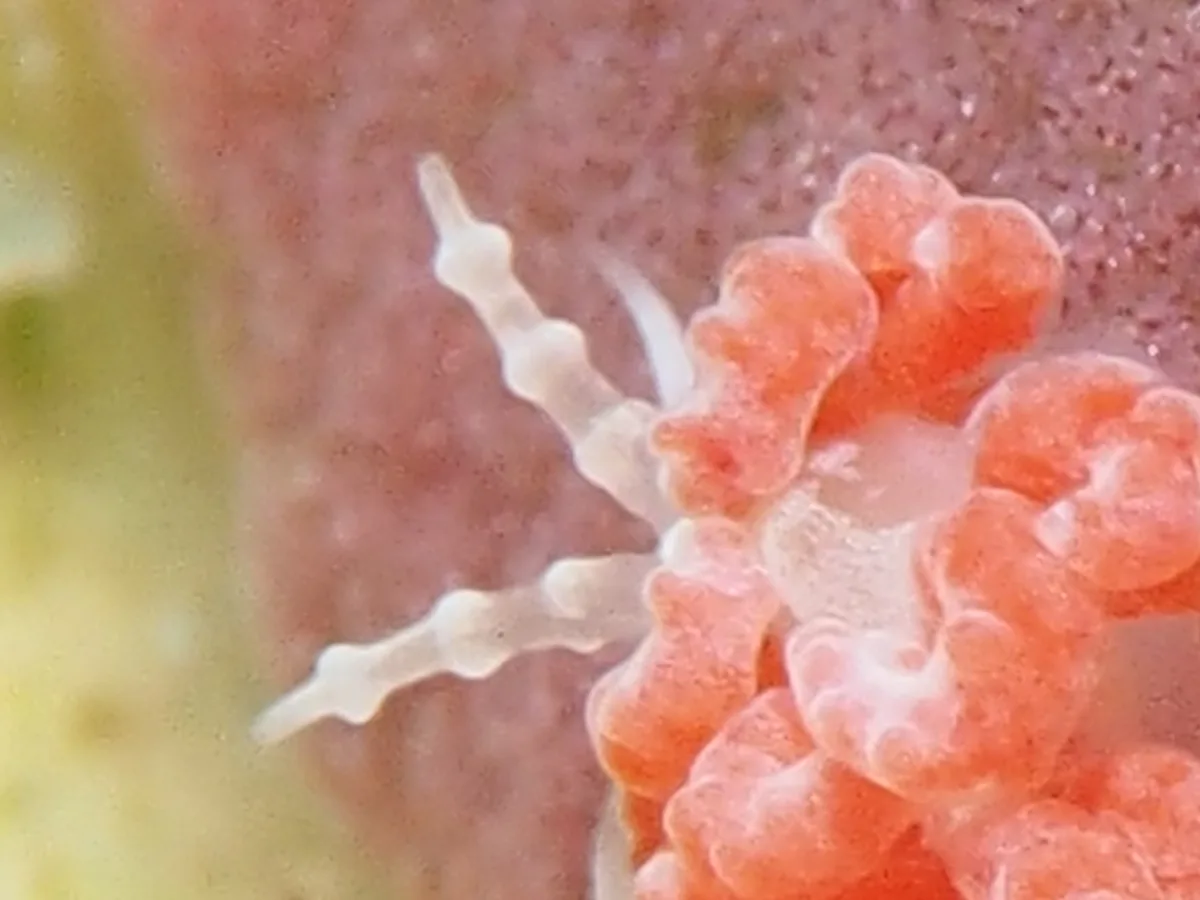
Smooth rhinophores have no obvious ridges, so they are often longer. Many species have smooth or almost smooth rhinophores, including most aeolids. Many of the slugs with smooth rhinophores also have oral tentacles. Some smooth rhinophores emerge from a collar.
Oral tentacles are not rhinophores. Rhinophores are usually higher on the head and mainly used for distant chemical sensing, while oral tentacles are closer to the mouth and are more associated with touch and close-range exploration.
Look for: simple, smooth, tapering structures on the top of the head. Check that you are not confusing them with oral tentacles.
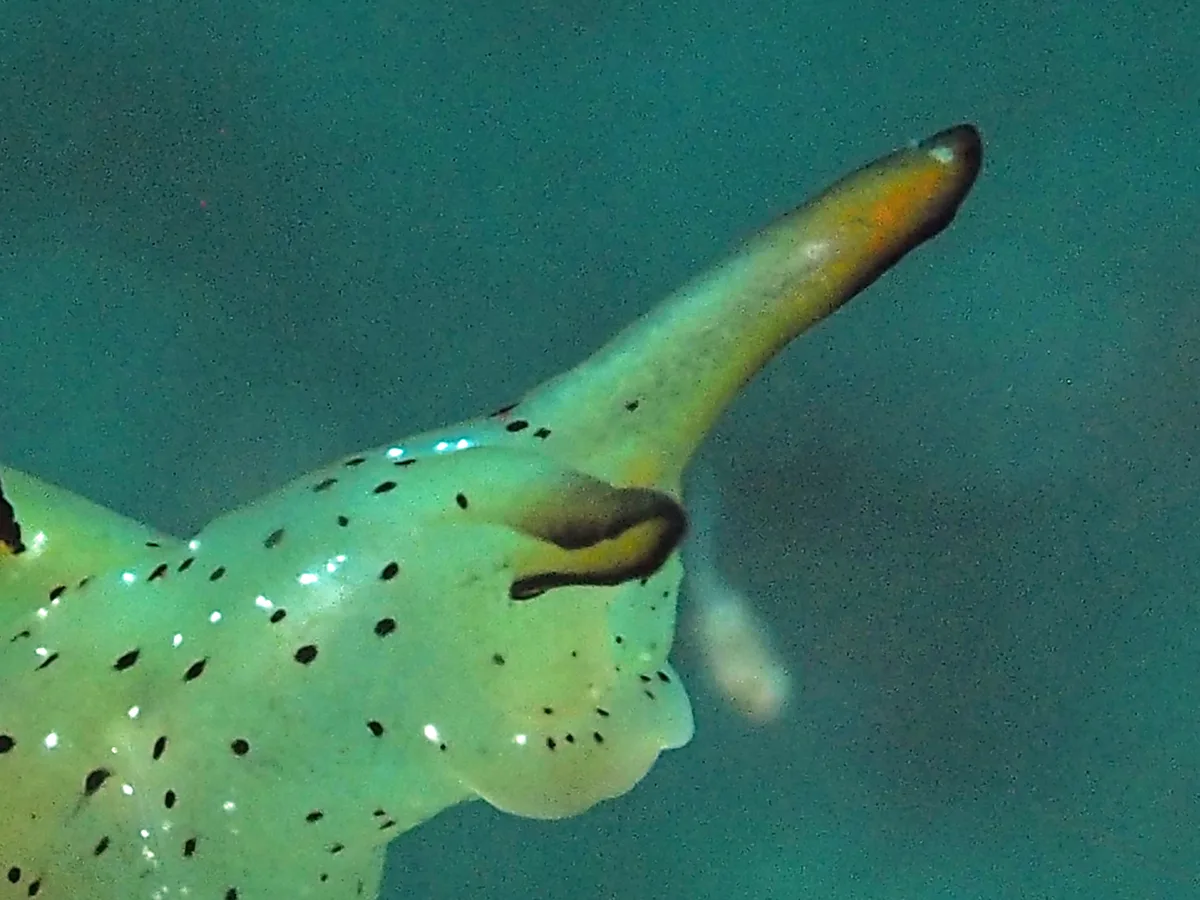
Rolled rhinophores form a tube with longitudinal rolling and a hollow through the centre. This style is not found on true nudibranchs, but it is found on sea hares, sap-sucking slugs and side-gilled slugs.
The Elysia example shown here is a sacoglossan, or sap-sucking slug, not a true nudibranch.
Look for: an ear-like or tube-like rolled structure rather than rings, plates or branches.
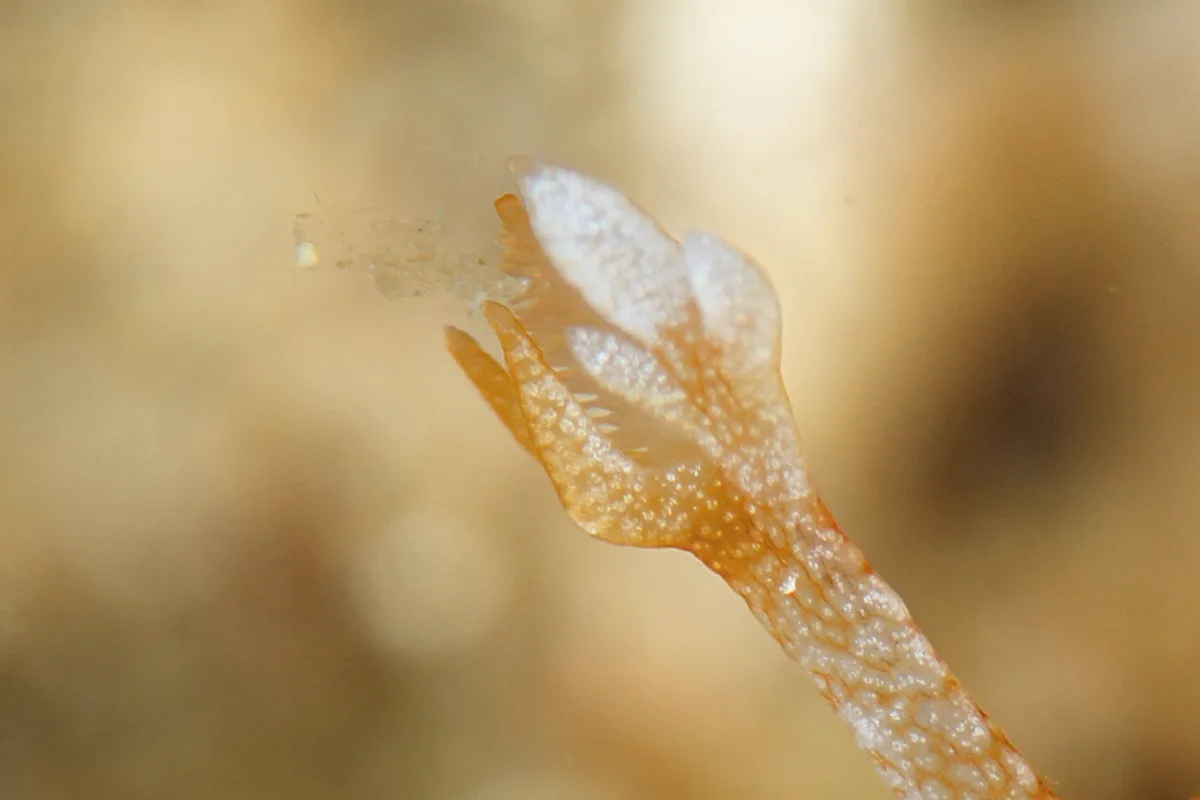
All other rhinophores are included in this group. Ornate and complex rhinophores include papillate, or bumpy, forms; branched forms such as those found on Dendronotus and Bornella; and pulpit, pocket or funnel-shaped forms as found on Trapania and Marionia.
Look for: branching, bumps, folds, cups or pocket-like structures that do not fit the simpler categories.
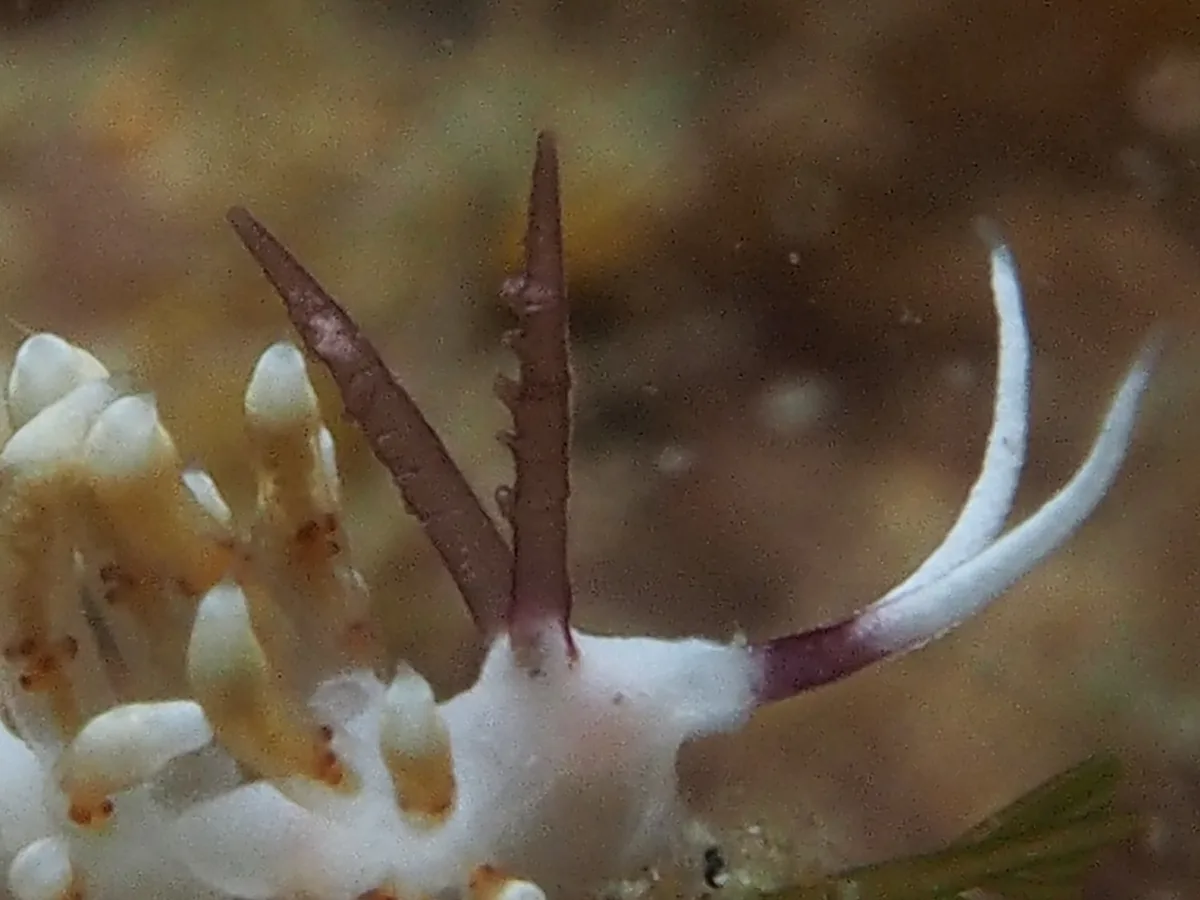
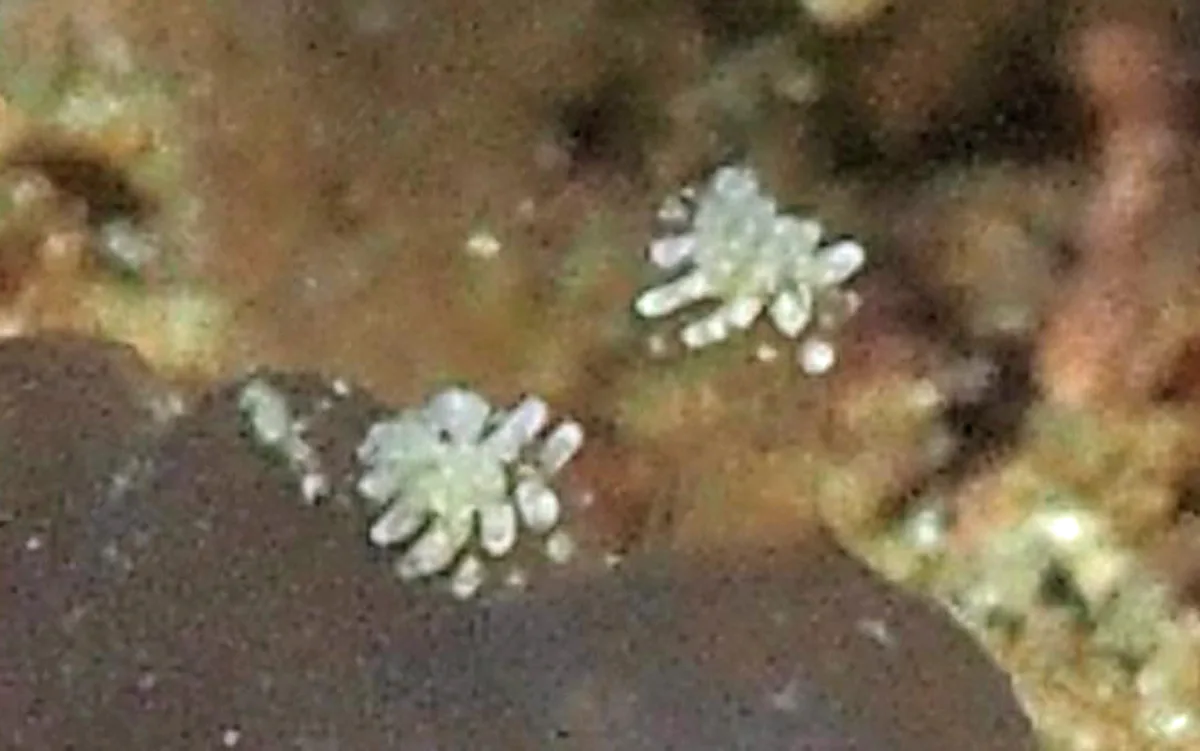
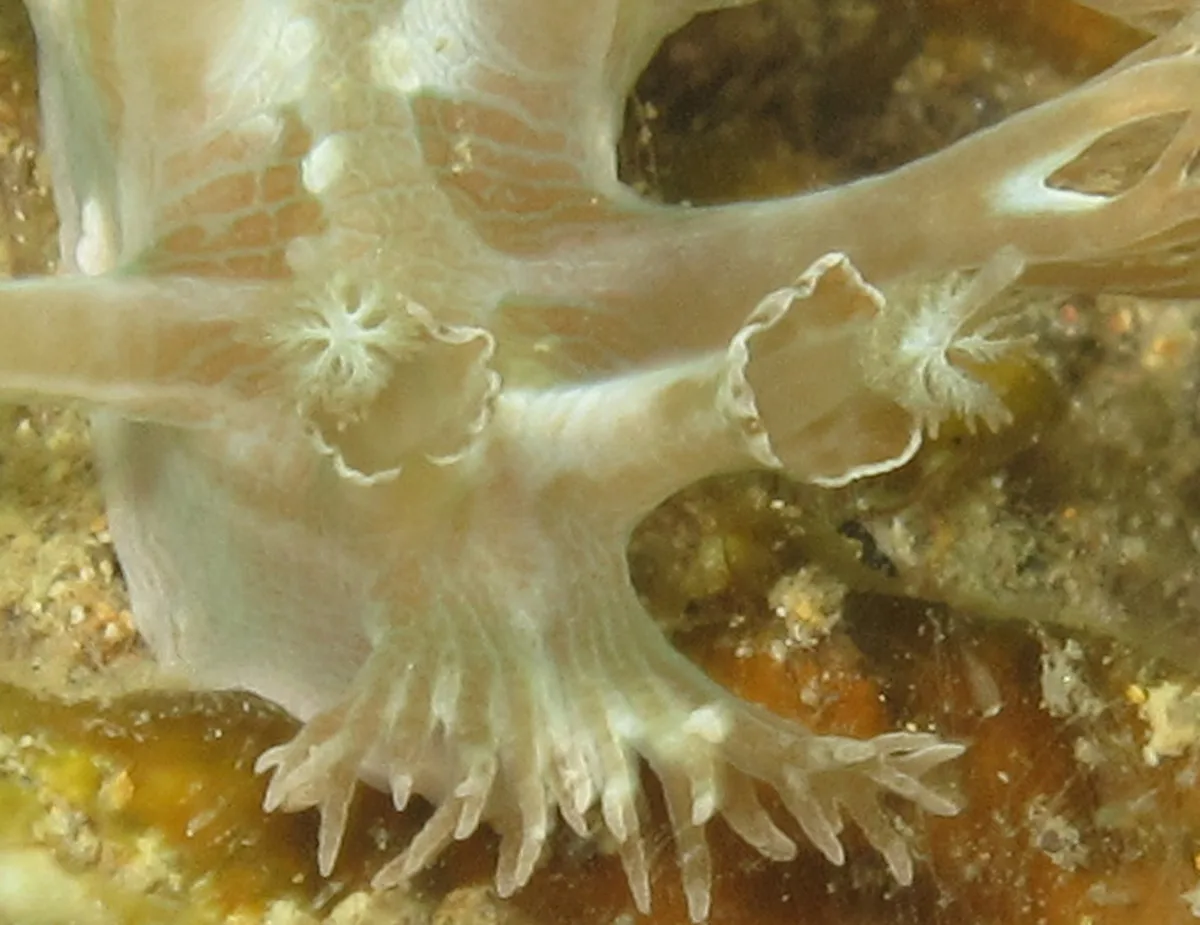
| Type | What it looks like | Useful ID clue | Example photo |
|---|---|---|---|
| Horizontal | Rings, plates, folds or leaflets across the rhinophore | Often looks banded or stacked | Goniobranchus / Cadlinella / Favorinus |
| Vertical | Lengthwise ridges or clubbed form | Ridges run up and down, not around | Dermatobranchus |
| Smooth | Simple, tapering, little or no ridging | May be confused with oral tentacles | Tenellia / Doto |
| Rolled | Tube-like or ear-like rolled structure | Often suggests a related sea slug rather than true nudibranch | Elysia |
| Ornate / Complex | Branched, bumpy, pocket or funnel-shaped | Often very distinctive for ID | Bornella / Facelina / Hallaxa / Marionia |
Rhinophores are small, delicate and often partly hidden, but a good close-up can make identification much easier.
Do not prod or blow water at the animal to make rhinophores appear. Wait, adjust your angle, and avoid stressing the subject.
Rhinophores are paired sensory organs on the head of nudibranchs and many other sea slugs. They help detect dissolved chemicals in seawater, including clues from food, mates and the surrounding environment.
Divers often call them antennae or horns, but rhinophores are specialised sensory organs. They are not true antennae like those found on insects or crustaceans.
Rings, folds, lamellae and other surface structures increase the surface area exposed to seawater. This gives the animal more sensory surface for detecting chemical clues.
Many dorid nudibranchs can retract their rhinophores into protective pockets. This helps protect the delicate structures from damage or predators.
Rhinophores are usually higher on the head and are mainly used for chemical sensing. Oral tentacles are closer to the mouth and are more involved in touch, taste and close-range exploration.
Rolled rhinophores are more typical of related sea slug groups such as sacoglossans and sea hares rather than true nudibranchs. They are included here because divers often encounter and photograph these animals alongside nudibranchs.
Yes. Rhinophore shape, colour, ridging and position can all help with identification, especially when combined with body shape, gills, cerata, colour pattern, food source and location.
Build the full picture by combining rhinophore shape with anatomy, behaviour, food source and location.