What is a nudibranch?
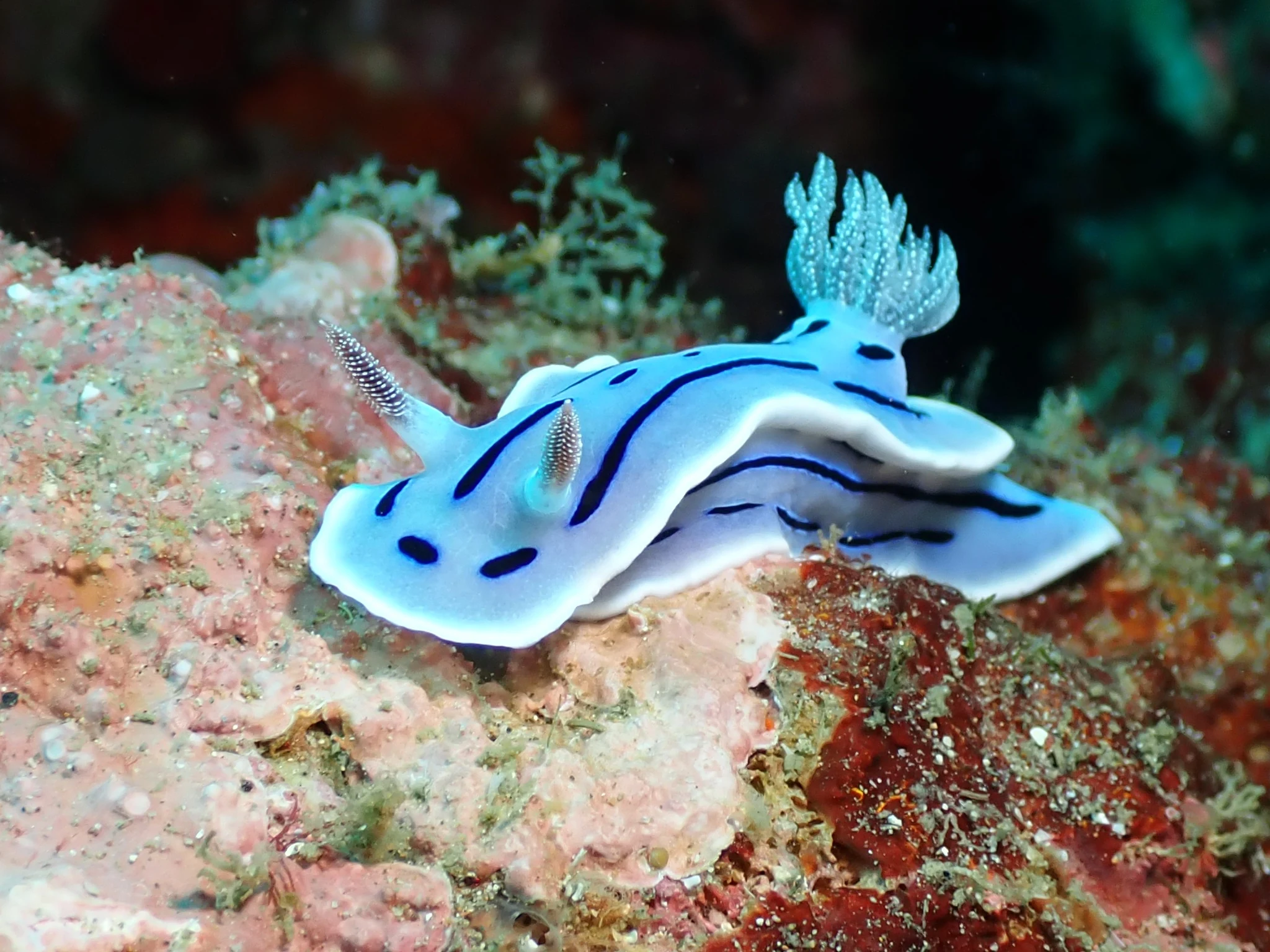
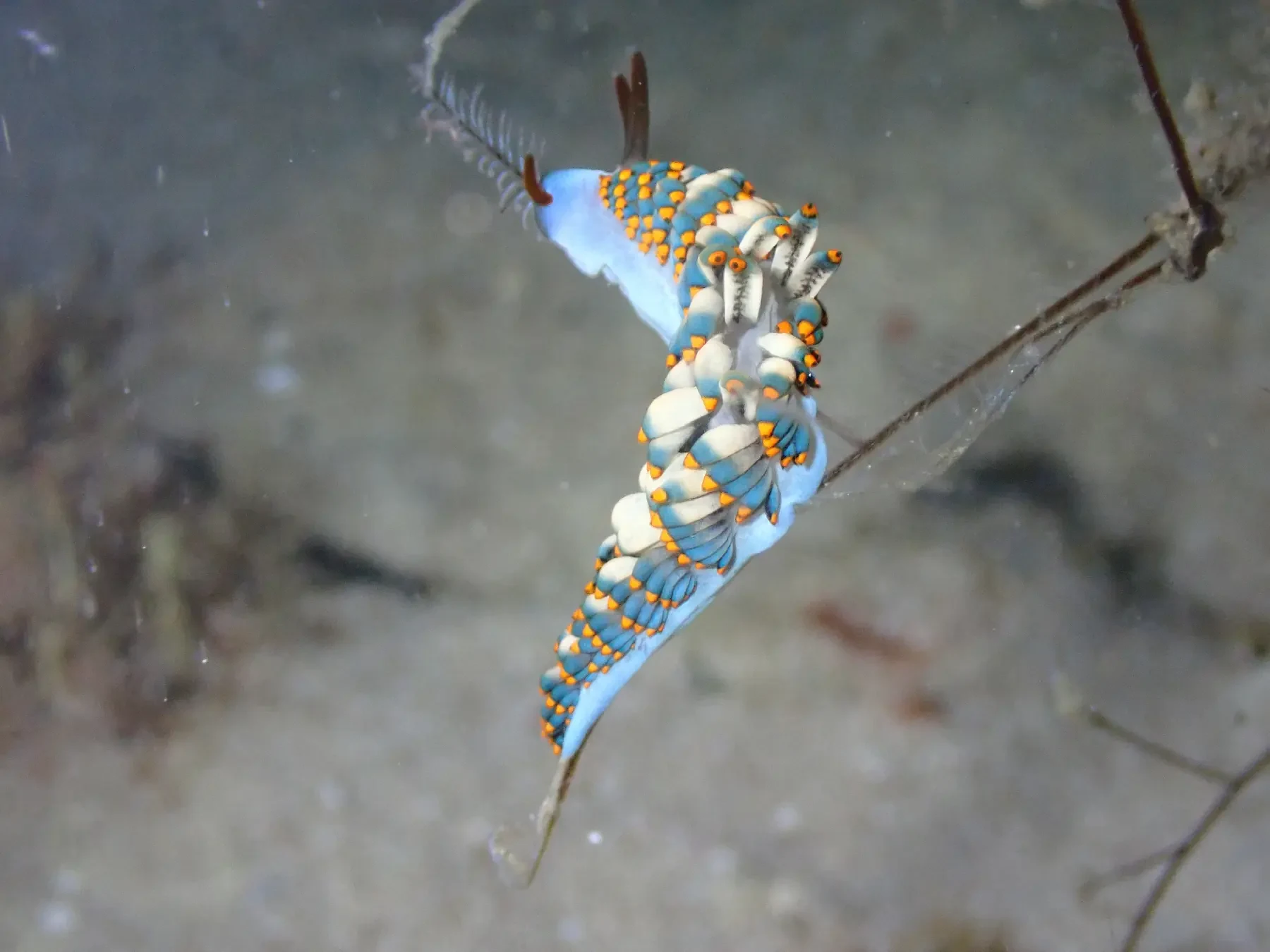
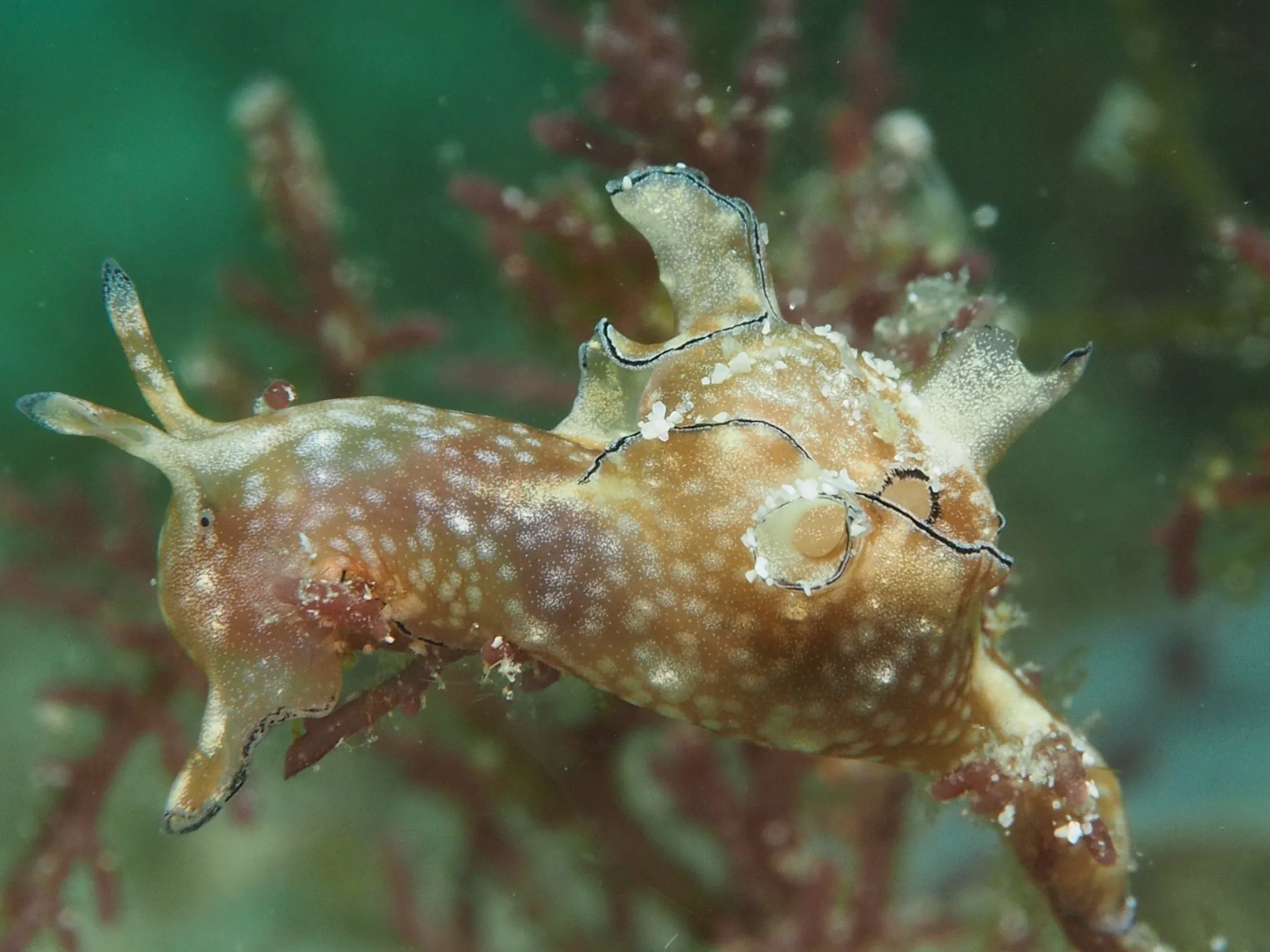
A nudibranch is a soft-bodied marine mollusc and a type of sea slug. Most adult nudibranchs have no external shell, and divers usually recognise them by their colourful bodies, rhinophores and exposed gills or cerata.
Is a nudibranch the same as a sea slug?
All nudibranchs are sea slugs, but not all sea slugs are nudibranchs. Divers often use the phrase sea slug loosely, but true nudibranchs are a specific group within the wider sea slug world.
Are nudibranchs poisonous?
Many nudibranchs have chemical defences that make them distasteful or toxic to predators, and some can store stinging cells or toxins from their food. Divers should never touch or handle them.
Why are nudibranchs so colourful?
Their bright colours can act as warning signals, camouflage or mimicry. Some species advertise chemical defences, while others blend into sponges, hydroids, soft corals or other food sources.
Where can divers find nudibranchs?
Divers can find nudibranchs on reefs, muck sites, walls, seagrass, sponges, hydroids and soft corals in both tropical and temperate seas. Good macro destinations include the Coral Triangle, Anilao, Lembeh, Ambon, Raja Ampat and cooler-water sites such as the Pacific coast.
Are nudibranchs good subjects for underwater macro photography?
Yes. Nudibranchs are excellent macro subjects because they are colourful, detailed and usually slow-moving. They reward careful buoyancy, patient composition and close attention to rhinophores, gills, texture and background.