Masters Of Camouflage
Many macro crabs blend into bubble coral, soft coral, anemones, fire urchins, algae or reef rubble. Often the habitat gives the clue before the crab does.
Marine Life
A diver-friendly guide to some of the most rewarding macro crabs to find, identify and photograph.
Macro crabs are masters of camouflage. In the Coral Triangle, many of the most interesting species are found by recognising the host habitat first — bubble coral, fire urchins, anemones, soft corals, rubble and reef crevices.
For macro divers and photographers, crabs are rewarding because behaviour, posture and habitat often reveal the story. A crab hiding in bubble coral or matching a soft coral is much more interesting when the image shows how perfectly it belongs there.
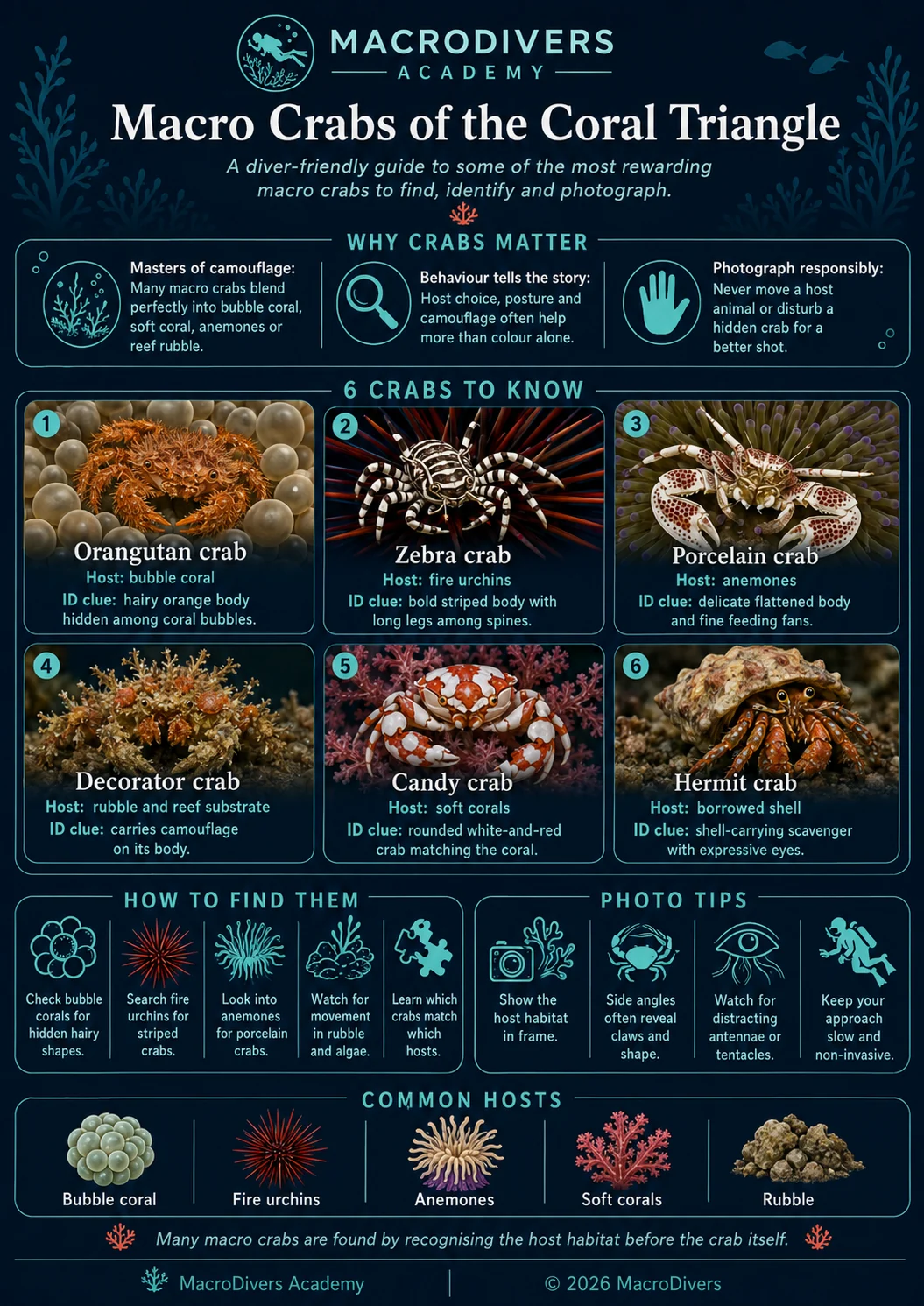
Many macro crabs blend into bubble coral, soft coral, anemones, fire urchins, algae or reef rubble. Often the habitat gives the clue before the crab does.
Posture, host choice, feeding behaviour and camouflage can be more useful than colour alone when identifying or photographing macro crabs.
Never move a host animal, pull apart coral, lift rubble or disturb a hidden crab for a better shot.
Host / habitat: Bubble coral and coral crevices.
ID clue: Hairy orange or brown body, often tucked among coral bubbles.
A favourite for macro divers because it is characterful, cryptic and often found close to its host.
Host / habitat: Fire urchins.
ID clue: Bold striped body and long legs among urchin spines.
Look carefully between the spines, but never touch or manipulate the urchin.
Host / habitat: Anemones and sheltered reef habitats.
ID clue: Flattened body, broad claws and fine feeding fans.
Often seen filter-feeding from the safety of an anemone or crevice.
Host / habitat: Rubble, algae, sponges, hydroids and reef substrate.
ID clue: Carries camouflage on its body, often looking like a moving piece of reef.
Movement is often the giveaway. Watch the reef carefully before moving on.
Host / habitat: Soft corals.
ID clue: Rounded body, often white-and-red or pinkish, matching the soft coral host.
A beautiful example of colour matching and host camouflage.
Host / habitat: Borrowed shells on sand, rubble and reef substrate.
ID clue: Crab body partly hidden inside a shell, often with alert eyes and colourful legs.
Common but underrated. Hermit crabs are excellent subjects for behaviour, eyes and night-dive photography.
Many macro crabs are only visible because they live in fragile host habitats. Avoid touching bubble coral, bending soft corals, disturbing anemones, lifting rubble or prodding urchins. The best macro images show the animal naturally, without changing its behaviour or damaging its home.
For low-impact technique, see responsible muck diving, better macro diving, the Coral Triangle guide and best macro diving destinations.
Look for host habitats first: bubble coral, fire urchins, anemones, soft corals, rubble, algae and reef crevices.
Orangutan crab is the common name for a small hairy crab often found in bubble coral or coral crevices. Its orange-brown hairs help it blend into the reef.
Porcelain crabs are often called crabs by divers, but they are more closely related to squat lobsters than to true crabs.
Decorator crabs attach material such as algae, sponge, hydroids or debris to their bodies, making them look like part of the reef.
Yes, if approached carefully. The main issue is not danger to the diver, but avoiding damage to the crab's host habitat.
Compare crab camouflage with host-specialist macro shrimps.
Read Macro ShrimpsReturn to the MacroDivers Marine Life Academy hub.
Return to Marine Life GuidesBuild better macro photos with careful approach, lighting and composition.
Improve Photos