Animal group
Frogfish are anglerfish, not frogs or nudibranchs.
The master of disguise: ambush predators, camouflage experts and one of macro diving's most fascinating photo subjects.
Frogfish are among the most rewarding animals a macro diver can find. They may look like sponge, algae, coral rubble or a small lump of reef until a tiny eye, a mouth line or a raised lure gives them away. Frogfish are masters of camouflage and ambush hunting, often blending into sponges, coral or rubble before striking at passing prey.
Their appeal is partly the challenge. Frogfish are not usually moving across the reef in plain sight. They wait, blend in and trust their camouflage. For photographers, that makes them brilliant subjects, but it also means the best encounters are slow, calm and respectful.
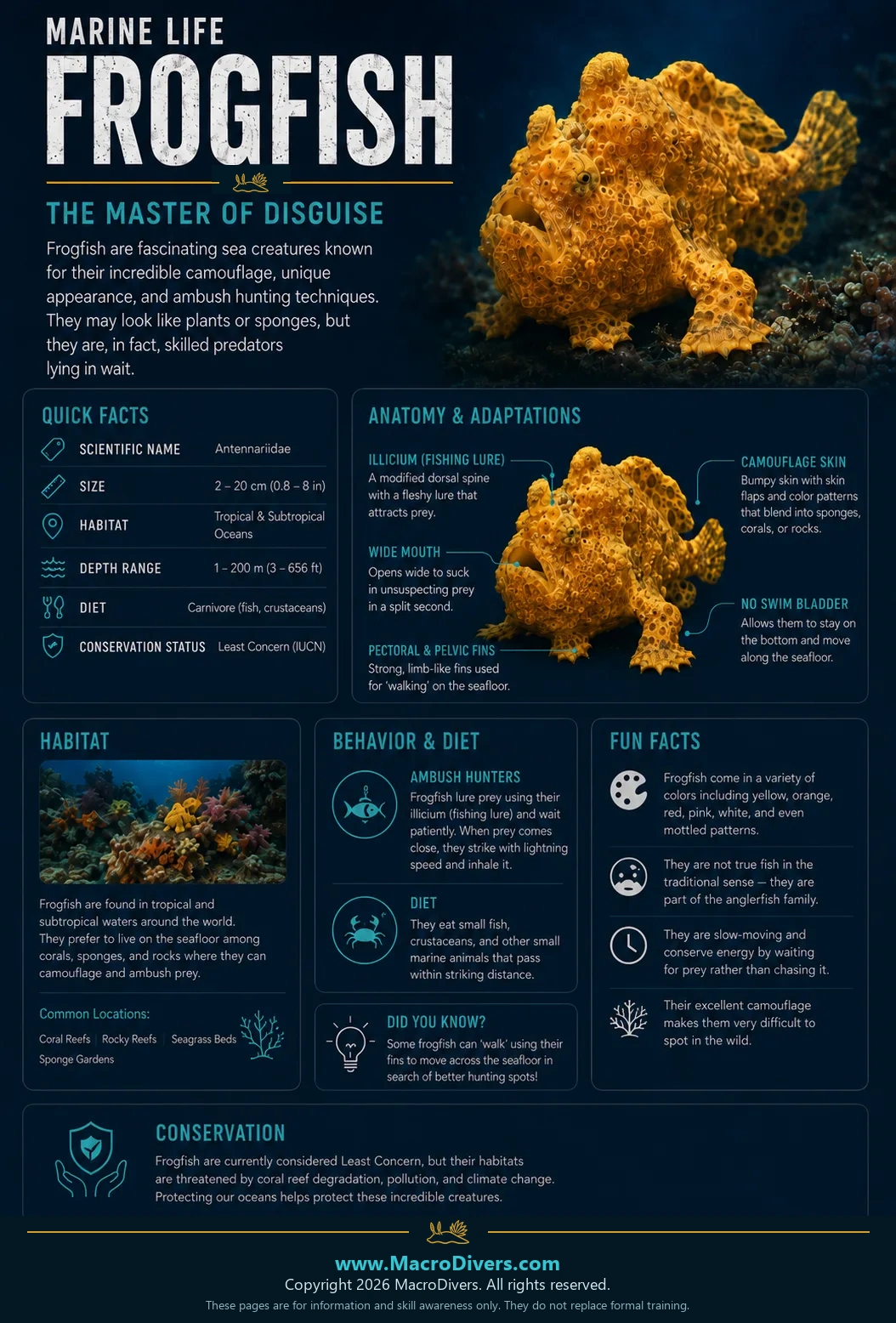
Frogfish are anglerfish, not frogs or nudibranchs.
Most wait in place and ambush prey that comes too close.
Many species use a lure, called an esca, on a fishing rod-like spine.
Look for the eye, mouth line, lure and paired fins.
Frogfish turn camouflage into a complete hunting strategy. Their colour, texture and posture can make them almost disappear against a sponge, hydroid patch or rubble slope. Some look smooth, some look hairy, and some have skin that breaks up the body outline so well that even experienced divers swim past them.
Instead of chasing prey, a frogfish usually waits. When a small fish or crustacean comes within range, the frogfish opens its mouth extremely quickly and creates suction. The strike can be over before a diver has fully registered what happened.
The most famous adaptation is the lure. In many frogfish, the first dorsal spine is modified into a small fishing rod called the illicium, with a bait-like tip called the esca. The frogfish can move this lure to attract curious prey.
Their pectoral fins are also distinctive. They often look like small arms or feet, helping the frogfish brace itself, shuffle over the bottom or hold position in a current. The huge mouth is another giveaway: seen from the side, the mouth line can reveal an animal that otherwise looks like sponge.
Divers often find frogfish on sponge gardens, rubble slopes, reef walls, muck sites, pier legs, mooring blocks and sheltered bays. Productive macro destinations such as Ambon, Anilao and Raja Ampat can all produce memorable sightings.
Frogfish are ambush hunters. They rely on stillness, camouflage and a rapid suction strike. Prey can include small fish and crustaceans, and the frogfish may sit in the same hunting position for long periods.
Frogfish can be stationary, which sometimes leads photographers to crowd them. A calm encounter is better for the animal, better for other divers and usually better for the photograph.
The same principles apply across all critter diving. For more on low impact technique, see the MacroDivers guides to responsible muck diving and better macro diving.
Start by understanding the animal's position. If the frogfish is tucked into sponge or rubble, a habitat frame may tell the story better than forcing a tight portrait. If the eye, mouth line and lure are visible, a lower angle can help the viewer read the shape.
If backscatter is a problem in muck or silty conditions, work on light position before moving closer. The TG-7 backscatter guide and macro photography guide are useful companion reads.
Dark sand and rubble make it easier to spot unusual shapes, but they also make buoyancy and fin control especially important.
Sponge-covered reef is classic frogfish habitat. Scan slowly for eyes, fins and a mouth line rather than looking for colour.
The Coral Triangle is one of the best regions for macro life, including frogfish and other cryptic subjects.
Yes. Frogfish are anglerfish, a group of fish known for using a lure to attract prey.
They use camouflage, body texture and stillness to blend into sponge, coral, algae, rubble or muck.
No. Divers should never touch, move, prod or reposition a frogfish. Photograph it where it is, without damaging the surrounding habitat.
Approach slowly, hold neutral buoyancy, keep your equipment off the bottom and use angles that show the eye, mouth line, lure or habitat.
Return to the MacroDivers Marine Life Academy hub.
View Marine LifeFind places known for nudibranchs, frogfish and small reef life.
Explore DestinationsImprove your critter encounters with calmer, lower impact diving.
Read The GuideBuild better macro photos with careful approach, lighting and composition.
Improve Photos