Group
Cephalopods.
Intelligent, adaptable and endlessly fascinating - from reef octopus encounters to coconut and mimic octopus behaviour on muck diving sites.
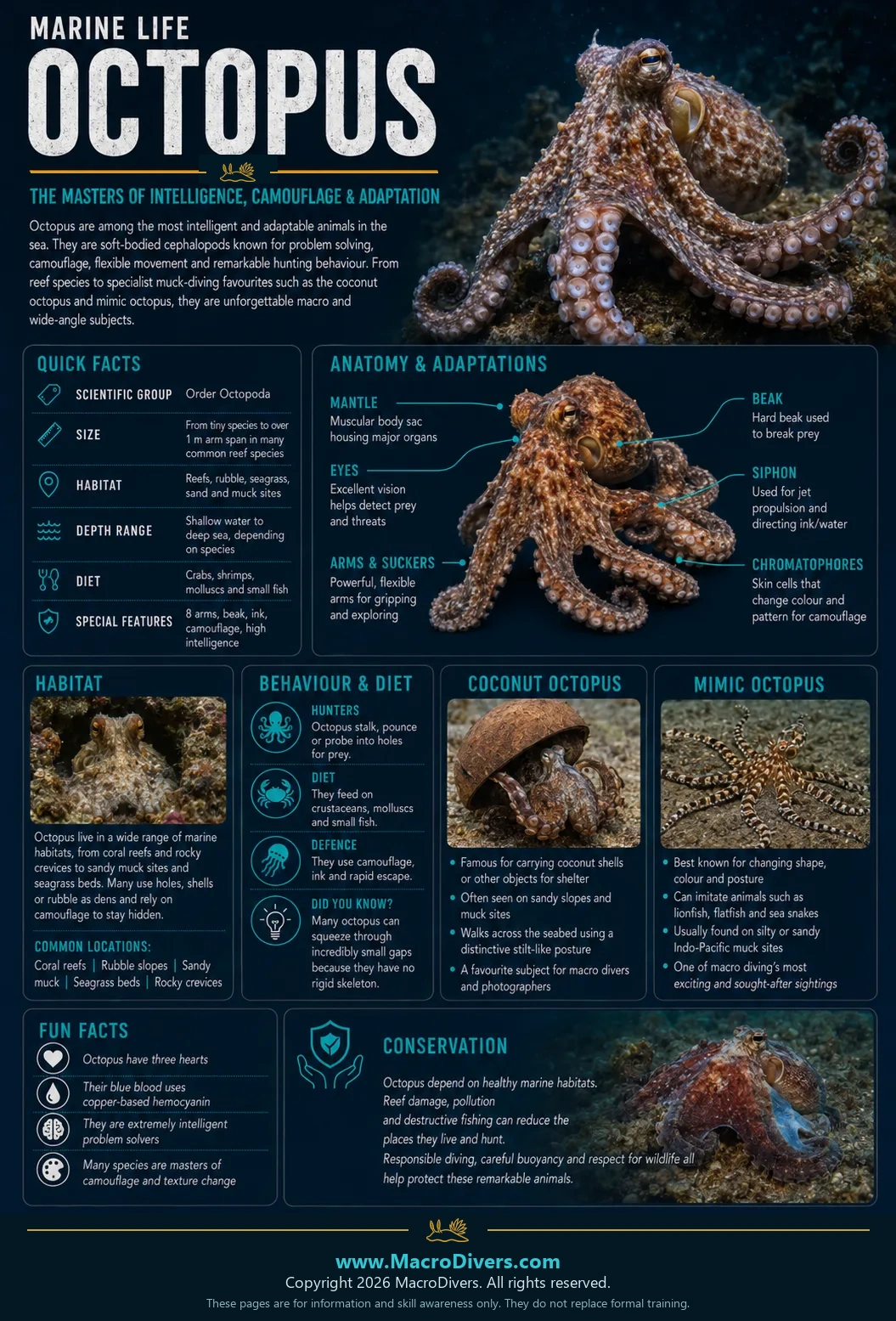
Octopus are among the most intelligent and adaptable animals in the sea. They are soft-bodied cephalopods with excellent vision, flexible movement, powerful arms and an extraordinary ability to change colour, texture and posture.
For divers, octopus encounters can be unforgettable. Some stay tucked into reef holes, watching the world through alert eyes. Others move across sand or rubble, changing colour as they go. On muck diving sites, coconut octopus and mimic octopus are two of the most exciting and sought-after species.
Octopus are brilliant subjects for underwater photographers, but they also need careful, respectful observation. Good octopus encounters come from patience, distance and letting the animal decide what happens next.
Cephalopods.
Octopoda.
Squid, cuttlefish and nautilus.
Eight flexible arms with suckers.
Soft-bodied with no rigid skeleton.
Crabs, shrimps, molluscs, small fish and other prey.
Coral reefs, rubble slopes, sand, muck sites, seagrass and rocky crevices.
Camouflage, ink, problem-solving, flexible movement and high intelligence.
Behaviour, eyes, texture, camouflage and interaction.
Octopus are built differently from fish. Their soft bodies allow them to squeeze through tiny gaps, hide inside holes and shells, and move with remarkable flexibility. Their arms are powerful, sensitive and covered with suckers that help them grip, taste and explore.
They are also famous for intelligence. Octopus can solve problems, investigate objects, learn from experience and use complex behaviour to hunt, hide and defend themselves.
Their camouflage is one of the most impressive in the animal kingdom. Special skin cells allow many octopus to change colour, pattern and texture, helping them blend into sand, rubble, coral, algae or rock within seconds.
The mantle is the muscular body sac that contains many of the octopus's major organs.
Octopus have excellent vision and use their eyes to detect prey, threats and changes in their surroundings.
The eight flexible arms are used for movement, gripping, hunting, exploring and manipulating objects.
At the centre of the arms is a hard beak used to bite and break prey.
The siphon is used for jet propulsion, breathing and directing water. It can also help direct ink when escaping.
Octopus skin can change colour, pattern and sometimes texture. This helps with camouflage, display and communication.
Many octopus can release ink as a defence, creating confusion while they escape.
Octopus live in a wide range of marine habitats, from coral reefs and rocky crevices to sandy muck sites, rubble slopes and seagrass beds. Some species hide in reef holes or dens, while others are found out on sand or rubble where they use camouflage and behaviour to stay hidden.
Many octopus rely on dens or temporary shelters. A good diver should never disturb a den, remove shells, block an exit or try to force an octopus into the open.
Octopus are active hunters and opportunistic feeders. They eat crabs, shrimps, molluscs, small fish and other prey. Depending on the species, they may stalk, pounce, probe holes with their arms, use their suckers to search crevices, or ambush prey from a hidden position.
Some octopus are shy and remain close to their den. Others may be more curious, watching divers carefully or changing colour as they assess the situation. This does not mean they want to be touched or chased. It simply means they are aware, intelligent animals responding to what is happening around them.
The coconut octopus is one of the classic muck diving favourites. It is best known for using coconut shells, clam shells and other objects as portable shelter. Divers may see it tucked between shell halves, carrying a shell across the sand or walking across the seabed on its arms.
Never remove a coconut octopus from its shell or shelter. Do not lift shells to check if an octopus is inside. Do not block the animal from returning to cover.
The mimic octopus is one of the most remarkable animals encountered on muck diving sites. It is famous for changing shape, colour, posture and movement in ways that may resemble other marine animals such as flatfish, lionfish or sea snakes.
Mimic octopus behaviour is often described as mimicking other animals, but divers should avoid assuming that every posture is a deliberate impersonation of a specific species.
Mimic octopus are often found on open sand and can be vulnerable to crowding. Give the animal space, avoid surrounding it, and do not chase it across the bottom for a better video clip.
Octopus are intelligent animals that respond clearly to diver behaviour. If an octopus changes colour rapidly, retreats, inks, blocks its den, moves away repeatedly or tries to hide, the diver should back off.
Octopus are among the most expressive subjects in underwater photography. Their eyes, arms, suckers, colour changes and behaviour can all make powerful images. The mistake is trying to force the encounter. The best images come when the photographer waits and lets the animal behave naturally.
Octopus can suit both macro and wider close-focus compositions. With a TG-7, start with a simple eye-focused portrait, then try wider environmental shots if the animal remains relaxed. For mimic or coconut octopus, avoid getting so close that you cut off the arms or lose the behaviour.
Anilao and Ambon include the sandy, silty and rubble habitats that can suit many unusual macro subjects.
The Coral Triangle is one of the key regions for Indo-Pacific macro life and muck diving.
See the macro diving destinations guide for wider destination context.
Octopus depend on healthy marine habitats. Reef damage, pollution, destructive fishing and habitat loss can all reduce the places they live and hunt. Some octopus species are also caught for food, and local pressures vary by region.
For divers, the practical message is simple: protect the habitat, avoid disturbing dens and shelters, and treat octopus as intelligent wildlife rather than props for photographs.
Yes. Octopus are widely regarded as highly intelligent invertebrates.
Octopus have eight flexible arms covered in suckers.
A coconut octopus is a muck diving favourite known for using coconut shells, clam shells and other objects as shelter.
The mimic octopus is a remarkable Indo-Pacific species known for changing shape, colour and posture in ways that may resemble other marine animals.
No. Octopus should never be touched, grabbed, chased or pulled from a den.
Octopus change colour for camouflage, display and response to their surroundings.
Ink is mainly a defence mechanism. If an octopus inks, back away.
Yes, but photographers should keep distance, avoid chasing and never manipulate the animal for a shot.
Octopus encounters are some of the most memorable moments in diving. Their intelligence, camouflage and behaviour make them fascinating to watch, but they are not props for photographs. The best encounter is one where the octopus remains in control and the diver leaves without changing its behaviour.
Read the MacroDivers guide to frogfish camouflage and ambush hunting.
Read FrogfishRead about seahorses, pygmy seahorses and careful macro observation.
Read SeahorsesImprove critter encounters with calmer, lower impact diving.
Read The GuideBuild better macro photos with careful approach, lighting and composition.
Improve PhotosReturn to the MacroDivers Marine Life Academy hub.
View Marine Life